WARNING: Some of the details in this story might be disturbing to readers. Discretion is advised.
Crews with the Department of Fisheries and Oceans Canada (DFO) are back from a two-month patrol of the northern Pacific Ocean, looking for illegal fishing activity.
They spent 56 days at sea covering millions of square kilometers of open ocean between Victoria and Japan.
The operation included officers with the DFO, the Canadian Coast Guard and a handful of international partners and they told Global News they found numerous fishing violations.
“Typically we’re talking about international vessels operating under flags from around the world,” Sean Wheeler, international enforcement, conservation and protection chief with the DFO said.
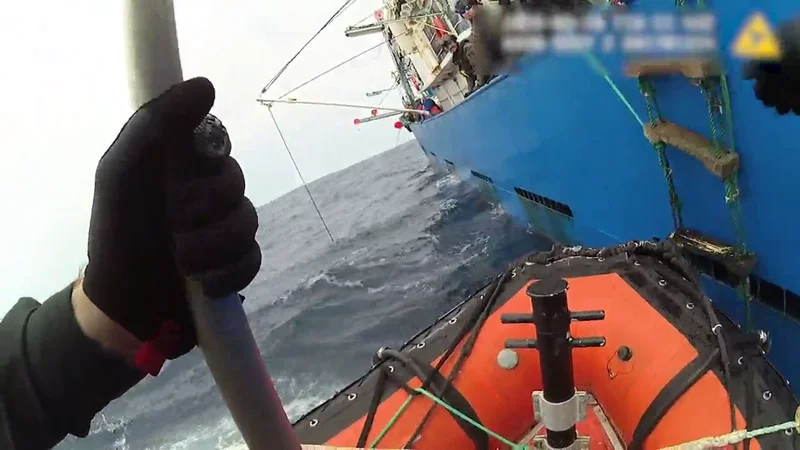
The organization said they intercepted and sent boarding teams onto 30 ships and what they say they found on some of them was heartbreaking.
This included illegally-caught sharks with their fins chopped off and the remaining parts of their bodies thrown overboard, presumably to be sold into the mostly underground global market for shark fins.
The Canadian enforcement team also said they found evidence that some of the ships had killed dolphins to use as shark bait and it is not the first time they’ve seen it.
- Fort Saskatchewan, Alta. RCMP seek public assistance in child luring investigation
- Saskatoon police charge 15-year-old with 2nd-degree murder after April incident
- Teen dressed as clown in doorbell videos has been detained for homicide
- Alberta organized crime investigators seize large quantity of drugs, cash, guns
Get daily National news
However, they say their inspections are starting to get results.
“We were heartened to see an example of prosecution in this case out of Taiwan, where they sentenced one captain to over two years in prison recently for the capture of 43 dolphins that were used for shark finning,” Wheeler said.
The DFO pointed out that another concerning discovery included the numbers of small forage fish in the open ocean: sardines, mackerel, and Pacific saury were found in unusually low numbers and those are some of the fish that B.C.’s wild salmon rely on in their ocean phase.
“We don’t know what’s causing that catch; we need to watch with our colleagues to determine if this is a seasonality change, if there’s been a shift in migration pattern, or if there’s a larger ecosystem impact happening,” Wheeler added.
The DFO said it will not release the information about which countries the ships are from that have allegedly been breaking the fishing laws until the investigations are complete.