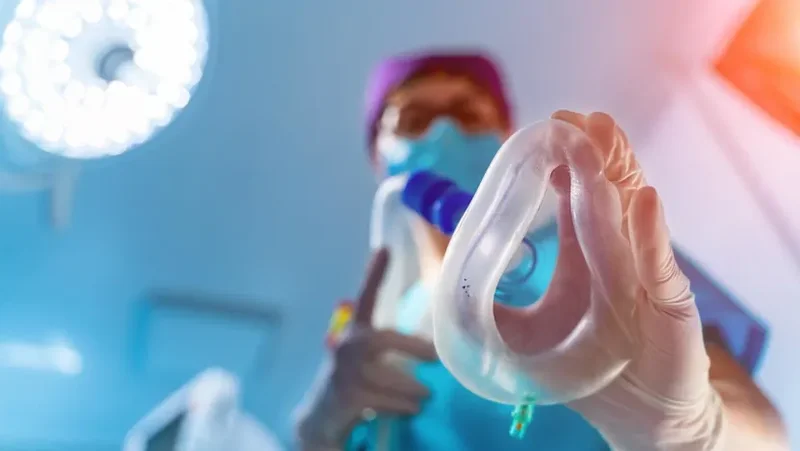
Going under the knife? What to know about anaesthesia before surgery
Experts explain how the different types of anaesthesia work, who they're suitable for and why some operations may not require general anaesthesia.
You don't think much about anaesthesia until you're told you need surgery – and that’s when you may be stumped by the options. Other than general anaesthesia (GA), you may be offered regional anaesthesia (RA), which may involve spinal anaesthesia or peripheral nerve block – depending on the kind of surgery you're undergoing.
It can be numbingly confusing to the layperson. How are the various types of RA different? Will you be wide awake? Why consider them when you’d rather get GA and be completely unconscious during surgery (“I don’t want to know what the surgeon is doing!”).
That’s because you may not need GA in the first place. “More complex procedures, such as major abdominal or chest surgeries, often require GA”, said Dr Wong Wan Yi, a senior consultant with Tan Tock Seng Hospital’s (TTSH) Anaesthesiology, Intensive Care and Pain Medicine.
But when it comes to procedures involving a particular area of the body, such as an arm, leg or the lower half of the body, RA may be more suitable, advised senior consultant Dr Fong Wee Kim, who heads TTSH’s Anaesthesiology, Intensive Care and Pain Medicine. “RA can also be a good option for patients who may face higher risks with GA because of existing medical conditions,” he said.
These medical issues can include the patient’s “health problems, reaction to medications, past surgical experience, and risks with different types of anaesthesia”, explained Dr Joanne Yeo, a consultant with Changi General Hospital’s Department of Anaesthesia and Surgical Intensive Care.
If you’re still groggy about GA and RA, read what anaesthetists have to say before making your decision.
WHAT HAPPENS DURING GENERAL ANAESTHESIA (GA)?
The anaesthetist is likely to first administer propofol, the most-commonly used intravenous anaesthetic agent, said Dr Yeo. Anaesthetics work by temporarily changing the brain’s electrical activity pattern. “They temporarily reduce communication between different parts of the brain producing unconsciousness, reducing awareness, and reducing perception of pain.”
Strong painkillers such as opioids (for example, fentanyl or morphine) are also administered intravenously, said Dr Wong.
What follows is likely an inhalational anaesthetic given through a mask, said Dr Yeo, which is used to maintain the GA. Although sometimes, “propofol can be used alone as a continuous infusion”.
The reason for this sequence is because inhalational anaesthetics have strong smells. “For instance, desflurane is particularly unpleasant to smell and is a lung irritant,” said Dr Yeo. “Hence, they are rarely used to start or induce anaesthesia.” Moreover, she added, inhalation anaesthetics are slower to take effect.
When you are fully unconscious from the GA drugs, a breathing tube is inserted through your mouth, past the vocal cords and into the windpipe. It keeps the airway open, delivers oxygen, and protects the lungs from stomach fluids.
Besides propofol, ketamine and etomidate are the other anaesthetic agents used, albeit less commonly, said Dr Yeo.
If ketamine and etomidate sound familiar, they are the same substances found in illegal K-pods that induce zombie-like behaviours in vape abusers. These anaesthetic agents are “safe and effective when used by trained anaesthetists in a monitored setting”, explained Dr Yeo. But they become dangerous when abused – and knowing what the substances are originally meant for further highlights the danger of vaping.
Desflurane’s environmental impact
This anaesthetic gas is one of the most potent greenhouse gases used in medicine. Compared to its alternative sevoflurane, desflurane has a global warming potential approximately 20 times greater than sevoflurane. Sevoflurane is also non-pungent and does not irritate the airways.
Having said that, all inhalational anaesthetics have the ability to trap heat and contribute to global warming, said Dr Joanne Yeo, a consultant with Changi General Hospital’s (CGH) Department of Anaesthesia and Surgical Intensive Care. “Desflurane does this to a much greater extent than sevoflurane.”
To put into perspective, using desflurane over one hour of surgery produces the same carbon emissions as driving a car 300km from Singapore to Kuala Lumpur. The same amount of sevoflurane, by comparison, produces carbon emissions equivalent to 6.5km of driving.
It is for this reason that CGH has completely eliminated the use of desflurane in its operating theatres. From using 242 litres of desflurane in 2019, CGH reduced its reliance to 1.44 litres in 2025. By September that year, desflurane has not been used for surgeries. In its place, propofol and sevoflurane are used for GA.
WHAT DO ANAESTHETISTS DO DURING SURGERY?
To ensure that you don’t wake up or feel pain during surgery, anaesthetists calibrate the medicines’ levels carefully. “Larger doses of drugs have more side effects on circulation and breathing, while smaller doses risk pain and awareness,” said Dr Yeo.
It is also the anaesthetist’s job to monitor your blood pressure, heart rate and oxygen levels during surgery as the drugs can affect your brain and heart, said Dr He Yingke, a consultant from Singapore General Hospital’s (SGH) Department of Anaesthesiology.
“Because of the effect of the medications on the heart, and the patient entering a very deep ‘sleep’ state, the blood pressure tends to show more fluctuations, which carries higher risks in elderly patients with significant heart and lung diseases,” explained Dr He.
At the end of the surgery, the GA medicines will be ceased, said Dr Yeo. “The anaesthetist will monitor when it is safe to remove the breathing tube as the patient is waking up” – in addition to ensuring pain control, and normal blood pressure and oxygen levels at the end of the operation.
WHY DO WE WAKE FROM GA WITH SIDE EFFECTS LIKE NAUSEA AND GIDDINESS?
Nausea, vomiting and giddiness can be linked to the residual effects from the anaesthetic agents, said Dr Yeo. They can resolve within an hour or a day for some patients. If you are normally prone to these effects, it is important to let your anaesthetist know in advance, she said. Other factors that contribute to those side effects, added Dr Yeo, can include the following:
- A long operation duration; more than four hours
- An operation that requires more painkillers
- Being prone to motion sickness
- Gender; women are more prone than men to the side effects
Some patients may also experience shivering due to the residual anaesthetics in their systems, said Dr Yeo, but it is more commonly caused by the patient becoming cold during surgery. “Measures are taken to address this as we have become more aware of the problem.” For instance, “operating theatres are no longer kept as cold as they used to be historically”. “The fluids we give patients are also warmed,” said Dr Yeo.
A sore throat can also follow due to the breathing tube and will clear up within one to two days, she said.
HOW DOES REGIONAL ANAESTHESIA (RA) WORK? HOW IS IT GIVEN?
RA numbs the specific part of the body undergoing surgery, said Dr Fong. “The main medications used are local anaesthetics, which temporarily block pain signals from travelling to the brain.”
Painkillers such as opioids are still administered intravenously, though to a lesser extent in RA. Even so, said Dr Wong, RA often provides better pain relief after surgery – along with a lowered risk of side effects such as nausea and vomiting. There’s also no need for a breathing tube.
What is anaesthesia awareness?
This describes the very rare situation when a patient under general anaesthesia (GA) becomes briefly conscious during the surgery. The patient does not feel pain, though he or she may hear sounds or feel emotional distress.
“The risks of true awareness under GA are estimated at around 1 in 1,000 in literature and are a rare complication,” said Dr Joanne Yeo, a consultant with Department of Anaesthesia and Surgical Intensive Care, Changi General Hospital.
What is more likely to occur is the experience of a dreamlike state – not fully awake – during GA induction and awakening, said Dr Yeo. The patient may have recollection of being awake but is unable to move, she said, reiterating that this is not anaesthetic awareness. “Occasionally, patients who are already unwell or in emergency situations may be at higher risk when the anaesthetic is minimised to avoid impacting the circulation and heart.”
To ensure patients stay unconscious, anaesthetists will monitor blood pressure, heart rate, breathing rate, and sometimes, brain electrical activity, to watch for how deeply unconscious the patient is.
In some cases, said Dr Fong, “additional medications may be used to help the anaesthetics work better or last longer, and provide more effective pain relief during and after surgery”.
Here’s a look at some forms of RA that are commonly used in Singapore – and how they work:
Spinal anaesthesia (or spinal block): A single shot of anaesthetic is injected at the lower back into the spinal fluid surrounding the nerves, explained Dr He. “It works within a few minutes to completely numb the lower half of the body. This numbing ability gradually wears off after four to six hours.”
Furthermore, “patients usually are awake the moment operation finishes and feel more refreshed”, said Dr He. “Thus, they are able to start walking around earlier, about four to six hours after the surgery when the spinal anaesthesia weans off.”
It also means that patients can be discharged earlier, said Dr Jiang Lei, a consultant at SGH’s Department of Orthopaedic Surgery. In GA patients who undergo spine surgery, they usually “would require an overnight monitoring before being discharged”; for spinal anaesthesia, they can leave the hospital “eight to 10 hours post-procedure”.
Since a very small needle is used for the procedure – much smaller than the needle used for blood taking – the chances of developing backaches are low, said Dr He. “And there is no literature associating spinal anaesthesia with backache.”
Peripheral nerve block: Ultrasound is first used to locate the nerves that supply the area being operated on, such as the arm, shoulder, leg or foot, said Dr Fong. Then, the anaesthetic is injected around the nerves, and the needle is removed afterwards.
“Peripheral nerve blocks are widely used in Singapore, especially for orthopaedic procedures involving the arms and legs. They can be used on their own or together with GA to provide better pain relief, and reduce the need for strong pain medications after surgery,” said Dr Fong.
Epidural: Often used by pregnant women during labour, the anaesthetic is injected into the back just outside the spinal fluid, said Dr He. A small catheter is inserted in the back to allow the anaesthetic to be topped up. The effect is similar to a spinal anaesthesia.
WILL YOU BE AWAKE IF YOU OPT FOR RA?
It depends on your needs and comfort level, said Dr Wong. You may choose to remain awake, or opt for sedation to help you relax or sleep during the operation.
Dr Yeo explained that “sedation can be given at varying levels and can range from very light to very deep”. “With sedation, the patient’s recall may vary – from none to fairly clear recollections – and the level of consciousness during the procedure may also vary.”
There is a no fixed formulae of drugs for light sedation, said Dr He. “It depends on the preference of the anaesthetist. Usually, it is a combination of some short-acting benzodiazepine together with propofol.”
“Most of the patients, especially the elderly population, are worried that they are widely awake during the procedure,” continued Dr He. “In fact, most of our patients managed to sleep throughout the surgery; some even commented their ‘sleep’ as one of the best they have ever had.”
WHAT SURGERIES IS RA USUALLY USED FOR?
According to Dr Wong, RA is most commonly used for:
- Orthopaedic surgeries such as hip and knee replacements, fracture repairs, shoulder surgery and hand surgery
- Vascular procedures involving the legs
- Lower abdominal procedures such as hernia repairs
- Selected breast and chest wall surgeries
- Day surgeries
In spine surgeries performed at SGH, spinal anaesthesia (a form of RA), is gradually replacing GA, once regarded as the default option. “The rate of choosing spinal anaesthesia over GA is roughly 90 per cent,” said Dr Jiang.
Since 2024, more than 200 spine surgeries have been performed at SGH with the patients opting to stay awake – or what its surgeons call awake spine surgery. These operations treated narrowed spinal passages, slipped discs and worn-out spinal cushions using endoscopic decompression – a minimally invasive surgery that relieves pressure on compressed spinal nerves.
“We have expanded the scope to include patients with spinal instability requiring fusion,” said Dr Reuben Soh, a senior consultant with SGH’s Department of Orthopoaedic Surgery, and the director of Spine Surgery. “Grades 1 and 2 spondylolisthesis (where one vertebra slips forward or backward over the bone below it) can also be performed using this technique of anaesthesia.”
However, in complex spine surgeries such as multiple-level fusion or scoliosis correction, said Dr Soh, GA is still the gold standard. This is “due to the longer duration of surgery and higher surgical risks associated with bleeding and other complications”, he said.