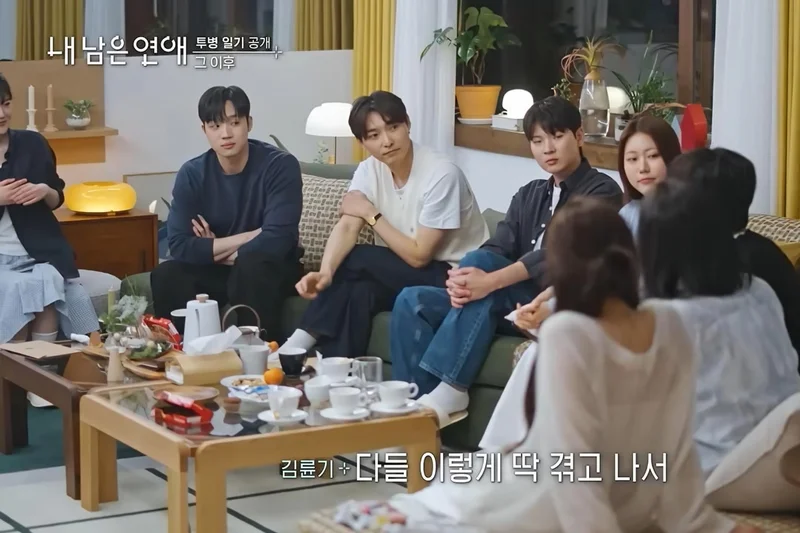
Korea’s dating reality boom has entered a new, uneasy chapter — one where terminal illness and artificial intelligence (AI) join ex-lovers, divorced couples, shamans and LGBTQ+ participants on television, raising fresh questions about how far romance entertainment should go.
SBS’s “Love Against Time,” which premiered Monday, follows young adults in their 20s and 30s who have received terminal diagnoses or survived life-threatening illness as they search for “the remaining love” in their lives.
In its first episode, eight contestants exchanged small talk and shy smiles, then carefully unfolded their “treatment diaries” — recounting stage 4 cancer, total gastrectomy and nights when they felt death approaching.
The show’s matching device, a “room of time,” gamifies scarcity. Each evening, participants receive 100 minutes, divided into 10 segments lasting 10 minutes each, to allocate to potential dates.
If two people send at least a combined 100 minutes to each other, they can earn a date lasting between 100 and 200 minutes. Time — once a private reminder of limited life expectancy — becomes the currency of romance on screen.
On Netflix, the show has already broken into the platform’s Korean Top 10 series chart, debuting at No. 9 and signaling interest from streaming audiences in its first week.
Overseas interest has been strong as well, with prerelease licensing deals struck with major regional platforms including Japan’s ABEMA, Taiwan’s friDayVideo and Hong Kong’s Viu.
Producer Lee Eun-sol argues the series is not centered on illness but on what comes after.
“'Love Against Time' is absolutely not a program centered on the narrative of battling illness,” she said at a press conference on July 31.
“Battling illness leaves a significant mark on one’s life, and the cast mentioned that without addressing it, moving forward is difficult ... We wanted young adults who have faced life and death battles to look at life and love anew,” she said, arguing the focus is on growth after illness rather than the illness itself.
MC Choi Ye-na, who survived pediatric lymphoma, told viewers she felt “strange” empathy for the cast, hinting at why some patients might welcome a space to meet partners who understand what they're going through.
Still, criticism has been sharp. Viewers and commentators worry that terms like “terminal” and “cancer battle” are being used as promotional hooks, and that the health histories of ordinary people could become differentiating traits in a competitive format, turning trauma into content.
Meanwhile, some viewers who initially dismissed the show’s teaser as “another attempt by broadcasts to chase shock value” said they came to understand the premise after realizing that people who share similar pain might genuinely want partners who can grasp their bodies and scars.
At the other end of the spectrum, SBS is preparing an artificial intelligence (AI) dating survival show that asks whether love requires another human at all.
In the new program, scheduled to air on Aug. 20, participants, including webtoon artist and television personality Kian84 as its main human contestant, form relationships with generative AI partners, chatting, sharing routines and gradually building what producers describe as real emotional responses that swing between excitement and disappointment.
The concept, reminiscent of the film “Her,” reflects the growing number of people worldwide who say they have formed emotional bonds with chatbots, and shifts the focus from technology to loneliness and the nature of connection.
Dating reality programs give viewers an all-knowing vantage point over how strangers interact, negotiate boundaries and fall in and out of love, often through multiple camera angles and carefully edited timelines.
While that god’s-eye view is part of their appeal and let audiences dissect micro-gestures and exchanges to debate who is sincere, who is manipulative and who deserves a second chance, the ethics of the omniscient gaze have become harder to ignore.