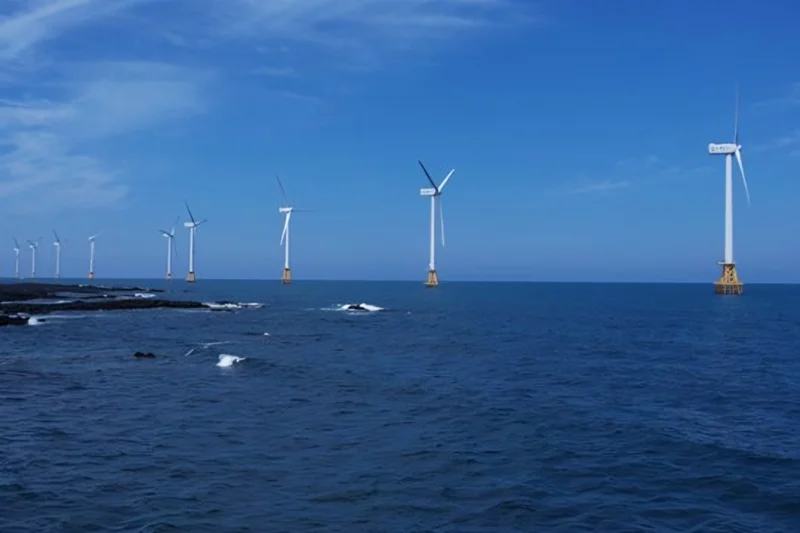
On an island globally renowned for its pristine coastline and sweeping offshore wind farms, the gusting sea breezes are doing more than just generating clean power — they are directly cooling the homes of those most vulnerable to Korea’s blistering summer heat wave.
Jeju Special Self-Governing Province said Friday it will deploy 600 million won ($440,000) from its municipal Wind Resource Sharing Fund to subsidize electricity bills for low-income households. From August through October, eligible residents — specifically low-income families with disabilities as well as grandparents serving as primary caregivers — will receive up to 40,000 won per month in direct financial assistance to offset high air conditioning costs.
The initiative offers a blueprint for environmental equity, transforming the financial windfalls of green energy into a social safety net. The revenue source, Jeju’s dedicated Wind Resource Sharing Fund, is financed through contributions from private wind farm operators under profit-sharing frameworks, alongside direct electricity sales from state-operated renewable facilities.
"Extreme summer heat poses an immediate threat to the health and safety of energy-vulnerable families," said Kim Nam-jin, director-general of Jeju's Innovative Industry Bureau. "We hope this electricity bill assistance brings tangible relief to those navigating a harsh summer, and we remain committed to expanding how renewable energy benefits are shared across our entire community."
While traditional energy assistance programs often focus heavily on winter heating vouchers or complex rebate cards, Jeju’s summer effort delivers direct cash transfers straight into bank accounts, removing administrative friction during the hottest months of the year. For residents facing banking restrictions, municipal staff assist with setting up protected accounts to ensure the relief reaches those who need it.
Jeju pioneered its renewable profit-sharing model in 2018 to ensure that the commercial exploitation of the island’s natural wind assets produced public dividends. Over the past eight years, the province has reinvested more than 4.3 billion won from wind revenues into localized energy welfare, aiding over 36,000 households.
This summer’s expansion reflects both rising seasonal temperatures and growing need.
Following local municipality reviews in late July, officials confirmed 5,325 households will receive support in 2026 — an 8.4 percent increase over last year’s enrollment. As climate volatility drives summer temperatures higher across the Korean Peninsula, Jeju’s model demonstrates how a transition to clean energy can simultaneously strengthen climate resilience for those living on the margins.
This article was published with the assistance of generative AI and edited by The Korea Times.