As asphalt softens under a relentless 39-degree Celsius (102 degrees Fahrenheit) heat wave in Seoul, forcing residents into air-conditioned subterranean malls, a small former coal-mining town perched high in the Taebaek Mountains is quietly offering something almost mythical in August: a breeze that actually feels cold.
Welcome to Taebaek, Korea’s undisputed summer sanctuary.
Sitting nearly 700 meters above sea level in Gangwon Province of western Korea, this mountain enclave operates on a seasonal logic that feels entirely detached from the sweltering peninsula below.
While the capital swelters in oppressive tropical nights that rarely dip below 28 degrees, twilight in Taebaek brings an almost shocking drop in temperature. Here, daily lows routinely fall to a crisp 15 degrees Celsius (59 degrees Fahrenheit) — a climate so distinct that locals routinely swap T-shirts for light jackets after sundown, and open-window sleeping requires a light quilt rather than an electric fan.
Yet even in Korea’s natural refrigerator, the realities of modern climate volatility are catching up with municipal administration.
Under local safety protocols, city hall is mandated to establish climate-controlled shelters and heat-protection measures for outdoor laborers whenever daytime highs peak near 32 degrees Celsius. To heat-dazed visitors escaping Seoul’s near-40-degree furnace, the notion of emergency heat protocols at 32 degrees feels less like a public health crisis and more like a gentle afternoon in late spring.
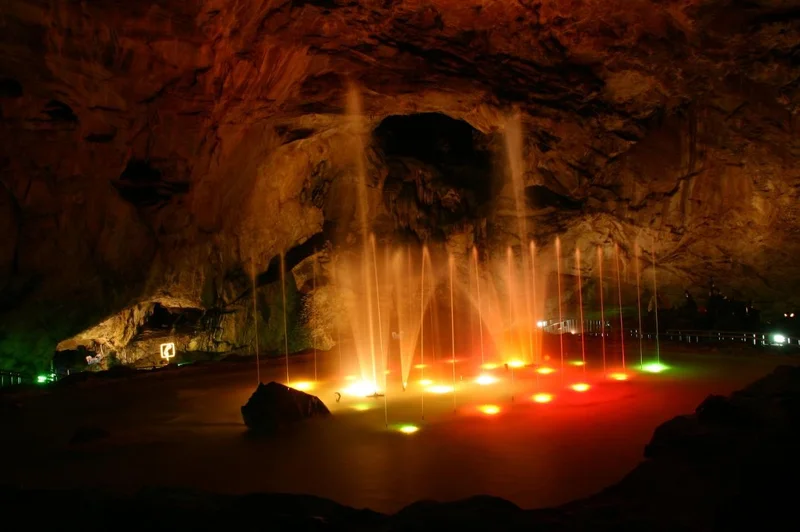
Nevertheless, Taebaek municipal officials are taking no chances when it comes to worker safety in the highlands. The city recently announced the completion of a dedicated, climate-controlled rest shelter designed specifically for field staff operating at Yongyeon Cave, one of the region’s premier natural tourist attractions.
Built with an 89.8 million won ($65,000) allocation from a specialized national disaster and safety grant, the facility is engineered to protect outdoor workers from thermal shock and heat exhaustion during peak summer operational hours, while doubling as a heated refuge during the bitter sub-zero mountain winters.
"While Taebaek enjoys a significantly cooler climate than the rest of the nation, field personnel working outdoors at tourist sites remain vulnerable to sudden temperature shifts and physical fatigue," said Lee Eun-sook, director of the Taebaek Facilities Management Office. "This dedicated shelter ensures our staff has a safe, temperature-regulated environment to recharge, directly enhancing both labor safety and operational efficiency."
Historically celebrated for its deep coal seams that fueled Korea's mid-century industrialization, Taebaek has successfully rebranded itself around its most precious modern commodity: elevation. Urbanites fleeing the concrete heat-island effect of the lowlands now fill local mountain cafes and highland parks, marveling at a rare Korean summer luxury — sweat-free afternoons and morning fog rolling through the pine trees.
In a summer where much of the nation feels like a humid sauna, Taebaek stands as a compelling study in contrasts: an alpine retreat where visitors flee the inferno below, and where municipal leaders build heat shelters for temperatures that the rest of Korea can only dream of.
This article was published with the assistance of generative AI and edited by The Korea Times.