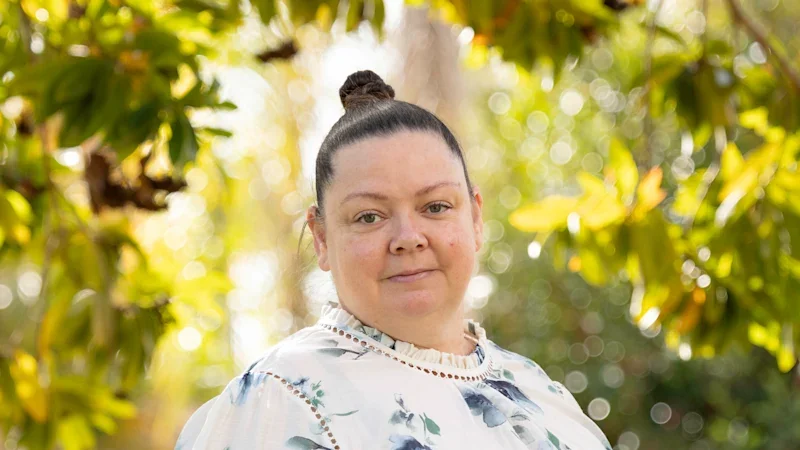
In 2012, Letisha Living was 35 and pregnant with her fourth child when she had an ischaemic stroke.
During three weeks in hospital, no one prepared Living for the possibility that her relationship with her body, and sex, would change because of the stroke.
“Nobody spoke to me about it, so I didn’t think it was something I should be talking about … For stroke survivors, identity and body image, those things that aren’t spoken about, have an impact,” Living says.
One in four people over 25 will have a stroke in their lifetime. It can cause a multitude of physical, mental and emotional adjustments that can change how a person’s body feels and functions. This can include erectile dysfunction, changes in libido, difficulty communicating or pain during sex.
“When you’ve had a stroke, you could have communication issues, or maybe your body parts don’t work,” says the now 49-year-old, who resides on the Gold Coast.
In her early recovery, all Living wanted was some information on what to expect and which member of her healthcare team to talk to about her sexual wellbeing.
That conversation never happened. Instead, she took to online forums, where she found a community asking the same questions.
“It was the place where I actually got acceptance about being a young person who had a stroke, so it was people saying the same thing; it was ‘oh my god, these people get it’,” Living says.
A research project to make a difference
Living says she fell through the healthcare gap, which inspired her to team up with Joanne Hilder, a researcher at Southern Cross University, on a research project to make conversations about sex part of the standard stroke rehabilitation.
“We know that sex is key to people’s quality of life,” Hilder says. “The Stroke Foundation recommends that while the patient’s in hospital or rehabilitation, a healthcare professional talks to them about their sexual wellbeing.”
The research compiled a list of the most-asked questions from Reddit to gauge what survivors were asking.
“The most common query is people wanting to know, is this normal? After a stroke, is it normal to have your sexual wellbeing impacted in any number of ways?” Hilder says.
This can also help train healthcare providers to be prepared for likely questions.
“We did a scope of all the literature to understand what the key barriers are. From our clinician perspective it’s not having enough time or the skill and confidence to discuss sexual wellbeing,” Hilder says.
It’s also a matter of addressing the issues with perception.
“There’s also people’s assumptions and biases about who gets to have sex, and often culture says younger people, able-bodied people, men, they get to have sex,” Hilder says. “But what about people with disabilities, or older people, or women?”
Matt Tilley, a clinical psychologist and lecturer in sexology at Curtin University, says sexual wellbeing is bound up in one’s sense of self and can support mental health. Still, it can be an awkward conversation topic.
“We’re raised in cultures, religions or families that may frame sex as taboo or private, and those early messages get layered onto experiences that may already be emotionally exposing and vulnerable,” Tilley says.
“So when we try to talk about sex as adults, we may be struggling with a lack of practised vocabulary and we may be bumping up against a deep-seated association between sexuality and vulnerability.”
This discomfort can be worsened by the “charged setting” when speaking with a healthcare provider.
“We’re often disclosing specific symptoms, dysfunctions or behaviours that touch on self-image and our sense of adequacy, which can trigger fears of being judged, pathologised or embarrassed in front of someone whose opinion carries real weight in our minds.
“Many providers themselves received minimal training in sexual health communication, so clients or patients sense that hesitancy or discomfort in the room and mirror it back,” Tilley says.
Talking about sex after a stroke
To approach a conversation about sex with a partner or clinician, it’s best when all parties are emotionally regulated.
Tilley also suggests preparing a structure for the conversation.
“It can help to prepare a short, direct opening line beforehand, like ‘I’ve been having some changes in my sex life since starting this medication, can we talk about it?’,” Tilley says.
Hilder agrees, saying the project isn’t asking too much of clinicians. She believes the findings have far-reaching impacts.
“All it takes is saying, ‘Your stroke can impact you in lots of ways, including your sexual wellbeing’, and maybe, ‘Here is a brochure’,” she says.
“We either die or we get a disability, and if we get a disability, like what a stroke can cause, then we are absolutely entitled to sexual pleasure and intimacy.”
National Stroke Week in Australia runs from August 3 to 9.
Make the most of your health, relationships, fitness and nutrition with our Live Well newsletter. Get it in your inbox every Monday.