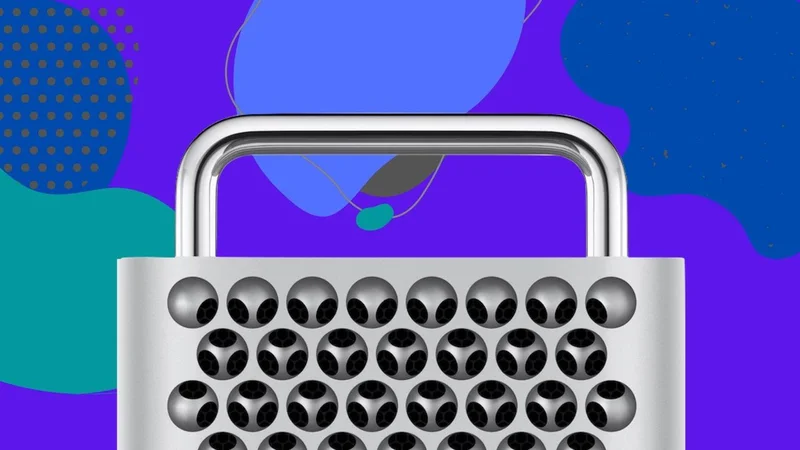
Apple unveiled the very first Mac Pro 20 years ago today, dubbing the computer “the ideal system for the most demanding user.” It was the last Mac to make the transition to Intel processors and put the final nail in the coffin of its PowerPC predecessor — quite a statement at the time.
In fact, the Mac Pro was so powerful that it doubled the performance of the Power Mac G5 that had launched less than a year earlier. Talk about earning that “Pro” moniker.
Many different iterations followed, but the one constant was the positioning. The Mac Pro was always the Mac you went for if money was no object but power was an imperative. It was, seemingly, a computer for the ages.
Or not, as it turned out. In March 2026, Apple officially discontinued the Mac Pro and said it had no plans for any future models. It was an ignominious end to the most powerful Mac Apple has ever made.
The very nature of the Mac Pro had always made it vulnerable. But that vulnerability proved to be fatal when combined with market conditions that even a giant like Apple is struggling to deal with today. When we look back at why the Mac Pro (just) failed to make it to 20 years old, there’s one very obvious culprit.
A dangerously niche product
Right from the off, the Mac Pro was designed to be used by people in challenging professions who valued performance above all else. It was made to complement the eye-watering powers of the best Intel chips of the day, which offered far more in the way of output than the PowerPC processors Apple had previously been using.
That meant that the Mac Pro was always a niche product that flaunted its raw power. That was the point of the machine, and although the general public liked to poke fun at its sky-high prices (remember the $400 wheels on the 2019 model?), its intended audience didn’t much care. When your work consists of high-grade film productions, artificial intelligence (AI) data crunching or similarly demanding pursuits, high prices are just the cost of doing business.
Sign up for breaking news, reviews, opinion, top tech deals, and more.
But that niche nature meant the Mac Pro was never going to sell on the scale of the MacBook Air or the MacBook Pro. Apple was always taking a calculated risk, determining that it was worth going after a small but loyal audience who craved the Mac Pro’s power and reliability — and would continue to do so over the years.
The problem, though, was that Apple often seemed to take these users for granted. The cylindrical model introduced in 2013 — nicknamed the “trash can” Mac Pro for its tubular shape — went years without an update because, Apple later admitted, the company had “designed ourselves into a bit of a thermal corner”.
Amazingly, the 2013 model wasn’t updated until six years later — a veritable lifetime in computing terms — when the final design iteration of the Mac Pro finally touched down.
The introduction of the Mac Studio also caused a massive problem for the Mac Pro. Its performance was just as good as the Mac Pro, if not better, yet it came in a smaller package that cost far less. The choice for many people was clear.
With the transition to Apple silicon, add-in extras like the Apple Afterburner Card were no longer feasible, meaning the Mac Pro’s only real advantage was its inclusion of a few expansion options like PCIe. But when you’re paying a minimum of $6,999, those returns make less and less sense when compared with a Mac Studio.
Apple had long walked the fine line between infrequent updates and outright abandonment, but still it kept chugging away at the Mac Pro, even after the Mac Studio’s arrival. Instead, it was an external force that finally killed off the Mac Pro — and forced a complete rethink from Apple.
Buried in the dark
On March 26, 2026, news emerged that Apple had discontinued the Mac Pro. The company explained to 9to5Mac that it also had “no plans to offer future Mac Pro hardware,” seemingly sounding the computer’s death knell for good.
The timing might have seemed strange, and it certainly seemed to come out of the blue. But with the benefit of hindsight, we can gain a pretty good idea of what happened and why Apple made the move when it did.
That’s because just three months later, Apple announced bombshell price rises that affected nearly every device it sold.
The Mac range was badly hit, with high-end devices like the Mac Studio coming in for particularly stinging increases. That device saw the single highest price jump by far, rocketing up by a painful $1,300 for the M3 Ultra model. The MacBook Pro, meanwhile, rose $300, the second-highest dollar increase of any Apple product.
These price adjustments weren’t made on a whim. No, they were prompted by the widespread component crisis that’s currently ravaging the entire computing industry.
Parts are getting more expensive by the day thanks to the overwhelming demand from AI data centers. Things are so bad that Apple CEO Tim Cook spoke out, calling the situation “unsustainable” and describing his company’s price increases as “unavoidable”.
When you see how badly pro users were affected by these changes, Apple’s decision to ditch the Mac Pro starts to make a lot more sense. If the Mac Studio now costs $1,300 more than it did previously — a figure that ballooned by almost 33% — what kind of wince-inducing costs would Mac Pro users be faced with had Apple continued to sell the device?
Going with that same 33% jump, we could have been looking at a Mac Pro that started at around $9,299. That’s a roughly 33% step up over the Mac Pro’s old entry price of $6,999. And we’re not even talking about any upgrades here — no beefed-up CPU or additional storage, not even any ultra-premium wheels. Just the base-level Mac Pro and nothing more.
When you think about it like that, it’s obvious why the Mac Pro was killed off just shy of its 20th anniversary. If Apple waited for the computer’s birthday, it would have been forced to escalate its price to frankly outrageous heights alongside all the other affected products.
And in the cut-throat world of business, that would have been a no-go considering the prices we’re talking about here. The Mac Pro was already selling in vanishingly small numbers. Boost its price by 33% — or even 20% — and its sales would have fallen off a cliff. The only thing a move like that would have generated is a torrent of bad press for very little positive return.
So in the end, Apple didn’t afford the Mac Pro a sentimental 20th birthday celebration. Given the ongoing memory crisis and its wide-ranging effects on the entire computing industry, there was no room to stand on ceremony. The Mac Pro was buried in the dark — before its price could become even more contentious.
➡️ Read our full guide to the best MacBooks and Macs**1. Best MacBook overall: **
MacBook Air 13-inch M5**2. Best budget MacBook: **
MacBook Neo**3. Best Mac: **
Mac mini (M4)**4. Best MacBook Pro **
MacBook Pro 14-inch M55. Best Mac for professionals
Mac Studio M4 Max
Alex Blake has been fooling around with computers since the early 1990s, and since that time he's learned a thing or two about tech. No more than two things, though. That's all his brain can hold. As well as TechRadar, Alex writes for iMore, Digital Trends and Creative Bloq, among others. He was previously commissioning editor at MacFormat magazine. That means he mostly covers the world of Apple and its latest products, but also Windows, computer peripherals, mobile apps, and much more beyond. When not writing, you can find him hiking the English countryside and gaming on his PC.