5 smartwatches you should buy instead of the Pebble Time 2
Aug 7, 2026 — 6:30 AM ET
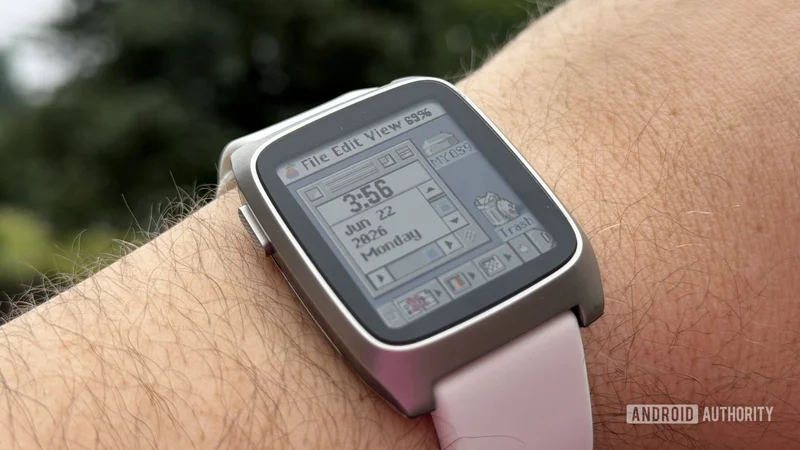
From its unique e-paper display to its amazing battery life, there’s a lot to like about the Pebble Time 2. Of course, it’s not for everyone.
The Pebble Time 2 is great if you prefer a minimalistic, lightweight device with great battery life and a retro vibe. Unfortunately, the watch isn’t the strongest when it comes to fitness features and sleep tracking. Likewise, the watch platform has limited app integration with other ecosystems compared to Garmin and others.
If you’re looking for more from your smartwatch, here are just five Pebble Time 2 alternatives that might be a better fit.
Would you rather have the Pebble Time 2 or a more conventional modern smartwatch?
Garmin Instinct 3 AMOLED
While it might share Pebble’s button-heavy navigation instincts, the Garmin Instinct 3 AMOLED is very different from the Pebble Time 2 in many ways. Unlike Pebble, it has deep health metrics, built-in GPS, and a vibrant display. It’s also a more ruggedized watch, which means it’s much larger, thicker, and heavier.
The Garmin Instinct 3 AMOLED is a better option if you’re looking for solid app integration and modern features like tap-to-pay. The watch feels much faster and more powerful than the Pebble, as that was never really the former watch’s goal anyhow.
Of course, all these extra features, like the stunning AMOLED display, come at quite the cost, literally. Starting at $449, the Instinct 3 is roughly double the price of the Pebble Time 2. That’s not the only downside here, either. If you use the always-on display, you’ll only get about seven to nine days of battery life, or even as little as 32 hours in GPS-only mode.
The good news is that with many of its sensors and other features turned off, the Garmin Instinct 3 AMOLED can last up to 18 days on a single charge. That’s not as impressive as the Pebble’s month-long battery claim, but this is also a much more feature-packed watch, even when you turn off some of its bells and whistles to preserve battery life.
Garmin Forerunner 70
The Garmin Forerunner 70 is priced much more competitively compared to the Pebble Time 2, retailing for just $249. Despite the low cost, the entry-level watch still feels much more like a full-featured experience compared to the lightweight Pebble OS. That includes Garmin’s solid app integration through the Connect IQ app store, as well as its heavy fitness-focused features and metrics.
Navigation is certainly quite a bit different here from the Time 2 or the Instinct 3, as you’ll navigate completely by touch. Battery life is also much worse than either option, as it averages around four to five days with the always-on display, or up to 13 days in standard smartwatch mode.
The Garmin Forerunner 70 is a great Pebble Time 2 alternative if you like Garmin’s OS and features, but were hoping for something cheaper and less massive. It lacks many extra sensors, such as multi-band GPS, but it is lighter and less bulky. The Forerunner 70 is still a bit wider than the Pebble Time 2, but it’s slightly lighter because it uses all-plastic construction instead of the Pebble Time 2’s stainless steel frame.
Amazfit Bip 6
My wife owns an Amazfit Bip 5 and swears by it for those who just want a basic entry-level device. The Amazfit Bip 6 has since replaced it, and it’s just as easy to recommend. At only $80, you’ll get a bright AMOLED with up to 14 days of battery life. You should still manage up to about a week with heavy use and always-on capabilities.
The Pebble Time 2 was always about providing an unintrusive, minimalist smartwatch experience, and that’s a pretty different result from Amazfit’s approach. The Bip 6 aims to deliver a fully packed smartwatch experience, including extra Bluetooth calling via the watch’s speaker. To pull this off, Amazfit also typically cuts out a few sensors, uses cheaper ones, or swaps to much cheaper build materials.
In a major departure from the Pebble, the Bip 6 watch is an all-touch navigation experience with built-in basic GPS and tons of advanced fitness focus profiles. Just don’t expect these features to be as reliable as you’d get with a watch that costs double or even triple the price. Still, you really can’t go wrong here if you want something that delivers the basics and a bit more while coming under $100.
Samsung Galaxy Watch 9
The Galaxy Watch 9 represents the absolutely latest from Samsung’s watch line, though in many ways it is quite familiar to its predecessor. It’s about 25% lighter and has a much bigger battery, but the only other major change is the inclusion of Raise to Talk, which lets you talk to your watch by simply raising it to your mouth.
If you want apps, the best third-party app integration, AI assistance, and other modern smartwatch features, the Samsung Galaxy Watch 9 is a wonderful recommendation. It has a much faster processor and feels much more like a “mini smartphone” compared to the Pebble Time 2, but that also means battery life is a massive weakness. You’ll typically get about one to two days on a single charge.
Samsung goes all in with AMOLED, while the Pebble Time 2 has a duller color e-paper display that’s easy to read in sunlight but admittedly not quite as nice to look at. Likewise, Samsung has tons of fitness and health features, though it’s not quite as specialized as a Garmin watch would be here.
Starting at $380, this is quite a bit more expensive than the Pebble Time 2, but that’s because their feature sets are night and day. Want to save even more? You can currently find the older Galaxy Watch 8 for around $300.
Google Pixel Watch 4
Like the Galaxy Watch 9, the Google Pixel Watch 4 is about as opposite as you can get from the Pebble. Google packs in a reasonably powerful Snapdragon W5 Gen 5, an ultra-bright display, and tons of great Gemini AI features into the mix. You’ll also find plenty of health features here, though many of its best fitness capabilities are locked behind a Fitbit subscription.
Pricing for the Pixel Watch 4 starts at $350, putting it in line with Samsung’s pricing. It’s obviously a lot more than the Pebble Time 2, but that’s to be expected, considering the feature differences. You’ll also find a few features that you won’t get with Samsung, like off-grid satellite SOS. This feature is great if you find yourself lost and have no signal otherwise. Loss of Pulse detection is another standout feature. If the Pixel Watch 4 fails to detect your pulse, it can automatically call emergency services for you.
Ultimately, if you want a full-featured modern smartwatch, the Pixel Watch 4 is the better pick if you prefer Google’s vision for Android over Samsung’s.