[Today’s Iran war post fired before finished. Please return or refresh this page at 7:30 AM EDT for a completed version]
Your humble blogger had wondered at the timing of Iran moving forward in its talks with Oman on management of the Strait of Hormuz, particularly since Iran made clear this had nothing to do with the MOU, which expires later this month. The Trump administration piled on aggressively, using it as another opportunity to engage in misleading messaging and successfully push paper oil prices even lower. One trope was that the Iran-Oman pact would lead to the opening of the Strait pronto. In fact, as Iran repeatedly explained, any normalization of traffic depended on the US meeting MOU conditions and now even more yet-to-be articulated ones (the formulation now is that adhering to MOU provisions is “necessary but not sufficient”). Another was that the US and Iran were negotiating, a regular Trump fabrication that Iran denied.
The publication of a draft Iran list of Strait of Hormuz management terms provided a harsh dose of reality. Iran plans to keep the Strait of Hormuz under tight control and use access as a vehicle for obtaining compensation for war damages. This is in a different universe than the US demand and financial market expectation that the Strait of Hormuz will someday be “open,” as in return to pre-war free and unrestricted transit, or at worse with nuisance-level fees:
Some additional detail on preliminary arrangements from Fars News via Sprinter Press on Twitter:
Iranian news agency “Fars” reports, citing sources, on the current agreements between Iran and Oman regarding the passage of ships through the Strait of Hormuz:
According to the general framework of negotiations between Iran and Oman, ships will enter the Strait of Hormuz through the northern passage and exit through the southern passage, located near the coast of Oman.
After a specified period, the movement of ships through both passages will cease, and all ships will pass through the central passage. However, entry of ships will be controlled by Iran, while exit will be under joint control by Iran and Oman.
The cost of ships passing through the strait will be determined by various fees for services provided. The amounts charged to ships depend on a number of factors, including the level of services provided. “Insurance, refueling of ships, environmental protection costs, and other similar services are part of the services for which ships must pay.”
It seems likely that the need for transit to continue on the Iran and Oman sides and then only later move to one channel with two lanes is that Iran did mine the former center route and that needs to be cleared.
Also consider that no US vessels will be allowed through the Strait. That includes the US Navy as well as contractor that might attempt to bring in weapons and material to restore the US bases in the Gulf. The 1982 UN law of the sea, UNCLOS, provided for “transit passage” of all ships, including military ones, through international straits like the Strait of Hormuz.1
Note that Reuters, citing only a single anonymous Iranian official, claimed that Iran is seeking fees of 5% to 7%. Reuters has a history of running bogus stories, and this one has the potential to further poison the well against the new Iran management by publicizing a nosebleed high fee level.
The draft legislative text says that every vessel will pay a fees. Note that UNCLOS does not allow for discrimination in fee levels, as in charging China less than the UK, which allowed its bases to be used in the war. Oman still seems to be trying to comply with UNCLOS. So perhaps Oman will levy environmental fees and other fees for services, which are permitted under UNCLOS. Environmental fees for tankers can legitimately be not shabby.
Some hot takes:
‼️ Far from being submissive to US demands, Iran is dictating harsher terms than ever before. https://t.co/8rTLlNhIih
— Will Schryver (@imetatronink) August 6, 2026
Mario Nawfal focuses on the Strati of Hormuz “deal” rumors, and in particular the potential fees, in a new talk with Douglas Macgregor. Both ponder what the US might do in response. Even though Nawfal points out that a big bombing campaign (or as big as the US can muster now) would lead to economic armageddon via retaliation on petostate energy assets, Macgregor explains, with particulars, how Trump has not been rational as far as this conflict is concerned. He thinks Trump going Curtis LeMay is entirely possible.
Sal Mercogliano gives a short overview from the shipping industry perspective. He concedes that joint Iran-Oman control would be a tad more colorable, as lawyers are wont to say. However, he reprises the moves of operators and insurers to bar the new Iran-Oman system to come into being. Most important is Lloyd’s of London has nixed providing war insurance riders to vessels that pay fees to Iran.
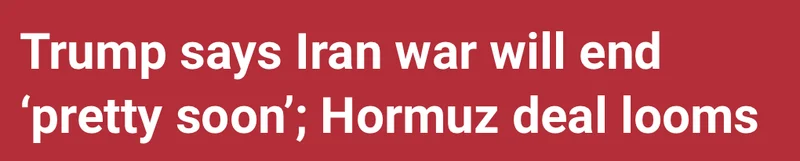
Disappointingly Aljazeera is still giving prominent play to Administration happy talk:
- US President Donald Trump says he expects the war on Iran to conclude “pretty soon”, adding during questions on high energy prices that he does not believe “they can go much longer”.
- The US, Iran, and Oman are approaching a temporary deal to reopen the Strait of Hormuz.
Again, notice the misleading positioning. The agreement is not to “reopen the Strait of Hormuz.” It is a precondition to any meaningful resumption of vessel movement. Iran has repeatedly stated that the US needs to deliver on its MOU commitments….and more.
The Wall Street Journal manages to one-up Aljazeera in pro-US posturing. Its only Iran war story on the landing page, and then below the fold, is Can Iran’s Diminished Diplomats Deliver a Hormuz Deal?. From the text:
Arab mediators working on a deal with Iran to reopen the Strait of Hormuz said they fear the country’s diplomats, who are under pressure from hard-liners in Tehran, lack the clout to guarantee compliance even if an agreement is reached.
The concerns, based on a pattern of faltering diplomatic efforts and conversations with Iran’s negotiators, come as top Iranian representatives in the talks are increasingly under fire at home from hard-line officials and commentators who argue they are cutting deals that sell the country short.
Mediators said the main negotiators, Foreign Minister Abbas Araghchi and Parliamentary Speaker Mohammad Bagher Ghalibaf, quickly embraced a plan presented this weekend to divide traffic through the Hormuz into an inbound lane near Iran and an outbound lane near Oman. They viewed it as an acknowledgment of Iran’s influence over the waterway. Talks became complicated when the Islamic Revolutionary Guard Corps demanded more explicit references to Iran’s role and clearer benefits, they said.
Even after mediators circulated a draft agreement midweek, the Revolutionary Guard, which exerts control over the waterway, continued to press for the right to charge fees for transits and to seek more explicit assurances that the U.S. will lift its blockade and sanctions on oil sales, they said.
It will be interesting to see if and when Iran commentators react to this story. It is completely contrary to what the Iran media and connected insiders have been consistently saying, that there are no talks now between Iran and the US and at best, the US is trying to stick its nose in Iran-Oman negotiations. An indirect indicator is a fresh entry on Aljazeera’s live feed, where Iran acknowledges that it is getting missives from the US but its bi-lateral deal with Oman comes first:
Iranian official signals ‘positive’ messages received from USWesam Bahrani, a journalist based in Tehran, says that amid reports that the US is running low on interceptors, the bigger question is what the status of talks with Iran is.
“The answer to that came from Deputy Foreign Minister Kerem Gharibabadi, who said that we are receiving some form of messages from the United States. He appeared to signal that these are positive messages, although he declined to say what sort of messages, or where those messages were coming from,” Bahrani told Al Jazeera.
“Iranians here, going forward with these negotiations, have to first settle the issue of bilateral talks with Oman, clinching a deal there, setting new boundaries on the Strait of Hormuz and from the Iranian side,” he added.
Given the givens as well as the conventions of diplo-speak, one might assume “positive messages” means “communications that do not contain threats”.
Reuters states that traffic in the Strait of Hormuz has fallen again from its already sub-par level. It also points out that Chinese and Indian refineries are particularly hungry for product. From Vessel traffic through Hormuz dwindles this week as markets watch Iran-Oman talks:
Shipping traffic through the Strait of Hormuz has dwindled to 33 vessels from Monday to Thursday this week, data showed, versus 50 in the week-ago period, as markets watched talks between Iran and Oman for signs of progress in reopening the key waterway.
Four vessels transited the strait on Thursday, including a very large crude carrier, Nissos Kea, carrying about 2 million barrels of Basrah crude loaded in Iraq, Kpler data showed.
The Reuters Power Up newsletter provides everything you need to know about the global energy industry. Sign up here.
Of the rest, two were laden with liquefied petroleum gas and one was a minor bulk carrier.Just six crude oil tankers have exited the strait this week, Kpler data showed. A total of 21 vessels have entered it so far, mostly via the Iranian route.
Several Chinese and Indian refiners have sought vessels this week to enter the strait and load crude at Iraq’s Basrah Oil Terminal, attracted by steep discounts, shipping sources said.
HFI Research is losing patience with the Trump nonsense:
Strait of Hormuz over the last 24 hours: Where is the fucking deal?
Uh oh, do you smell that?
Yeah, that's the smell of bullshit.
We went from Tuesday's "opening within hours" to Axios's Wednesday announcement to nothing.
Meanwhile, Iranian news appears to point out a deal… pic.twitter.com/KYlc6PR0El
— HFI Research (@HFI_Research) August 7, 2026
The rest of the text:
Meanwhile, Iranian news appears to point out a deal that looks nothing like a deal. It looks like a straight rejection of everything the US wants.
And even as the talks continue, the US continues to escort a convoy of tankers through the Oman lane. This time, Iranian forces fired missiles at the ships.
Nissos Keros turned off its AIS right before it transited the Oman lane and remains off. No UKMTO report, nothing. I guess we won’t know until satellite images show up.
So will there be a deal?
Well, with each passing day without an announcement, the likelihood of a deal diminishes. Trump’s own 48-hour timeline has gone and passed.
It’s now or never.
We are not alone in taking note of the sorry state of what passes for reporting:
I am keeping count of all media outlets and X accounts that so far have apologised for spreading an avalanche of fake news on Tuesday about the Strait of Hormuz
Total: ZERO
— JustDario (@DarioCpx) August 7, 2026
In fairness, Bloomberg is signaling a teeny bit of skepticism. The lead block on its landing page:
- US President Donald Trump said negotiations between Iran and Oman over the Strait of Hormuz are “moving along,” despite some Iranian lawmakers seeking to bar American and Israeli ships from the waterway.
- A draft bill under review by Iran’s parliament includes a demand for compensation from “hostile countries,” a proposed ban on cargo related to Israel, and a fee structure covering services like insurance and environmental costs.
- Arab mediators are concerned that Iran’s diplomats may not be able to guarantee compliance with any agreement reached, and tensions remain high, with Iranian naval forces striking “hostile targets” at the entrance to the strait.
An aside: we have suggested before that
Pakistan intermediaries have a pattern of way way overselling (in a US-favoring way) where US-Iran interactions stand
The negotiators often seem to be pulling on levers not connected to any machinery
And Iran is being a wee bit disruptive:
BREAKING: Iran has directly dismantled Donald Trump's Hormuz deal narrative by striking two oil tankers transiting under U.S. escort on the same southern corridor the president claims is part of a reopening agreement, according to Tasnim News.
The attacks reportedly targeted the…
— The Hormuz Report (@HormuzReport) August 6, 2026
Saudi exports to the US not surprisingly have collapsed:
According to World Population Review, in 2024 Saudi Arabia was the third biggest oil exporter to the US, so not shabby:
Larry Johnson points out that the world is not getting back to the old normal thanks to damage to Gulf state petroleum assets. From Even If the Strait of Hormuz Opens, the Damage to the Persian Gulf Energy Infrastructure is Enormous:
Even if a deal is struck, it will be months, possibly years, before the Gulf arabs return to normal because of the damage to the equipment that pumps and stores oil.
The manufacturers and the people that do the warranty work, as well as the repair work on the oil and gas platforms, power plants pipelines, compression stations, are primarily US contractors. The personnel doing maintenance and repair of the oil and LNG infrastructure are 100% tied to the US military… It is a symbiotic relationship.
Many of the warehouses where equipment and parts for repairing oil terminals and pipelines are stored also have been destroyed. Second, among the warehouse that are still intact there are limited amounts of spare parts. Third, the trained maintenance personnel that worked on the oil and gas platforms and power plant pipelines have, along with the US military, vacated many of these facilities. The lack of spare parts and the evacuation of US contractors will create additional delays in trying to return the oil and gas platforms to normal operation.
Even if everything opened up today and traffic was flowing through the Strait of Hormuz, the repair and maintenance work requited to get the systems functioning again is going to be delayed by weeks and, quite possibly, years. Some of the infrastructure, such as Qatars LNG facility ast Ras Laffen, will take at least three years to rebuild and return to full operations.
Here’s the country breakdown of the damage incurred so far:
On the Ansar Allah attacks on Saudi forces, the most lethal in years. The first tweets describe the initial attack:
⭕️ ⚡️The Yemeni Armed Forces (AnsarAllah) fired Ballistic Missiles & Drones at Saudi mercenaries gatherings in the areas of Al-Rawik, Al-Ubour, Al-Thaniah, and other camps belonging to 1st and 3rd Emergency Brigades, claiming hundreds of casualties. – Statement https://t.co/QmxAHMXOXX pic.twitter.com/a2LSSqnkt2
— MenchOsint (@MenchOsint) August 6, 2026
According to unconfirmed sources,
the missile strike occurred while the mercenaries were gathered to receive their monthly salaries from Saudi officers at the camps.
They were ordered to come to the camps to be prepared for the attack on Sana'a and to receive their monthly…
— Ahmed 🇾🇪 Zaid (@Ahmed175143) August 6, 2026
There are videos and photos that have been published showing Saudi mercenaries under the rubble, their bodies lying on the ground, and the wounded screaming, but I have not published any videos or photos. …
I couldn't publish them , they are Yemenis, and what happened to them…
— Ahmed 🇾🇪 Zaid (@Ahmed175143) August 6, 2026
This video gives a sense of the wider significance of this operation:
Ansar Allah has launched new attacks:
Yemeni army launch a new wave of attacks against Saudi-backed forces
IRNA and the Tasnim news agency reported a new wave of ballistic missile strikes by the Ansar Allah movement against the eastern provinces of Yemen – Marib and Hadramaut.
Videos circulating online show direct… pic.twitter.com/LF6cafJVw4
— 𝕊𝕡𝕣𝕚𝕟𝕥𝕖𝕣 𝕻𝕣𝕖𝕤𝕤 (@SprinterPress) August 7, 2026
Another sighting:
🔺 Fresh Ansarallah attacks are being reported against Saudi-backed forces in Marib and Hadramout, according to Tasnim News and monitoring accounts. Circulating footage purports to show strikes on Seiyun Airport in Hadramout.
Marib, east of Sana’a, is the Saudi-backed… https://t.co/8tilemwiyF
— Drop Site (@DropSiteNews) August 7, 2026
1 Contrast the Iran provisions with this crude layperson summary of the former transit regime. The Strait is an international strait, per UNCLOS, which is customary international law. It provides for what is called transit passage. That means s all maritime vessels—commercial or military—and even aircraft have the right to rapid, uninterrupted passage through the Strait of Hormuz.
Iran signed but did not ratify UNCLOS.
Iran wants to enforce a regime called innocent passage, which is when transit does not harm the peace, good order, or security of the coastal state. So with innocent passage, Iran could bar military ships as well as ones of hostile states.