IRCS, ICRC underscore need for strategic partnership roadmap
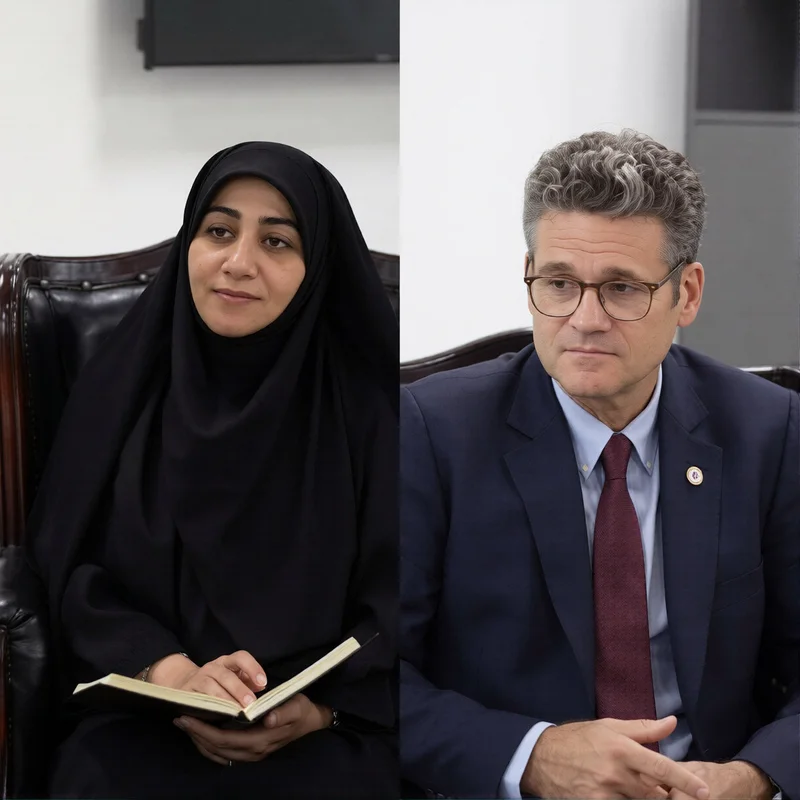
TEHRAN – The Iranian Red Crescent Society (IRCS) deputy director for international and humanitarian law affairs, Razieh Alishvandi, in a meeting with the new president of the International Committee of the Red Cross (ICRC), Stephan Bonamy, has highlighted the need to enhance cooperation to a long-term strategic partnership, proposing the development of a roadmap for collaboration.
The official also called for increasing support for relief workers, expanding technological cooperation, and utiliing extensive capabilities of the IRCS in responding to regional and international crises.
Highlighting the capabilities of the IRCS, including its vast search-and-rescue network, land and air fleets, medical and rehabilitation centers, helal (crescent) houses, massive volunteer network, training and production capacities, she stated that the IRCS is one of the most capable national societies in the region and is prepared to share its experiences and resources with other national societies.
Referring to over 200 rehabilitation centers, pharmaceutical, and medical facilities affiliated with the IRCS operating in the country, and the IRCS capabilities in manufacturing medicines, medical equipment, and relief supplies, Alishvandi proposed expanding collaborations in technology transfer, product standardization, and the utilization of the IRCS production capacity within supply chains and international humanitarian operations.
She also voiced the IRCS readiness to serve as a regional hub in fields such as rehabilitation, International Humanitarian Law training, Chemical, biological, radiological or nuclear (CBRN) training, crisis management, Restoring Family Links (RFL), and mass gathering management.
The official stressed the need to benefit from modern technologies, noting that the use of artificial intelligence in crisis management, hazard analysis, satellite image analysis, humanitarian data management, operational information systems, and digital crisis management can bring about a significant transformation in the quality and speed of incident response.
Moreover, Alishvandi called for the implementation of joint projects in mental health and psychosocial support (MHPSS), the training of specialized personnel, the development of post-crisis intervention protocols, and cooperation during regional crises.
Highlighting the development of regional cooperation regarding crisis preparedness and response, Alishvandi said developing joint emergency response scenarios, conducting collaborative exercises, pre-positioning relief supplies, and strengthening regional coordination can enhance the international movement’s preparedness for future crises.
The official also urged the ICRS to play a more constructive role in safeguarding civilians and rescuers during the conflicts.
“Support for aid workers must become a key pillar of joint efforts. Joint protection programs, specialized training on mission security, the documentation of attacks against relief personnel, and the exchange of international experiences should be put on the agenda,” she noted.
For his part, Bonamy underlined sustaining and developing the ongoing collaboration between the two organizations, lauding the ICRC the IRCS capabilities and valuable experience in relief operations, pre-hospital care, rehabilitation, international humanitarian law, and humanitarian crisis response. The official announced the ICRC willingness to expand technical and specialized cooperation between the two parties.
Expressing sympathy with the Iranians, he noted that: “We are aware of the difficult conditions people have faced in the aftermath of the war.” The ICRC will strive, within the framework of its humanitarian mandate, to effectively cooperate with the IRCS to alleviate human sufferings.
Offering condolences on the martyrdom of the relief workers, he expressed sympathy with their families and the Iranian nation, highlighting that: “The loss of relief workers while carrying out humanitarian missions is a matter of deep concern to us. Red Cross and Red Crescent societies are members of a family. In such circumstances, they must stand together and support one another.”
Referring to the future plans of the ICRC, Bonamy said that cooperation with the IRCS is a cornerstone of the committee’s activities in the country, adding that enhancing preparedness to face potential crises requires close cooperation, ongoing coordination, and joint programming.
The ICRC is prepared to expand its cooperation with the IRCS in areas like search and rescue, pre-hospital services, psychosocial support, rehabilitation, the promotion of mental health for relief workers and disaster victims, and specialized training.
Referring to the economic and livelihood impacts of the US attacks on residents in southern parts of the country, particularly fishers, the official voiced the ICRC readiness to support assistance programs aimed at restoring the livelihoods of those affected.
MT/MG