SpaceX’s IPO this summer created an estimated 4,400 new millionaires overnight, and Anthropic and OpenAI are expected to soon follow. Goldman Sachs projects a historic year for IPO proceeds, driven by the AI boom. The question is: How much of this enormous wealth will trickle down to the people who need it most?
We’ve watched this moment take shape from different angles — one of us building and scaling technology companies, the other leading a nonprofit that provides career training to help people move into the middle class. From both of these vantage points, we see a country where costs are rising, services are stretched thin, and the American dream is further out of reach.
AI wealth can help solve these problems. But there’s an alarming misapprehension circulating in tech circles: that the nonprofit sector lacks the talent, speed, and ambition to deploy capital at this scale. Techies who came up in the “move fast and break things” era want to apply that same ethos to philanthropy, rebuilding the sector in tech’s image.
The truth is we don’t need a whole new infrastructure to make the best use of new AI wealth. There are 1.8 million nonprofits operating in the U.S. right now, deploying roughly $600 billion in charitable giving each year to make peoples’ lives and communities better. This is a sector that’s helped solve civilizational challenges like eradicating smallpox and lifting more than a billion people out of extreme poverty. Contrary to perceptions, nonprofit workers aren’t well-meaning amateurs waiting for tech to save the day, but savvy operators with deep community knowledge and relationships that can’t simply be replicated.
Nonprofit organizations have survived decades of public funding cuts, shifting policy priorities, and economic volatility — and, like a lot of people who’ve come up in the tech sector, they’ve learned to innovate, adapt, and do more with less. Give them more to work with and they’ll accomplish even more.
We don’t need to speculate about whether nonprofits can absorb transformational investment. MacKenzie Scott has given more than $26 billion in large, unrestricted gifts to existing nonprofits since 2019. The Center for Effective Philanthropy studied the outcomes over three years and found that 90% of recipients reported stronger financial positions, expanded programs, reduced staff burnout, and increased capacity to innovate. The early concern that nonprofits couldn’t absorb capital at that scale turned out to be unfounded across more than a thousand organizations.
The assumption that nonprofits are too set in their ways to respond to a rapidly changing world doesn’t hold up either. The best nonprofits operate like any tech startup: reading market conditions and pivoting to where the need is greatest. This is partly out of necessity, as nonprofits, more than any other sector, need to be constantly responsive to the shifting winds of community need and donor focus. Many have to raise their entire operating budget from scratch every single year — a pressure that breeds operational discipline and adaptability.
Workforce development is where this plays out most visibly right now, and where AI wealth has perhaps the most responsibility. Demand for career training programs has increased as jobseekers navigate a rapidly changing labor market. As generative AI restructures employment, workforce nonprofits continue to innovate. For example, at JVS Bay Area, we’ve sunsetted job training programs in tech and developed new programs in sectors more resistant to automation, like healthcare and the skilled trades. We’ve integrated AI skills across all our training programs to help jobseekers stick out in a competitive market. Amid all the uncertainty of 2025, our program graduates were still able to secure meaningful employment within less than a month, on average. Nonprofits like us don’t need to invent a new way of putting capital to work, we simply need more funding for programs that are already proven effective.
There are countless other nonprofits across the country with a track record of doing this kind of nimble and effective work on a range of urgent social issues. What they share is a funding gap that AI philanthropy could close.
To the next generation of tech philanthropists, our ask is simple: Before you conclude that the nonprofit sector needs rebuilding, go look at what’s already there. Meet the CEO of a workforce development organization. Visit a community health clinic. Ask an experienced program officer at an established foundation which organizations they’d fund if they had twice the budget. Join the board of a nonprofit that is passionately focused on a cause you care about.
The nonprofit sector has spent decades proving what’s possible on a fraction of what it needed. Imagine how much more they can accomplish with new AI wealth behind them.
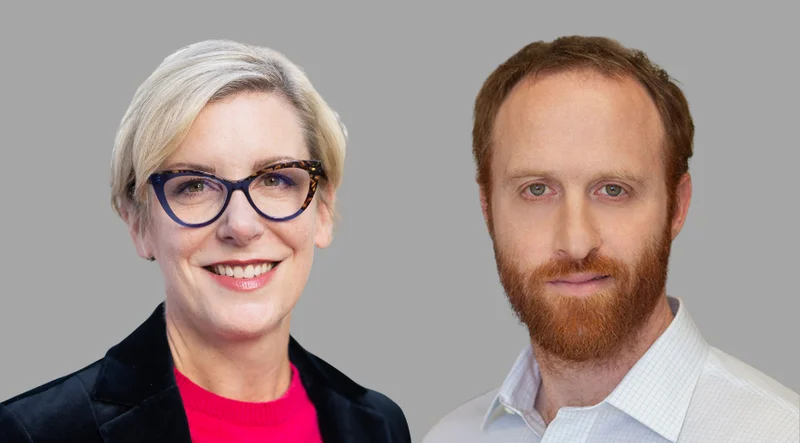
Max Simkoff is the founder and CEO of Doma Technology and board director at JVS Bay Area. Lisa Countryman-Quiroz is CEO of JVS Bay Area.
The opinions expressed in Fortune.com commentary pieces are solely the views of their authors and do not necessarily reflect the opinions and beliefs of Fortune.
breaks the traditional barrier between audience and newsroom. The show transforms
Fortune DailyFortune’s trusted reporting into actionable, conversational, and entertaining insights for an emerging class of business leaders.
Watch here.