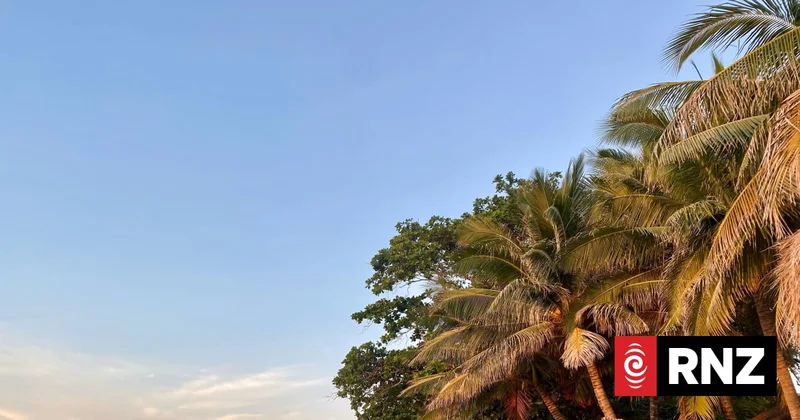
Timor-Leste: The new tourism frontier
For the adventurous traveller, finding somewhere genuinely undiscovered has become almost impossible. Modern travel, globalisation and social media have left few blank spaces on the map. One country, however, has so far escaped mass tourism: Timor-Leste, a peaceful nation with a complicated history, a distinctive culture and a special bond with New Zealand. Anna Thomas reports.
Timor-Leste, or East Timor, is a name most New Zealanders would recognise but few could probably locate on a map. The most direct route is by flying to Bali, then taking a two-hour flight to the capital of Dili. But while Bali attracts 16 million visitors a year, Timor-Leste receives just 26,000, even then, most of those are ex-pats or business travellers.
Change, though, is arriving quickly. Since joining ASEAN in October 2025, development in this small South East Asian nation has accelerated. New hotels and restaurants are opening, roads are being sealed, and the international airport is undergoing a US$240 million upgrade.
With Timor-Leste due to chair ASEAN in 2029, a large convention centre is under construction on Dili's waterfront and thousands of political leaders, media and visitors are expected.
Roughly the size of Hawke's Bay, the country has a population of 1.4 million. It has a rich and complex history marked by colonisation, conflict and occupation but as 'independent' Timor-Leste, its history is still being written.
It remains the poorest country in South East Asia, with almost half its people living below the poverty line. Ironically though it is also one of the most expensive countries with the majority of its goods imported. While oil and gas reserves remain the country's main revenue earner, tourism is increasingly seen as a potential golden goose.
A Kiwi connection
Diane Clayton has been living in Timor-Leste for a year. After 10 years with Tourism New Zealand, she and husband Tristam decided they needed an adventure. She signed up with Volunteer Service Abroad with the plan to help Timor-Leste develop eco-tourism. While the well-travelled couple were given a lengthy brief before arriving, she says nothing can quite prepare you.
"It's really quite a crazy place", she laughs "especially the lack of infrastructure, the heat, and the pollution. But very quickly we were made to feel at ease because the Timorese are so friendly."
Clayton has been working alongside tourism operators sharing her knowledge on everything from marketing to basic customer service. She explains that very few of the locals have experienced being a tourist themselves sowhen you're advising on hospitality you're starting from scratch.
And while health and safety wasn't part of her job description, Clayton discovered first hand, it needed to become a priority.
"On day two of my job I was asked if I'd like to join a group of Australian tour operators heading to Atauro Island."
The island is roughly 36km from Dili, about 1.5 hours by a small boat, and it has one of the world's most biodiverse coral reefs. The waters around Timor-Leste also have at least 24 species of whales and dolphins living or travelling through them. Clayton says the weather wasn't ideal and from the beginning she had a bad feeling.
"Because of the wind and swells the trip was on-again off-again but the call was made to proceed. There were 14 of us in a 10 person boat with no lifejackets.
The trip over was OK but when we arrived visibility wasn't good enough for snorkelling. So we had lunch and decided to return to Dili. However, halfway across the channel, the boat just stopped. We had run out of gas."
The crew couldn't speak English and refused to use the boat radio but luckily there was some phone coverage. "Calls were being made but because of the deteriorating weather no one wanted to bring out extra fuel. As the hours ticked by, and the seas got rougher passengers were scared and a few of them were throwing up.
Finally, after waiting four hours, help arrived." Clayton told me it was the first time she had ever feared for her life.
As a result of that incident, Clayton has been working on health a safety protocols. But like most things in the country, developing industry standards is a work in progress.
VSA volunteers like Clayton have been making a small but important contribution in the tourism sector. Clayton's predecessor, Jonty Crane, spent a year producing tourism videos and articles that remain the country's most visible promotional material online.
Australian expat Barry Hinton, who owns 'Barry's Place' one of Atauro Island's original eco-resorts credits Crane with doing more for Timorese tourism than anyone else. Hinton arrived in 2001 to teach English, later settling on Atauro and marrying locally.
Up to 85 percent of guests at 'Barry's Place' are Australians who are drawn to the island's marine environment.
Hinton employs 30 local staff, doesn't advertise and books entirely through WhatsApp. His main frustration is bureaucracy. "The laws are changed all the time," he says.
"They (government) want investment, they want tourism, but they don't get how difficult they've made it." Still, he stays for the lifestyle. "It's just the rawness and the beauty of a very simple life and meeting guests who want an ethical holiday."
The next generation
'Friendly' and 'resilient' are the two words most commonly used to describe Timorese. Despite the poverty, the people of Timor-Leste are always smiling.
Mateus Varela Belo de Almeida is a 24-year-old tour guide from Dili. He is sharp, enthusiastic and hungry to learn. He started work in a car rental firm and when customers kept asking for recommendations of what to do and where to go, he saw an opportunity.
He's been running his business MaunTimor Guide for three years.
Varela Belo de Almeida says because Timor-Leste is an expensive country, it's not really suited to backpackers. Most of his clients are Australians and some New Zealanders, who want to learn more about the country where many of their soldiers served first in WWII and then again from 1999 as part of a multinational force restoring peace to the newly independent country.
Varela Belo de Almeida says an ideal itinerary is about six days; a couple of days in Dili, visiting Christo Rei (a smaller version of Rio's Christ the Redeemer), Santa Cruz cemetery, markets and museums, then Baucau to see Portuguese architecture, and then up to the remote and pristine Jaco Island.
He says getting around the island can be challenging. "The roads can be dangerous at times and you could travel for hours only to discover the guest house you booked has increased the price, given away your room or has run out of food."
While guiding can't support him full time yet, he says the knowledge and expertise he's received through Clayton has been invaluable. "I have learnt so much in her workshops on story-telling, hospitality and customer service, and especially marketing. I'm hoping as a result business will grow."
As Clayton's one year posting comes to an end she says volunteering gives you a rare insight and access to this young nation.
She is looking forward to returning in a few years to see how the country has developed. And for those considering visiting Timor-Leste, Clayton has some advice. "Come with your eyes wide open. Have low expectations and you'll be delighted."
Anna Thomas travelled to Timor-Leste with assistance from Asia New Zealand Foundation