Country Life: Three native nurseries, a fridge full of seeds
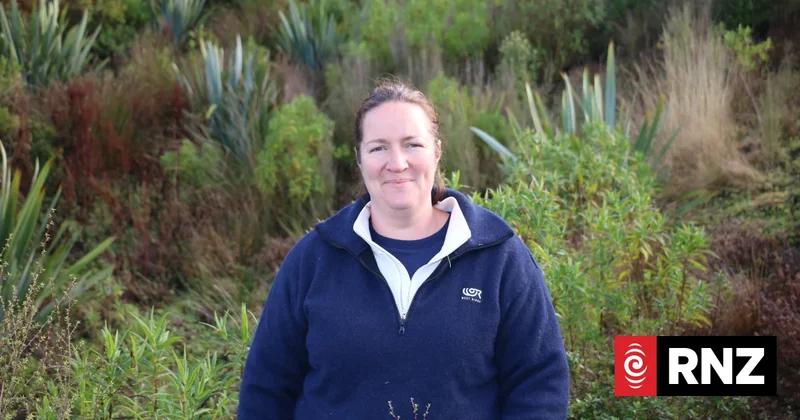
Clifton farmer Sandra Campbell tries not to take life too seriously, so there was room to experiment when she began planting the gullies on her dairy farm with native shrubs.
"Inevitably this improves water quality because no one's putting stock in here ... it should improve bird life at some stage. There's offsetting of emissions. There's all sorts.
"[But] we've just had a heap of fun along the way. We've met a heap of people, and it's made farming a little bit more exciting."
The farmer with the seed fridge
What began as an attempt to beautify some land has grown into three nurseries, a fridge full of seeds, and a blue Bedford named Beryl.
She's documented her and husband Chris' "water care journey" on Instagram, taking viewers through the challenges and triumphs of harvesting native seeds and then growing them.
She was inspired to try her hand at growing seedlings through her role as a catchment group facilitator.
"Covid happened and we were not in the financial position to buy lots of trees, so I figured that I could give it a go," she said.
"We started with one nursery, and then it extended to the other side of the shed and became a second nursery, and then it ended up in the tractor yard as a third nursery.
"We now grow about 4000 trees in the nursery on-farm as a hobby."
There is a DIY spirit about the nursery: seedling houses made from pellets, old water line and windbreak, a garden sprinkler and timer setup found on Temu.
Even the storage for the foraged seeds - the hand-collected jewels of the Campbells' operation - is a repurposed fridge.
"You used to come in here and it just smelled like mice. Granny's fridge broke down, so it got moved down here."
Containers full of southern rātā, ake ake (Dodonaea viscosa) and more seed sit along paper bags and pillowcases of mixed seeds, and a tub of unprocessed mānuka branches.
"Seed collecting takes over the shed normally, and also sometimes my house, because I'm drying a lot.
"There's a period of time between December to April that I'm very busy seed-collecting; I try and make weekends away to Te Anau or the Catlins so I can collect seed, and everybody I know who has ever holidayed with us has gotten roped in to helping."
Some seeds get potted for the nursery, to be hand-planted in the gullies, or donated to other farmers who want to start their native planting journey.
The seed mixes were used for drone seeding, which was not commonly done when planting natives, but Campbell said it was cost-efficient.
"You could solely drone seed and not plant. If we did that, we could probably almost do it for free, bar the first drone visit.
"But it's quite patchy... so it works well with the planting."
Drone seeds take time to "strike", some popping up years after they've been spread, but the plants that want to grow will, Campbell said.
"I just think nature sorts that out. If I plant something that shouldn't be [there], it'll die and then we try something else.
"And when you're growing it yourself, you get a bit less picky about things dying because you just haven't [gone] and spent $10 on a tree for it to die."
Aside from efficiency, Campbell said drone-seeded plants often passed the hand-planted ones, likely because they had not had their root structure handled.
She said six hectares of gully had been planted - but there were many more to go.
"It's satisfying to see it grow and improve the farm. It's like putting up a new fence if your fence line's been awful."