Sign in. It’s quick, free and it’s up to you.
An account is an optional way to support the work we do. Find out more.
(Seo alt ónár bhfoireann Gaeltachta. Is féidir an bunleagan as Gaeilge a léamh anseo)
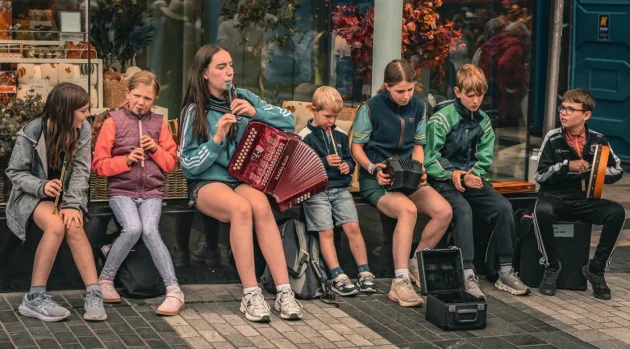
IT IS NOW estimated that Belfast business people could reap a dividend of up to £100m (€117m) from Fleadh Cheoil na hÉireann taking place in the city this week, with crowds far larger than anticipated attending events in the harbour city.
The forecast before the Fleadh got underway on Sunday was that there would be 800,000 visitors to the city during the Fleadh, which was the basis for the previous income projection of around £53m (€60m).
More than 170,000 attended the official opening — double the number that came to the opening day of the Fleadh in Wexford last year. By Tuesday, 350,000 had already come to Belfast, adding to the hope that the crowd going north for the great traditional music festival will far exceed what was predicted.
According to Donal O’Connor, founder and chief organiser of the Belfast Tradfest – which concluded as the Fleadh began – it is possible to expect 1.2 million visitors to the city over the eight days, which could generate £100m for the city’s business sector.
The authorities have similar confidence, though they have not yet put a figure on the income the festival will generate. Caoimhe Archibald, Northern Ireland’s economy minister, believes there are positive signs that income will exceed the £53m projected from the festival.
Speaking on BBC Northern Ireland, Archibald said she believed more people than expected were coming to enjoy the Fleadh and “we’re thinking it will be more than that”.
“We’re not putting a figure on it yet — all of that will come in the post-event assessment.”
The reason the commercial income from this festival is significant is that it highlights a ‘frightening’ contrast, according to O’Connor, between the commercial income and the support traditional music and the arts in general receive from the State in the north, compared with what major events like the Fleadh Cheoil and the likes of the British Open Golf Championship receive from those same authorities.
“Last year Belfast Tradfest received £20,000 (€23.3k) from the City Council and it is estimated that generated £5.1m (€5.95m) for the city,” he said.
Belfast City Council has invested between £5m and £6m in the Fleadh and the return will be between £50m and £100m – the ratio between investment and economic return is better at Tradfest.
According to many in the north, it was the success of Tradfest that paved the way for the Fleadh Cheoil to come to Belfast – it had only been in the north once before, in Derry in 2013 – and O’Connor hopes there will be a lasting dividend for traditional music in the city as a result of the Fleadh being there this year and, again, next year.
“Belfast has demonstrated that there is enormous appetite for traditional music, song, dance and culture – the heritage and the momentum show what Belfast can achieve when our city, our cultural organisations, our public institutions, tourism agencies and communities come together working with ambition.”
He believes a traditional music festival – one of the largest of its kind in the world — could be the lasting legacy of the Fleadh in Belfast.
At present, however, the arts sector – the community on which the authorities rely to create the positive images as well as the economic dividend – is severely underfunded.
As O’Connor puts it: “The Arts Council of Northern Ireland receives just over £10m (€11.66m) – the Abbey Theatre in the south, a single organisation, receives around €9.5m – the contrast is frightening.”
The situation is even worse at present given that there is no agreed budget from the Northern Executive – the Arts Council of Northern Ireland has only received 25% of its annual grant, £2.53m (€2.95m) from the Department of Communities. Even if the Council were to receive the full grant, it represents a cut as it does not account for inflation.
“It would be better for the ministers in the Executive to be sitting around the table agreeing the Budget rather than running around the Fleadh looking for photo opportunities,” he said.
The Fleadh Cheoil is about more than money, however, in that a rare sense of unity has been created on the streets of the city among people attending and playing at music sessions and among the musicians and their followers. Traditional musicians can be seen on the same stage as loyalist bands, the bodhrán being played in time with the Lambeg drum.
Attending the Fleadh this week, Taoiseach Mícheál Martin said it was a wonderful example of a cross-community celebration of music and said he was looking forward to attending events such as the Bands Forum and Ceol na Cruinne, an event celebrating the diaspora.
He referred to the support the Shared Island Policy was giving to all-island cross-community projects such as the all-Ireland music archive.
The richness that is brought to light through working hand in hand like this is wonderful. One loyalist musician told me last year that communities will filter their music through their own traditions but we are all drawing from the one well.
The Fleadh’s highest honour was awarded to traditional musician Gary Hastings, a retired Church of Ireland minister originally from east Belfast who now lives in Dalkey. He was named Ard-Ollamh (Grand Professor) of Fleadh Cheoil na hÉireann at an event in the city during the week.
Speaking to The Journal, the musician said he was enormously taken with the Fleadh in Belfast. “The city is packed, it’s teeming with people everywhere and money is being made — there’s plenty of money there,” he said.
“The cleverest thing they did before all this started was that they went and talked to the Unionists and to everyone in a way that meant everyone was on board with this.
“There’s a stage outside City Hall and there are Lambeg drums and pipe bands, fiddlers and fife players and every kind of music all mixed up together.”
He said it was difficult to measure what impact the Fleadh would have on Unionists when the celebration was over.
“Unionists believed that traditional music was a Catholic, Nationalist thing – which it is not – and now they will see that it is simply good music and everyone is free to take part in that music and the music of their own background and to listen to us.
“With God’s help, that will be the legacy.”
He also said it was important that people from the south – who had never visited Belfast before – were going north for the Fleadh.
By this point, with the city full to the brim, there is barely a bed left for overnight accommodation between now and the end of the Fleadh on Sunday night.
But if you want a taste of the music and the craic on the streets of Belfast, you can get it from the live broadcast on TG4 between 9.30pm and late tonight, tomorrow and Sunday. The broadcast got off to a tremendous start on Thursday night with bands like The Hot House Flowers and Tim Edey performing.
According to TG4 Fleadh26 presenter, Doireann Ní Ghlacáin, Belfast has added a spirit to the festival she has not seen in other venues.
“I’ve been to a lot of fleadhanna cheoil, both as a TG4 presenter and as before that when I went myself for the craic but, without a doubt, the truth is I’ve never been at a Fleadh that the spirit has been so wonderfully positive as you walk out on the streets,” she said.
“It’s incredible and everybody is saying it, there’s a great spirit about, a massive effort has been made, there’s a great variety of events, heaps of sessions happening every where but also raves, art exhibitions and different gigs and, of course, Féile an Phobail/the West Belfast Festival is also on.”
And finally – book your accommodation for Fleadh 2027 and Belfast Traditional Music Festival 2027 (Belfast Tradfest) now!
The Journal’s Gaeltacht initiative is supported by the Local Democracy Reporting Scheme.
This article was originally written in the reporter’s native Irish and has been translated to English here. AI was used as part of the translation process before final edits.
* *
To embed this post, copy the code below on your site