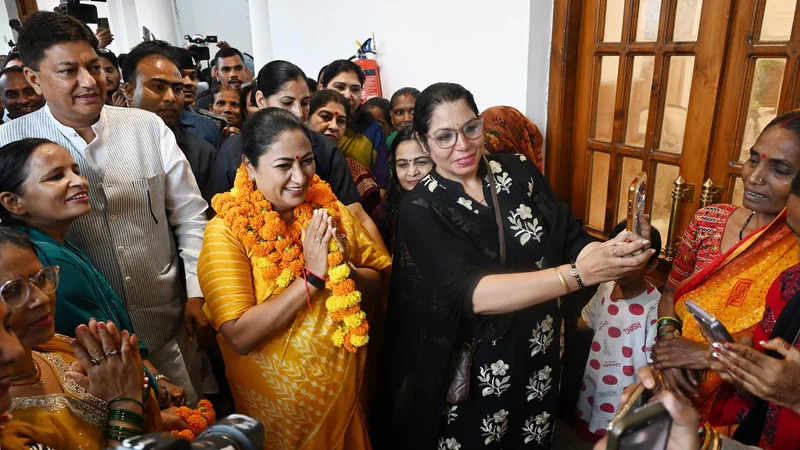
The Monsoon Session of the Delhi Assembly began on Friday with the Opposition questioning the absence of Question Hour, even as the Bharatiya Janata Party (BJP) government tabled a Comptroller and Auditor General (CAG) report flagging discrepancies in the previous Aam Aadmi Party (AAP) regime’s power subsidy scheme.
AAP MLA Sanjeev Jha criticised the government for not allowing Question Hour, saying legislators had been submitting questions without getting an opportunity to raise them in the House. “What are we submitting questions for?” said the Burari MLA.
Aid for ‘non-consumers’
The audit, covering 2019-20 to 2022-23, flagged several discrepancies, including ₹42.26 crore in subsidies extended to domestic consumers with no recorded consumption over consecutive billing cycles.
The report also questioned the framework of the scheme, observing that consumers with higher electricity consumption received substantially higher subsidies per connection.
More than 30 lakh consumers using up to 200 units a month received an average annual subsidy of about ₹6,000 per connection. In contrast, around 16.60 lakh consumers consuming more than 200 units received an average subsidy of over ₹10,000 — nearly 70% higher.
According to the report, the cost of the power subsidy scheme rose from ₹2,405.59 crore in 2019-20 to ₹3,161 crore in 2022-23, accounting for 66.96% to 70.39% of Delhi’s total subsidy expenditure during the period under review.
The audit also found tax and fee irregularities amounting to ₹220.59 crore in 145 cases.
The report also flagged ₹29.45 crore as “unfruitful” expenditure by the Delhi State Industrial and Infrastructure Development Corporation on land acquired in south-west Delhi’s Baprola in 2006 for a Gems and Jewellery Park and Fashion Design Hub.
The House also passed a Motion of Thanks on the Delhi Lakshmi Yojana, the government’s scheme to provide ₹2,500 in financial assistance to women.
Till Friday, over 4.87 lakh women had registered on the official portal.
Nod to pvt. universities
Meanwhile, the Chief Minister’s Office issued a release stating that the Cabinet has approved a draft Bill to establish private universities in the national capital, which will be introduced in the Monsoon Session for approval.
Currently, no legal framework exists in Delhi for establishing private universities. According to the statement, Chief Minister Rekha Gupta pointed out that the absence of a legal framework “had led many students to move to neighbouring States or abroad in search of quality higher education”.
Published - August 08, 2026 01:43 am IST