It's one thing to plant a seed. It's another to nurture it and watch it grow.
The Itaewon Film Festival is heading into its second year with clear signs of growth and maturity, demonstrating its widening impact on the neighborhood and the city around it.
Running in Haebangchon and Itaewon, two central Seoul neighborhoods that have long housed artists, expats and people operating outside the mainstream of Korean culture, the lively outsider character of the festival's home runs through every programming decision.
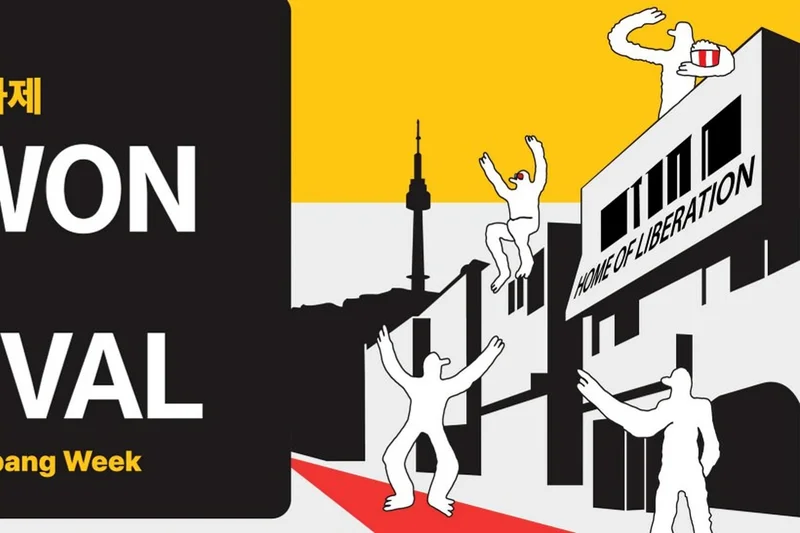
This year's edition will be held from Sept. 10 to 13 as part of Haebang Week, a weeklong program of events affiliated with Block Party Music & Arts Festival.
The festival's slogan, "Home of Liberation," is a nod to the neighborhood's name — "Haebangchon" translates directly to "Liberation Village."
Co-founder Simon Chong has been open about how much the neighborhood shapes the festival's direction.
"Itaewon and HBC (Haebangchon) have been home for people with different backgrounds for a long time," Chong said. "When I think about the word 'home', I think of a place where you can be who you are, where you can feel safe and where you are accepted. We came up with that slogan not just because we are collaborating with Haebang Week, but also to remind people that they are already home, at least in our event and community."
Thirty-three films from more than 20 countries will screen over the course of four days, organized into seven curated programs built around themes like "Never Truly Alone," "How We Love," "Close but Far," "Where Is My Home" and "You Are Home." Films are arranged around common ideas of identity, belonging and connection that feel true to the spirit of the festival.
"We focused on themes and messages for the selection process," Chong said. "What's fascinating is that when the themes and messages are right, they can overcome cultural differences. We believe the audience and the community can relate to and connect with what each film is trying to communicate. It becomes a process of discovering similarities more than differences, and I believe that's what makes a community stronger."
The festival opens with "Flower Cow" (2024) by Korean director Leem Joong-wan, an 80-minute documentary about Animal Liberation Wave activists rescuing 15 cattle found near an illegal dog farm, then working alongside local residents and elderly villagers to establish Korea's first cattle sanctuary.
The second day shifts to short films with two back-to-back blocks — "Never Truly Alone" and "How We Love" — presenting films from Mexico, Singapore, Brazil, Germany, Taiwan and France.
The third day's theme of "Close but Far" focuses on Korean narratives, including “Land of My Father” (2020), which follows two people fighting for their rightful place and representation on Dokdo Island.
Also on the third day, the theme "Spirit of Peru" section will run from 3 p.m. to 7:30 p.m. By far the biggest section this year, the showcase grew out of a conversation with the Embassy of Peru at last year's festival.
"Last year during the festival, the Embassy of Peru reached out and suggested a collaboration," Chong said. "The embassy did a great job organizing their wonderful films, and that influenced the programming for sure. This collaboration gave us the new idea about collaborating with different cultures and nations every year with different themes, and we are currently looking into our options for the next."
With this collaboration, we see the festival building its international footprint through cultural exchanges at a neighborhood level, one relationship at a time.
The last day closes things out with "Where Is My Home" and "You Are Home," programs built around themes of displacement and belonging, featuring films from Russia, the U.S., Greece, Kazakhstan and Switzerland.
Most programs run roughly two hours and are followed by a director Q&A to encourage genuine connections between audiences and filmmakers and honest conversations about their work.
"We hope audiences get to know the filmmakers through these conversations," Chong said. "Often audiences don't see what filmmakers see, and sometimes it's the other way around. But through this process, I believe we'll discover that the values we share aren't so different after all."
This year also brings a venue change to Poolmoojil, a progressive bookstore in Haebangchon. It's a fitting move for a festival whose stated mission includes strengthening ties with the local arts ecosystem in Yongsan. The shift takes the festival out of a traditional theater setting and places it inside a cultural hub known for hosting reading groups, book talks and community events. Each program is capped at 50 seats, which also makes the sessions feel more personal and intimate.
"This year, because of our collaboration with Haebang Week, Poolmoojil opened up their venue for us," Chong said. "I believe it benefits our audience both in timing and location, since they can enjoy the film festival and Haebang Week on the same street at the same time."
Pricing is designed to be accessible and convenient. Single program tickets run 7,000 won, a day pass covering two programs is 12,000 won and a full event pass covering all seven programs costs 39,000 won, giving audiences an easy way to pick a single theme or take in four days of independent cinema.
Visit itaewonfilmfest.com or follow @itaewonfilmfest on Instagram for more information.