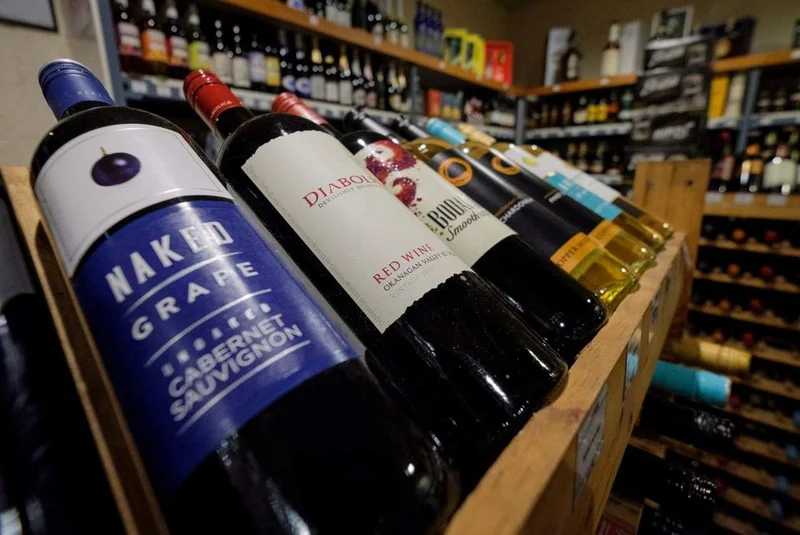
Canada’s premiers are knocking down a key interprovincial trade barrier that will — in some ways — make it easier for Canadians to buy alcohol from another province.
But some experts say it’s only the first step in bringing more choice to consumers and won’t mean consumers will see a wider range of products when they go to a liquor store.
The premiers of nine provinces announced Tuesday that they’re removing major barriers to interprovincial sales of alcohol to allow brewers and distillers to sell alcohol directly to consumers regardless of jurisdiction.
Tuesday’s deal stems from a memorandum signed by all the provinces and the Yukon in 2025 to take action on the file.
The new agreement comes after U.S. President Donald Trump announced this week a plan to implement steep tariffs on Canadian beer, wine and spirits as part of sweeping 50 per cent tariffs he vows to impose for Canada’s retaliatory tariffs after his trade war and the boycott of American booze.
Story continues below advertisement
2:02
Okanagan winemakers celebrate after premiers sign interprovincial alcohol trade agreement
How can you buy out-of-province booze?
The agreement by the nine premiers knocks down a number of trade barriers across the country but mainly deals with direct-to-consumer sales, not sales to provincial liquor stores.
Direct-to-consumer sales of beer, wine and spirits manufactured in one province and shipped to consumers in another have been largely governed by item-specific agreements between provinces or were effectively prohibited.
Story continues below advertisement
However, getting alcohol from another province on the shelves of your local liquor store is a different matter, said retail analyst Bruce Winder.
“You can buy direct from the wineries or breweries and get it delivered to your home,” Winder said.
“I haven’t read anything yet about distribution in terms of brick and mortar,” he added.
Get breaking National news
Get breaking Canada news delivered to your inbox as it happens so you won't miss a trending story.
Canada has a very fragmented regulatory framework when it comes to alcohol trade. Each province and territory has its own regulatory frameworks, licensing requirements, markup structures and distribution systems.
As of 2021, Canada was home to 830 breweries, 508 wineries and 191 distilleries, according to the Canadian Federation of Independent Business. These smaller businesses struggle to navigate the regulatory framework to get on liquor store shelves across the country.
“For small producers, this means navigating a patchwork of rules and duplicative paperwork, paying multiple fees and often waiting months for approval to enter a new province,” the Canadian Federation of Independent Business said in a 2025 report on interprovincial trade barriers.
Before the agreement, different provinces had different rules about procuring alcohol from out of province.
Until 2019, Ontario had strict limits on how much alcohol you could bring into the province. The previous limit was nine litres of wine, three litres of spirits and 24.6 litres of beer. While that limit was lifted in October 2019, it only extended to alcohol use for personal consumption.
Story continues below advertisement
If Ontarians wanted to order liquor not for sale in the province, they had to place their order through the Liquor Control Board of Ontario (LCBO). Direct shipment of alcohol from other provinces to consumers was not allowed.
In Quebec, only the provincial alcohol corporation, Société des alcools du Québec (SAQ), has legal authority to import alcohol into the province. Quebecers bringing alcohol into the province are required to contact the SAQ via an online form, even if it is a gift, donation, inheritance or souvenir from a trip.
Allowing direct-to-consumer sales across nine provinces is “a quick solution to try to get things going,” Winder said.
However, there’s no indication so far of the direct-to-consumer move being extended to provincial liquor stores stocking more alcohol from out of province.
New Brunswick Premier Susan Holt said this would set Canadians on the path towards being “our own best customer.”
“New Brunswickers are buying more Canadian products and Canadian alcohol and New Brunswick alcohol than ever before, because they are fiercely loyal and patriotic. And when our country is threatened, we respond,” Holt said.
Ontario Premier Doug Ford said the deal “will open new markets and new choice and convenience for producers and customers in Ontario and across Canada.”
Alberta Premier Danielle Smith said the same new opportunities are now open to producers in her province. She said the next step will be clearing the way for barrier-free retail sales across the country.
Story continues below advertisement
Will it be more expensive?
More on Consumer
More videos
If you’re a wine connoisseur in B.C. looking to sample some Niagara wine, there’s bad news — it’ll likely end up costing you a lot more money.
“If they send it through a courier, it’s going to cost more money versus if they did it through traditional brick-and-mortar, licensed provincial retailers,” Winder said.
This is particularly true for beer, said Richard Alexander, president of Beer Canada.
“The shipping of beer is quite expensive and the product has to be fresh. The fresher a beer is, the better it tastes,” he said, adding that this means some beer lovers are likely to stick with their local breweries.
2:18
Premiers defiant in face of Trump’s new tariffs
New Brunswick and Manitoba had already dropped the barriers before Tuesday’s announcement.
Story continues below advertisement
Not all provinces signed on.
The premiers of Quebec, Yukon, the Northwest Territories and Nunavut didn’t sign the deal. However, a statement released by those who did sign said Quebec and the Yukon were working to join in the near future.
The new trade system is effective immediately, but British Columbia said it is aiming for next February to get regulations in place.
Dan Paszkowski, the president of Wine Growers Canada, said they’ve been urging the change for almost two decades.
The interprovincial agreement is “the culmination of years of collaboration between governments and industry and represents a transformational step toward a truly national Canadian wine marketplace,” he said in a statement.
“The fact that the premiers got together and they’ve signed this agreement, is positive for consumers,” he said.
The deal may not move the needle much when it comes to making up for losses from Trump’s tariffs, but it does expand consumer choice in Canada, Winder said.
“It’s going to create some business momentum. There are consumers out there who do prefer certain alcohol under certain brands from certain provinces. And they would pay to have it shipped out,” he said.
–with files from The Canadian Press