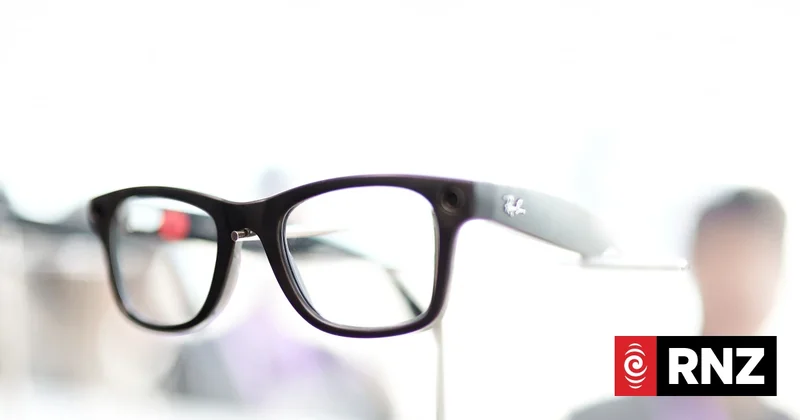
Privacy experts are warning that wearable camera technology, dubbed by some as "pervert glasses", expose significant gaps in New Zealand's laws.
University of Canterbury professor Annette Mills said the devices, which were often marketed as smart glasses, were "essentially a computer on your face", combining cameras, microphones, speakers and AI-powered functions in everyday wearable technology.
Her warning comes as Kmart begins selling its Anko Camera Glasses for just $99, a price point expected to make the technology far more accessible than premium smart glasses such as Meta's Ray-Ban range.
She said that while the glasses offered some benefits, especially as assistive technology for people with disabilities, the technology's growing popularity raised serious privacy concerns.
"We expect to be recorded in some places, such as by CCTV cameras in supermarkets," Mills said.
"But we certainly don't expect to have that everywhere we go."
Mills said that unlike smartphones, which required users to visibly raise a device before taking a photo or recording video, smart glasses could capture footage far more discreetly, making it difficult for bystanders to know whether they were being filmed.
She said overseas cases had already shown how wearable cameras could be misused, including secret recordings in bathrooms and people approaching women in public before uploading the footage to social media without their consent.
Mills said future developments, including facial recognition technology, could make the privacy implications even more significant.
"You could literally look at someone and say, 'Tell me everything there is about this person'. That can make someone feel very vulnerable."
Laws designed for organisations, not individuals
Mills believed New Zealand's privacy framework had a fundamental weakness when it came to wearable technology.
"Our privacy regulations are primarily aimed at protecting individuals, but they are targeted at organisations and what organisations do," she said.
"They are not set up to deal with personal information collected by individuals."
While existing laws could apply to intimate recordings, harmful digital communications and some forms of stalking, Mills said many everyday uses of camera glasses may fall outside current legal protections.
Her concern extended beyond what people record.
Once footage was uploaded to cloud services, it could be processed, analysed and potentially shared in ways many users - and the people they record may not fully understand.
"I think we need to come up with not just regulations that deal with the use, but also controls that deal with the deployment of these devices," she said.
'Serious privacy harms'
The Office of the Privacy Commissioner said the Privacy Act was largely focused on regulating the actions of businesses and organisations, not individuals and it applied regardless of what technology was used.
"Tools like CCTV, drones, and smart glasses make it easier for individuals to record each other. If individuals do not use them in a responsible manner, that can lead to serious privacy harms," a spokesperson said.
It said that individuals using glasses to film covertly should be aware that their actions might breach the Privacy Act if the collection, use or disclosure of the personal information was highly offensive to a reasonable person.
"Other laws are also likely to be relevant, such as the Harmful Digital Communications Act, stalking offences or other crimes under the Crimes Act."
Surveillance concerns extend beyond the wearer
Meanwhile, University of Auckland commercial law professor Gehan Gunasekara raised questions about the companies behind the devices.
His concern was not simply that individuals may misuse camera glasses, but that platforms operating the technology could collect vast amounts of information about where people went, what they looked at and how communities behaved.
"The platform also knows all of that information," he said.
"They can map trends, see where people travel and the kinds of stores they shop at."
Even where companies anonymised data before using it to improve artificial intelligence systems, Gunasekara said the aggregated information remained commercially valuable and raised broader questions about privacy and data sovereignty.
A 'game-changing' technology for blind New Zealanders
However, not everyone saw the technology as a threat.
Blind Low Vision New Zealand chief executive Andrea Midgen described AI-enabled smart glasses as the most significant technological advancement her community had seen.
The glasses could read street signs, restaurant menus and other visual information aloud while allowing users to keep both hands free for a white cane or guide dog.
"This is the most exciting game changer thing that we've had in technology for our community ever," Midgen said.
She acknowledged privacy concerns but said they stemmed from how people chose to use technology, rather than the technology itself.
"This is just a different form of what already happens with smartphones," she said.
'Use responsibly' - Kmart
A Kmart Group spokesperson confirmed that its Anko Camera Glasses were available to buy in New Zealand.
"The Anko Camera Glasses are part of an established and increasingly mainstream category of wearable technology, with similar products available globally from major technology and eyewear brands. Like other products in this category, they allow users to capture photos and video while also providing audio and connectivity features," the spokesperson said.
"As with any device capable of recording images, we expect customers to use the product responsibly, respectfully and in accordance with applicable laws and community expectations around privacy."
The Ministry of Justice said that there were no current plans to introduce a regulatory response specific to the issue of smart glasses.