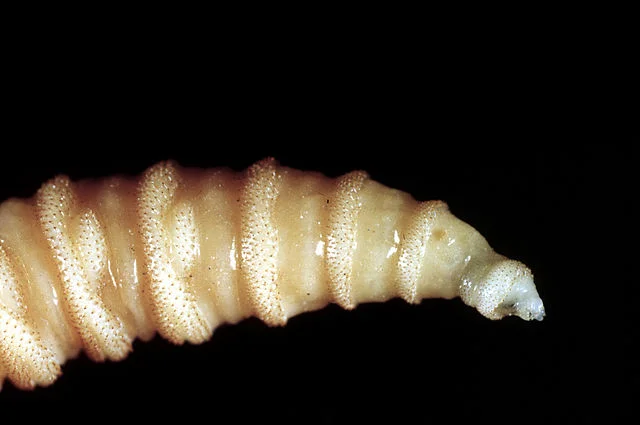
Since the flesh-eating screwworm fly reinvaded Mexico in 2024, human cases of the voracious parasite have been mounting. According to a July surveillance report from Mexico’s Ministry of Health, there have been over 500 human cases in 2025 and 2026. A study this week in the journal Emerging Infectious Diseases analyzed the information on over 200 confirmed cases reported between April 2025 and March 2026 and found that the infestation pace is increasing.
Among the 200 confirmed cases in the study, six deaths were reported. At least one of the deaths was directly caused by the fly’s maggots, researchers in Mexico reported in the study.
The New World screwworm (NWS) fly was once endemic in Mexico—as well as the US. The flies lay hundreds of eggs in the wounds, inflamed tissue, mucous membranes, and orifices of warm-blooded creatures. The resulting maggots hatch within a day and begin ravenously feasting on the living flesh of their victims. While the fly’s maggots generate ghastly, life-threatening wounds in a variety of warm-blooded species, including humans, they’re particularly devastating to livestock.
Amid a decades-long eradication effort, the fly’s populations were wiped out from the US, Mexico, and Central America. This was largely done with massive aerial releases of sterilized male flies, a technique that works because female NWS flies only mate once in their lifespans. Mexico declared NWS eradicated in 2003. Panama declared eradication in 2006 and kept an active, biological barrier along the Darién Gap at the border with Colombia. But in 2022, the barrier was breached, and Mexico began seeing cases in animals in 2024.
Mexico’s cases
Since the breach, there have been more than 36,000 animal cases of NWS in Mexico, with nearly 2,000 active as of August 5, according to the US Department of Agriculture. While human NWS infections—called myiasis—are a small fraction of the overall cases, the infestations can be severe and horrifying. The maggots can cause painful, rapidly enlarging deep wounds, which can destroy muscle, cartilage, and bone—even the skull—if not caught quickly. The wounds pose the risk of irreparable damage, secondary infection, sepsis, and, in extreme cases, death.
To better understand the human health impact of NWS’s reemergence in Mexico, researchers surveyed public health, epidemiological, and laboratory reports of confirmed NWS myiasis cases between April 2025 and March 2026. In 2025, the cases were being reported at a rate of about three per week. But in 2026, the pace increased to just over nine a week.