Argentina · Politics
Key Facts
—Who spoke. Former Argentine Army chief Diego Luis Suñer made the remarks on 2 June 2023, the anniversary of the 1982 war.
—What he said. Suñer called the Malvinas a permanent and non-negotiable national objective for Argentina.
—Government position. President Javier Milei reaffirmed the sovereignty claim while calling for mature dialogue with the UK.
—UK response. Downing Street said sovereignty rests with the UK and the islanders’ right to self-determination is paramount.
—Why it matters. The dispute remains tied to Argentine nationalism and the memory of the 1982 conflict.
The Malvinas remain “a permanent and non-negotiable national objective,” former Argentine Army chief Diego Luis Suñer declared, reviving a politically charged debate over sovereignty just as President Javier Milei’s government attempts to balance a firm claim with pragmatic diplomacy toward London.
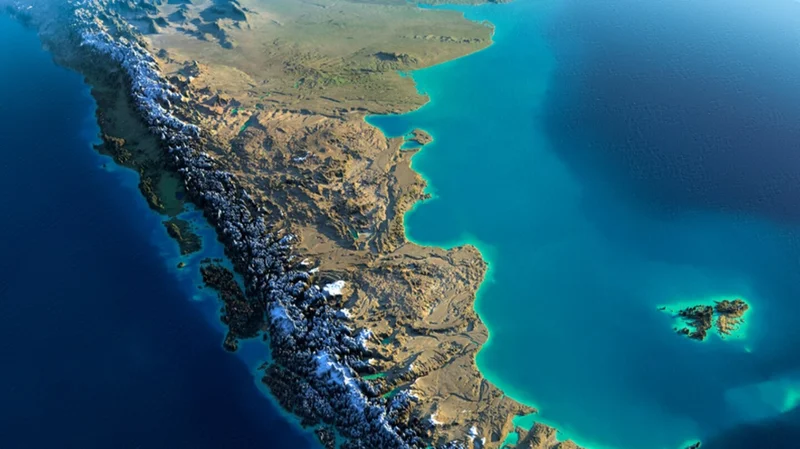
Argentina maintains a longstanding territorial dispute with the United Kingdom over the islands.
One-stop reference
Company Intelligence
Every listed company in Latin America — financials, ownership and structure for 1,450+ companies across 26 exchanges, in one place.
RTAsk Rio TimesCost of living, safety, visas across Latin America›
A General’s Uncompromising Words
Suñer, who once led Argentina’s ground forces, spoke on 2 June 2023 to mark the anniversary of the 1982 war with the United Kingdom over the South Atlantic archipelago.
His phrasing echoed the most traditional wing of Argentine nationalism, which views any softening on the islands as a betrayal of the 649 soldiers who died in the ten-week conflict.
Milei’s Balancing Act on the Malvinas
President Javier Milei, a libertarian economist who took office in December 2023, has walked a careful line on the issue that stirs deep emotion across Argentina’s political spectrum.
On 25 April 2026, Milei posted on social media that the islands “were, are, and will always be Argentine,” a statement that came days after Reuters reported he had called for direct negotiations with Britain.
His official 2 April 2026 statement reaffirmed the sovereignty claim, argued the 1982 war “did not alter the legal nature of this dispute,” and urged “mature and sincere dialogue” with the United Kingdom.
At the same time, Milei warned Argentina would take “all the necessary diplomatic measures” in response to oil exploration activity around the islands.
Why the Islands Strike Such a Deep Nerve
For Argentines, the Malvinas are far more than a territorial claim. The archipelago, known internationally as the Falkland Islands, sits about 480 kilometres off the Patagonian coast and has been under British administration since 1833.
The 1982 war, launched by the military dictatorship then ruling Argentina, ended in defeat after 74 days. The conflict still evokes strong emotions and is woven into school curricula, political rhetoric, and national identity.
Sovereignty over the islands is enshrined in Argentina’s constitution, and successive governments have treated the recovery of the territory as a unifying national cause.
Any perceived retreat from that position can trigger swift backlash from opposition parties and veterans’ groups, as Milei discovered when his early comments were branded too conciliatory.
Government Insists No Policy Shift Has Occurred
After Milei’s remarks drew criticism, cabinet officials moved quickly to insist there had been no change in Argentina’s long-standing policy.
The government’s formal position remains a demand for bilateral negotiations with London, a path the United Kingdom has consistently rejected unless the roughly 3,500 islanders consent.
Downing Street responded by stating that sovereignty “rests with the UK” and that the islanders’ right to self-determination is paramount.
The diplomatic friction intensified after reports emerged of a possible US review of support for Britain’s position, a development Milei seized upon to amplify his sovereignty message.
What It Means for Expats and Investors
For foreign residents and investors in Argentina, the renewed Malvinas rhetoric is a reminder of how quickly nationalist sentiment can reshape the political climate.
While Milei’s government has prioritized economic liberalization and attracting foreign capital, the sovereignty dispute remains a non-negotiable pillar of Argentine identity that can flare up and dominate headlines overnight.
Expats should understand that the islands are a universally sensitive topic across Argentine society, and questioning the country’s claim—even in casual conversation—can provoke strong reactions.
For investors, the diplomatic tension with the UK is unlikely to derail Milei’s pro-market reforms, but it adds a layer of political risk to watch, particularly if the dispute escalates and affects bilateral trade or international perceptions of Argentina’s stability.
What Happens Next
The immediate outlook points to continued diplomatic stalemate, as the UK shows no sign of entertaining sovereignty talks without the islanders’ consent.
Milei is likely to keep using the Malvinas issue to shore up nationalist credentials at home while quietly pursuing a less confrontational relationship with London on trade and investment.
The reported US review of support for Britain’s position introduces a new variable, though any concrete shift in Washington’s stance remains uncertain and would likely face strong pushback from UK allies.
For now, the Malvinas will stay exactly where they have been for decades: at the center of Argentine national identity, and far from any diplomatic resolution.
Frequently Asked Questions
Why are the Malvinas so important to Argentina?
The islands represent a deeply emotional sovereignty claim tied to nationalism, the 1982 war, and a constitutional mandate to recover the territory peacefully. For many Argentines, the Malvinas are a symbol of national unity and a reminder of the lives lost in the conflict, making the issue far more personal than a typical territorial dispute.
What is the United Kingdom’s position?
The UK maintains that sovereignty rests with Britain and that the islanders’ right to self-determination, expressed clearly in a 2013 referendum where 99.8 percent voted to remain British, must be respected. London has consistently refused to enter sovereignty negotiations unless the roughly 3,500 islanders themselves request them.
Has President Milei changed Argentina’s policy on the islands?
His government says no. Milei has reaffirmed the sovereignty claim while pursuing a more pragmatic tone, calling for dialogue rather than confrontation. Cabinet officials insist there has been no policy shift, even as the president balances his pro-Western economic agenda with the nationalist expectations of his domestic audience.