'Māori data in Māori hands': Experts want Google to adhere to data sovereignty principles
Māori tech experts have renewed calls to adhere to Māori data sovereignty principles after a first of its kind partnership with tech giant Google.
In July, Google and Te Taura Whiri i te Reo Māori (the Māori Language Commission) launched an AI-powered text-to-speech (TTS) model for Google Maps that could correctly pronounce cities and towns with te reo Māori names.
In a statement Te Taura Whiri i te Reo Māori said all Māori data from the model was placed under the kaitiakitanga of Te Taura Whiri.
"Google has a license to use this data for the purposes of this text-to-speech model. The long-term view remains to establish a consortium of interested groups as long term kaitiakitanga.
"The goal is to ensure Māori academics, researchers and communities who are looking to improve speech or similar technology, would have the ability to access this data, share the benefit and contribute to the evolution of this kaupapa."
University of Waikato computer science professor Te Taka Keegan told RNZ any data generated around reo Māori, tikanga Māori, must stay in Māori hands.
"This was one of the first times where Google has ever produced something where that's been the case. So the IP for the data, not the IP for the actual tool and the technology, the techniques, the algorithms, but the IP for the actual data itself remains with Te Taura Whiri."
Keegan said there were a few Māori organisations that would be suitable to take over guardianship in the long term.
"So what Te Taura Whiri needs to do, and they are aware of this and they should start working on it shortly, what they need to do is they need to find another storage avenue, where the data is held by Māori entities, because Māori entities will protect it, this government won't protect it. Te Taura Whiri is a government organisation."
Erena Mikaere (Tūhourangi) is the principal technician at Te Kāhui Raraunga, the operational arm of the Data Iwi Leaders group. She told RNZ in the short term, given that Te Taura Whiri had a duty of care for te reo, they probably came to the right arrangement.
Te Kāhui Raraunga released a Māori data governance model in 2023, aimed at a government audience to understand how to govern data in a way that adheres to a Māori worldview and that adheres to Māori data sovereignty principles, she said.
"We're talking about our reo data for now, which is some of our most precious data, absolutely. The Crown have so much of our data and our job is to advocate for that data to be available for iwi. Put iwi Māori data in iwi Māori hands, that is what we advocate for.
"So we have the tools, we have the resources, and we have the time to support and advise government agencies about how they could do that better. And we do think they need to do that better."
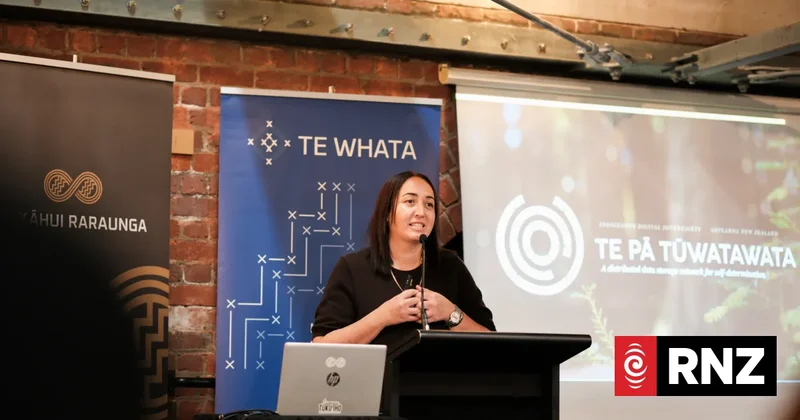
In May, Te Kāhui Raraunga launched its own decentralised data storage network, Te Pā Tūwatawata, and Mikaere said it would be open to having a conversation with Te Taura Whiri about the possibility of storing the Google Maps data set within it.
"Because we know it is the only large scale accessible, safe, sovereign storage solution available in Aotearoa owned by Māori. And we can support a governance model that in fact allows access to that data by the right people, the people who have affinity, who have connection and kinship to that data."
Since the launch of the platform Mikaere said it had been approached by a number private companies who saw that by adhering to the Māori data governance model, they were establishing ethical data governance models for their businesses and for their customers.
"They see real value in that, not just because of the moral imperative to do better with people's data, but actually they see economic value in looking after data better and ensuring that our families, communities, our whānau, everybody in this nation has a better understanding of their mana over their own data."