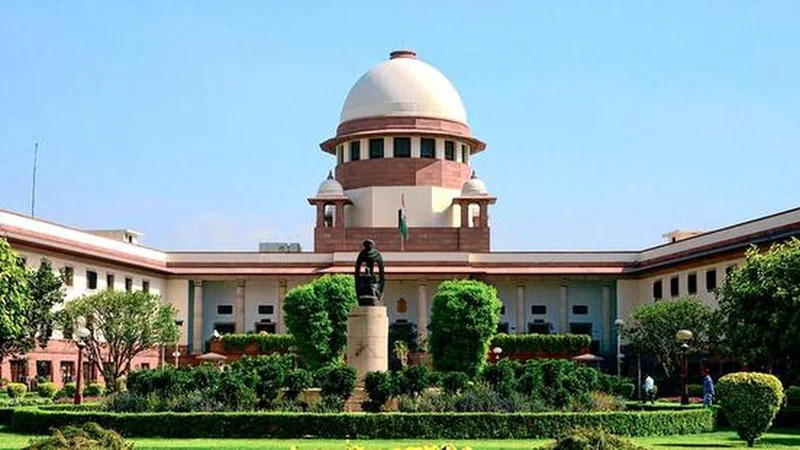
The story so far: A Supreme Court report published on Monday (August 3, 2026) makes a series of recommendations aimed at enhancing gender sensitivity in how judges write judgments and conduct proceedings in cases involving sexual offences and vulnerable persons. It replaces patriarchal language with survivor-centric terminology and recommends trauma-informed courtroom practices to prevent the re-traumatisation of victims.
Who prepared the new report?
Titled “Judgments and Gender: Sensitivity and Compassion in Writing Judgments”, the report was drafted by an expert committee headed by former Supreme Court judge and Director of the National Judicial Academy (NJA) in Bhopal, Justice Aniruddha Bose. It marks a shift from the court’s 2023 “Handbook on Combating Gender Stereotypes”, which focused primarily on helping judges identify and avoid gender stereotypes and patriarchal language. The new report, which will replace the earlier handbook, broadens that approach by recommending practical reforms spanning courtroom management, victim protection, judicial reasoning and trauma-informed adjudication. Before formulating its recommendations, it examined 125 trial court judgments from across the country with the assistance of State Judicial Academies.
What prompted this intervention?
The need for a new handbook arose from the Supreme Court’s February 10, 2026, judgment setting aside an Allahabad High Court ruling that had held that allegations of grabbing a 14-year-old girl’s breasts, dragging her towards a culvert and breaking the string of her lower garment amounted only to “preparation” to commit rape, rather than an “attempt” to rape. The apex court had taken cognisance of the ruling on its own after the High Court’s distinction between preparation and attempt drew widespread criticism for its apparent insensitivity.
During the proceedings, questions were also raised about the effectiveness of the Supreme Court’s 2023 handbook, issued during the tenure of former Chief Justice of India (CJI) D.Y. Chandrachud, in preventing such flawed judicial reasoning. CJI Surya Kant remarked that the handbook was “too Harvard-oriented”, suggesting that it was overly theoretical and did not adequately reflect the realities of the Indian judicial system. Justice Kant instead called for practical training, observing that it “serves no purpose to sermonise” High Court judges while sitting in the Supreme Court.
The court consequently directed the NJA in Bhopal to constitute a committee of domain experts, academics and lawyers to formulate fresh guidelines geared towards the practical training of judges.
What does it say about gender-sensitive judicial language?
The new report cautions that judicial observations rooted in stereotypes can deter survivors from reporting offences, reinforce prejudices and undermine confidence in the justice system. While both the 2023 handbook and the new report contain glossaries of terms that judges should avoid, they differ in their focus.
The 2023 handbook largely sought to replace stereotypical, colloquial or outdated expressions with neutral and legally appropriate terminology. For instance, it recommended “street sexual harassment” instead of “eve teasing”, “homemaker” instead of “housewife”, and “woman who has engaged in sexual relations outside of marriage” instead of “adulteress”. It also challenged broader assumptions about women, including stereotypes that they are inherently emotional or invariably want to have children.
The 2026 report, on the other hand, focuses more closely on problematic expressions that frequently appear in trial court judgments, particularly in sexual offence cases. Notably, it recommends replacing “prosecutrix” with “victim”, “survivor” or “complainant”, noting that the former is essentially a procedural label, while the alternatives better acknowledge the lived realities of those approaching the justice system.
The report also seeks to move judicial writing away from language that views sexual violence through the prism of morality, chastity or honour. Expressions suggesting that rape “destroyed the soul of a helpless woman”, “spoiled her childhood”, “ruined her life” or caused her to “lose her chastity” should be avoided. Instead, judges are encouraged to focus on the legal injury and its consequences — for instance, by stating that the survivor’s bodily autonomy was violated, that the offence caused severe trauma, or that its consequences require continued support and rehabilitation.
The report further urges courts to use respectful and contemporary terminology when referring to people of diverse sexual orientations and gender identities, and recommends the globally recognised framework of Sexual Orientation, Gender Identity, Expression and Sex Characteristics (SOGIESC).
What changes does it recommend in courtroom practices?
Beyond judicial language, the report asks judges to play an active role in ensuring that the justice process does not itself become a source of further victimisation. To this end, it sets out a series of “compassionate court practices” that judges should adopt proactively, rather than waiting for survivors to seek specific relief.
The report reiterates that trials involving rape and other sexual offences should ordinarily be held in camera (in private, closed-door proceedings) as mandated under the Bharatiya Nagarik Suraksha Sanhita (BNSS). It also calls for strict protection of survivors’ identities, including through the use of initials or pseudonyms in court proceedings and publications.
Describing witnesses as “guests” who assist the court in arriving at the truth, the report cautions against repeated adjournments, prolonged waiting and poor treatment that can discourage participation in the criminal justice system. Judges are also urged to enforce provisions of the Bharatiya Sakshya Adhiniyam that prohibit indecent, scandalous or needlessly offensive questions during cross-examination. In particular, the report reiterates that a survivor’s previous sexual history is immaterial in a rape trial.
A trauma-informed approach is another central recommendation. The report cautions judges against drawing adverse conclusions solely from delayed reporting, absence of physical injuries, inconsistencies in testimony or a survivor’s demeanour, noting that people respond to trauma differently. It also encourages pre-trial counselling to reduce survivors’ anxiety and help them navigate court proceedings.
Published - August 08, 2026 08:38 am IST