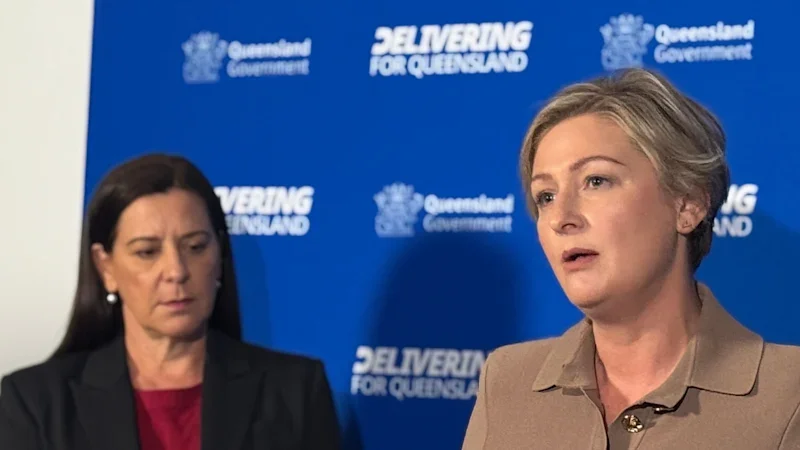
Under-fire Child Safety Minister Amanda Camm has come under fresh scrutiny amid revelations that statements made during estimates might have been flawed.
Documents and internal correspondence detailing topics the minister and her senior staff were grilled over in estimates threatened to undermine the government and embattled minister’s credibility, deputy opposition leader Cameron Dick said.
Dick said the minister had “broken her promise” to reveal the corporate data tied to the state’s IT reporting system on July 30, and shifted the date for “political spin”.
The minister’s office was contacted for comment but did not provide a response before the publishing of this article.
Camm faced mounting pressure across the year, including questions over children in need of emergency shelter sleeping on the floor of government facilities, a $38.5 million cut to the domestic and family violence services budget, and a bungled IT system roll-out compromising responses to time-sensitive child safety matters.
During estimates hearings on July 30 Camm faced a grilling on the corporate data, dodging questions about whether it was delayed from an original release date on July 1.
The data was released earlier that day.
“I made a commitment that we would restore corporate data and we have restored corporate,” the minister said during estimates.
Internal messages published in The Courier-Mail indicated the department was ready to release the data on July 1.
During estimates Camm said the department had always had access to operational data, but said the department “wanted to ensure we got that data correct” before releasing it.
Department of Families, Seniors, Disability Services and Child Safety director-general Belinda Drew echoed Camm.
“We did take some extra time through that process on a couple of the datasets, particularly the new measures, to ensure that we had the accounting rules right and that the data we were going to provide publicly was accurate,” Drew said.
Documents seen by this masthead also revealed members of a domestic violence survivors working group signed gag orders, despite the director-general denying non-disclosure forms had been required.
The Lived Experience Working Group was convened in February 2025, with documents released last month after initially being shelved and later leaked to media.
A internal briefing document from April 2025 revealed the department had initially planned to keep members silent with “confidentiality agreements” they would sign before taking part in any meetings.
In estimates, when asked whether members of the lived experience working group were required to sign non-disclosure agreements, or “NDAs”, Drew said “the answer is no”.
A summary of the report, created after the group met three times, detailed a fragmented system full of procedural and cultural barriers, including inconsistent police and legal responses, weaponisation of the system, and a lack of culturally safe and trauma-informed practices.
The bungled Unify IT system is the centre of an ongoing probe, which the state fast-tracked in early July. The final report was expected in September.