The story so far:
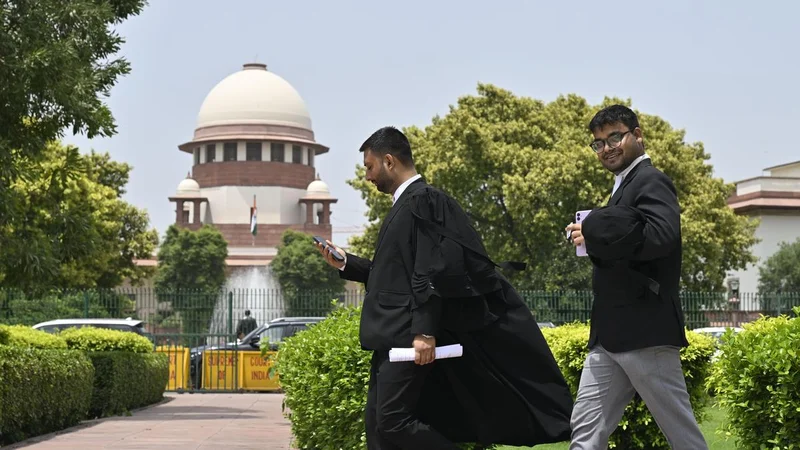
Opposing a batch of petitions seeking a “creamy layer” exclusion from the reserved categories of Scheduled Castes (SC) and Scheduled Tribes (ST) (like that for Other Backward Classes), the Union government has recently reiterated in the Supreme Court of India that this concept of carving out exclusions within reserved categories was not applicable to the SC and ST classifications.
Also read | Explained | The Scheduled Caste classification and the religion bar: What has the Supreme Court ruled?
What brought this about?
The current batch of petitions pending before the Supreme Court largely came through after a significant judgement of the Supreme Court in August 2024 (Davinder Singh judgement), which recognised the “heterogeneity” of communities classified as SC and ST and the graded backwardness amongst the communities already in these Constitutional lists. While doing so, a seven-judge Bench of the court, headed by then Chief Justice of India D.Y. Chandrachud, granted sanction to State governments to sub-categorise within the existing lists of SCs and STs to ensure benefits of reservations reach communities that have been routinely crowded out by relatively less backward communities within their respective lists.
However, in this judgement, Justice (Retd.) B.R. Gavai, in the opinion he had authored, noted that the problem of graded inequality and continued crowding out of certain SC/ST communities from benefits like reservations in public education and employment required that the Government seriously start considering introducing a concept of “creamy layer” exclusions within these lists as well, as introduced for the OBCs in the landmark Indra Sawhney judgement (1992).
This particular observation had sparked protests from several SC and ST associations across the country, and the Union government and the ruling Bharatiya Janata Party were quick to take a strong position against introducing a creamy layer concept for SC and ST quotas. But this opened the door for petitions seeking orders that the Union government introduce this concept for SC/ST quotas as well, which prompted the Supreme Court to issue a notice to the Centre earlier this year, also asking the Union government for a report on the action taken since the 2024 Davinder Singh judgement, intertwining sub-categorisation and creamy layer exclusion once again.
What is the context that surrounds the judgement?
The most recent reiteration of the Union government in the Supreme Court against introducing the creamy layer exclusion for SC/ST quotas comes at a time when a significant section of students in the country (largely from the General Category) that has traditionally been sympathetic to the ruling BJP establishment is organising the Reservation Hatao Andolan (RHA), a movement that came into being through an Instagram page, soon after the countrywide student movement ignited by the Cockroach Janta Party led to the resignation of erstwhile Education Minister Dharmendra Pradhan over the issue of the NEET paper leak this year. The RHA page has garnered over 5 million followers on the social media platform and is currently being given direction by key actors of the anti-reservation movement like Ajeet Bharti, Anuradha Twari and Neha Das. All three have been consistently vocal for the rights of General Category students and job seekers and have also helped mobilise and amplify the protests against the UGC’s 2026 social equity rules earlier this year over alleged discrimination against General Category students. One of the principal demands of the RHA is to abolish all socio-economic caste reservation categories and only retain “income-based reservation”.
What does graded inequality, sub-categorisation and creamy layer stand for?
Even though the national classification of the Other Backward Classes had not come into being until 1990, State governments across the country had, for decades, been recognising the problem of graded inequality amongst communities and castes that were then known simply as Backward Classes — a classification that States had created on the backs of Article 16(4) of the Constitution. Examples of reservation matrices for public employment in States like Andhra Pradesh, Tamil Nadu, Maharashtra and many more before the Mandal Commission was even constituted in 1979 show that States were dividing up their total share of quota for Backward Classes into smaller shares for certain groups of communities so that equitable representation could be ensured to a certain degree — the concept of sub-categorisation.
In 1992, while upholding the PM V.P. Singh-led government’s move to implement OBC reservations across the country, the Supreme Court gave rise to the concept of the “creamy layer”. The Court, in the Indra Sawhney case, noted that such an idea was necessary to ensure that only those who need the benefit of this reservation are able to access it. As a result, the Court laid down that certain categories of OBC individuals, whose parents and families had acquired a certain level of social and economic privileges over the years — the creamy layer among the OBCs — should be excluded from being eligible for this quota.
So, while the idea of sub-categorisation is to divide an existing quantum of reservation for a single category to ensure access for unequal groupings within that category, the idea of a “creamy layer” exclusion is meant to identify individuals within a particular categorisation who may have escaped certain effects of discrimination or backwardness that their communities at large may still be facing, and then exclude them from availing reservation altogether.
Post the Indra Sawhney judgement, the Government of India laid out detailed directions for carving out the creamy layer from OBCs (criteria for which included OBCs with parents in senior Constitutional, Army, or Government positions, and those whose families had a minimum income/wealth threshold); and the idea of sub-categorising spread beyond the OBC classification to categories like the Scheduled Castes, leading to decades-long battles in courts across the country that culminated in the August 1, 2024 Davinder Singh judgement, which allowed State governments to sub-categorise within the lists. The court importantly laid down that while inclusion and exclusion from the SC/ST lists was in the exclusive domain of Parliament, executive arms (including State governments) were within their powers to sub-classify within these lists, as this was different from including or excluding communities.
Both tools — sub-categorisation and creamy layer exclusion — are aimed at restricting the crowding out of relatively more backward communities or individuals within a given category by relatively forward communities or individuals in that category. But while sub-categorisation distributes available quotas to groups within a category as equitably as possible, the creamy layer tool is meant to exclude certain individuals from quotas altogether.
Where does creamy layer apply and where is sub-categorisation being done?
While the government has maintained that the concept of creamy layer exclusions applied to OBC communities only, there is an argument to be made that the Economically Weaker Sections (EWS) reservation, introduced in 2019, also technically embodies a similar idea. Even as one criterion for availing the EWS quota requires that an individual must not have availed any benefits meant for SCs, STs or OBCs, there is an explicit exclusion of individuals with a certain threshold of family income and assets — much like in the case of OBCs, albeit the method of calculating the income/asset is different in the EWS case.
The tool of sub-categorisation, however, has been more widely wielded — for SCs, STs, and OBCs — but more so by State governments than the Central government. While the State governments, like in Telangana, Haryana, Punjab and others, have had a history of sub-classifying the SC category, there are also States like Mizoram, where the ST quota has been sub-categorised.
The only arguable example of the Centre using sub-categorisation nationally, however, has been for the ST category, in quotas for Eklavya Model Residential School admissions, where the ST quota is divided up to ensure minimum representation of the Particularly Vulnerable Tribes (PVTGs) among the STs.
What is the Centre’s positions and rationale?
Even though Union governments under the leadership of Prime Minister Narendra Modi have yet to make public their vision for using the sub-categorisation tool nationally for SC, ST and OBC categories, their opposition to the introduction of the creamy layer concept in SC/ST quotas rests on the thinking that this would require exclusion of either certain communities or individuals from the benefit of reservation altogether, a power that the Social Justice Ministry has argued rests solely with Parliament as per the Constitution. Further, it has argued that judicial precedent so far has never called for or suggested creamy layer exclusion for SC/ST.
But even though it has taken this position in the ongoing cases before the Supreme Court, the Centre has notably left a potential roadmap for what it would take for it to consider such a move. It has said that such modifications to the reservation policy “should be preceded by a holistic review and thorough empirical study, including socio-economic data of reserved category beneficiaries” but stressed that it was not within the domain of the judiciary to direct it.
Interestingly, while the PM Narendra Modi-led government has been clear on which classifications the tool of creamy layer exclusions would apply, it has not done so for the tool of sub-categorisation as emphatically. In its first term, the PM Narendra Modi-led government indicated that it was keen on sub-categorising OBCs nationally — the National Commission for Backward Classes recommended it in 2015, and the Centre formed the Justice (Retd.) G Rohini Commission for this task in 2017. Three years since it was submitted, the report has not seen the light of day.
Similarly, when the issue of sub-categorisation of SCs was heating up ahead of the 2024 Lok Sabha elections in the Supreme Court and in States like Telangana and Andhra Pradesh, the Union government had constituted an internal committee headed by the Cabinet Secretary to look into how the grievances of the Madiga community could be addressed but since the Davinder Singh judgement paved the way for the exercise in principle, the Centre has remained silent on this.
Published - August 08, 2026 11:03 am IST