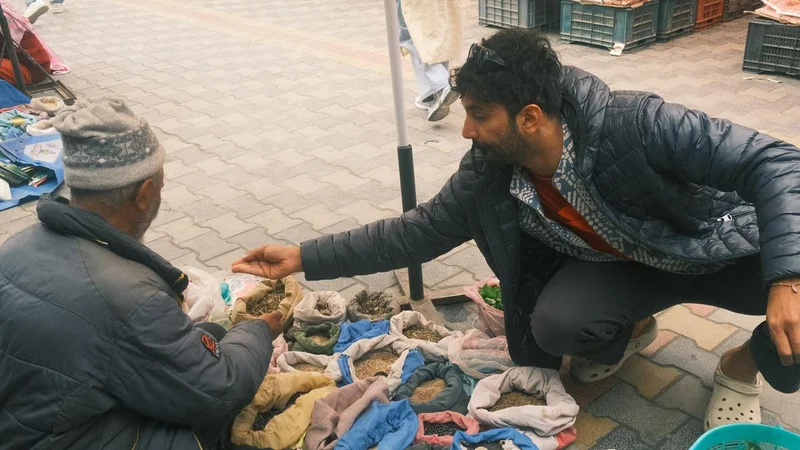
On the way from Srinagar to Kargil, author and mountaineer Yash Saxena struck up a conversation with a group of youngsters from Kargil. Kargil, would soon become Yash’s base as they researched their book, Stories from a Kargili Kitchen, which then went on to be published by Penguin Books in January earlier this year.
They asked the youngsters what their favourite dishes from their home cuisine were. “I assumed they would name some dishes from Kargil, but they kept saying names of dishes from Kashmir. I asked them if they didn’t eat Kargil food that often, and they said they never eat Kargil food. ‘It’s only for old people, and we’re not able to digest it’, they said,” says Yash.
It was one of the first things that struck Yash: how much had changed within Kargil itself, and how a younger generation was growing increasingly distant from its own food.
That question of what happens when a community begins to lose touch with its own food lies at the heart of Stories from a Kargili Kitchen, which grew out of Yash’s time in Kargil, where they lived, cooked and listened to local communities for over three years.
At an evening for The Hindu Lit for Life Unplugged, Yash will bring some of those stories to Chennai in a conversation with restaurateur and entrepreneur Sandesh Reddy, looking at food not just as sustenance, but as a way of understanding place, memory and identity.
For Sandesh, the book is a part of a larger conversation about how India understands its food.
“I think India itself is a nano-cuisine. Not even a micro. It’s like pockets of the same,” he says. Recipes, ingredients and even everyday dishes can change across communities within the same region, he points out. “If you think about Ladakhi cooking or Kargili cooking, we are often referencing to some vibrant dish or some meat preparation... But Kargil’s most famous contribution to the culinary world is an apricot chutney,” says Sandy in awe.
But beneath those recognisable dishes, Yash found a food culture shaped by its landscape, history and changing habits. Some of the most revealing discoveries came not from elaborate meals, but from everyday food and drink. Even a cup of tea offered a glimpse into how Kargil’s culinary traditions were changing.
During their first few days in Kargil, Yash began drinking salt butter tea everywhere, often dipping the local bread into it. But after developing stomach issues, they began looking more closely at the tea itself. “I discovered that the version of the tea I was drinking was different from what was traditionally consumed 20-20 years ago. It’s a whole different version with bicarbonate in it,” they say. The traditional ingredient, sapul (a natural form of sodium bicarbonate), had been replaced with bicarbonate, which gave the tea its distinctive magenta colour, which was then made pink with the addition of milk.
“This was another moment when I felt in real time how food can reflect the changes happening in the community,” says Yash. That distance from traditional food is part of what they hope the book draws attention to.
“Kargili cuisine offers a different understanding of what Indian food can be. Unlike much of the country’s cooking, where spices are central to building flavour, Kargili food has historically relied on fewer ingredients and little to no spice. It is shaped by what could grow in the region’s harsh climate,” they argue.
At The Hindu Lit for Life Unplugged, Yash hopes the conversation with Sandesh will move beyond the book and towards some of the larger questions it raises — about food, identity, authenticity and what it means to belong to a place. They are also looking forward to Chef Nilza Wangmo’s food curation following the conversation, which will offer audiences a chance to experience some of the flavours they have been writing about.
*Yash Saxena will be in Conversation with Sandesh Reddy for the Lit for Life Unplugged at Zhouyu on August 14, at 6pm. To register for the talk, contact 9363096446. *
Published - August 08, 2026 03:17 pm IST