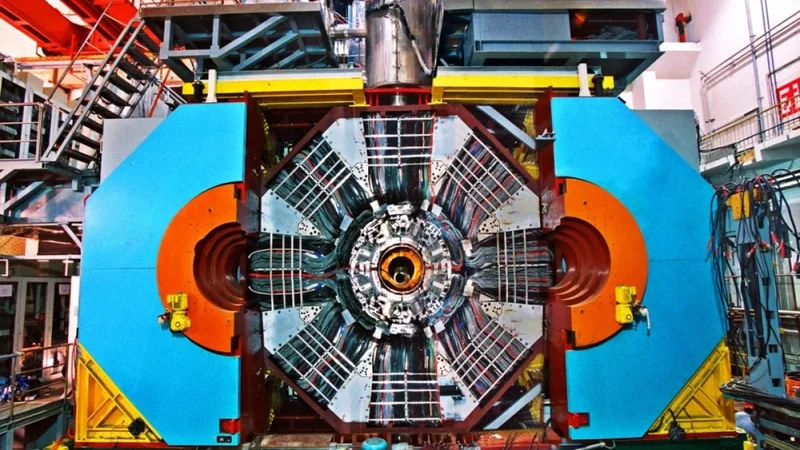
What is a glueball? Chinese-led team finds rare particle made entirely of force
After 15 years of research, scientists discover definitive evidence of glueballs using the Beijing Electron Positron Collider II
The finding was announced by a Chinese research team on Thursday at the International Conference on High Energy Physics in Natal, Brazil. Held every two years, the event features some of the most significant advancements in the field.
The team includes around 700 scientists from 15 countries.
Glueballs are made of gluons – particles that act as force carriers to “glue” quarks together into larger particles such as protons and neutrons. Protons and neutrons make up atoms, the fundamental building blocks of all matter in the universe – from human bodies to everyday objects.
For 50 years, scientists have predicted that gluons could bind together into glueballs because, unlike photons, they attract each other while carrying the strong force. However, evidence supporting the hypothesis remained elusive until the scientists presented it at the conference on Thursday.