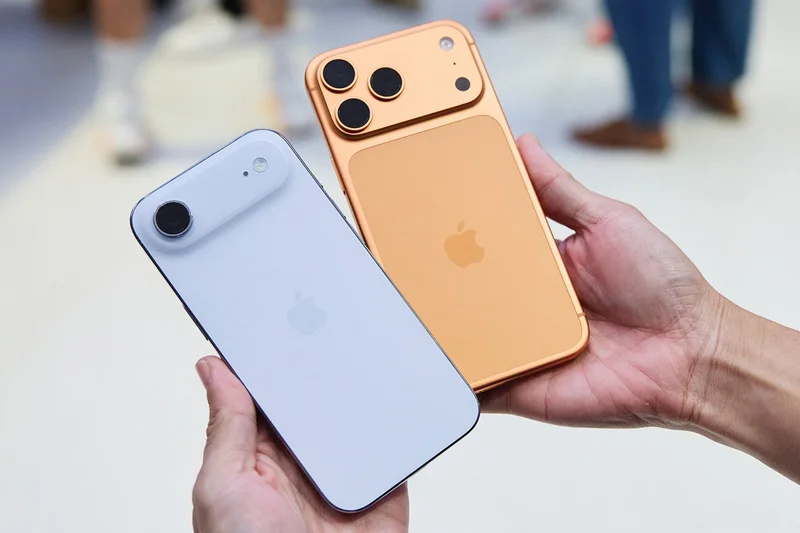
Apple brings out multiple new iPhones each year, which means you can keep regularly upgrading to the newest and shiniest Apple smartphone around in order to be ready for the latest iOS updates—though these handsets don’t necessarily come cheap.
At the time of writing, the most affordable iPhone in Apple’s range over the past year is the iPhone 17e, starting at $599. After that, the next cheapest is the iPhone 17, which will set you back $799.
That’s a lot of money to pay up front, but Apple just launched a new way to buy an iPhone: Apple Upgrade. It’s essentially a leasing program, so you pay a fixed amount each month. At the end of the lease, you either return the phone, pay a final settlement amount and keep it, or switch to a new lease for another iPhone.
It means you can get the latest and greatest iPhone for a lower initial outlay—but exactly how does it work? And will it save you money in the long run? You’ll find all the details you need on the iPhone Apple Upgrade plan below.
While we’re focusing on iPhones here, the Apple Upgrade plan is also available (and works similarly) for selected Apple Watches, Macs, and iPads. For more information, head to the Apple Upgrade page on the Apple website.
How Apple Upgrade works
You’ve always got options when it comes to buying a new iPhone: You can give Apple the entire cost of the handset up front, for example, or trade in your existing iPhone to get some money knocked off the new one. You can also go through a carrier and pick one of their plans together with a phone.
With Apple Upgrade, you enter into an agreement with Apple and its financing partner, Klarna, to pay for your iPhone monthly over 12 or 24 months. That’s a cheaper way in, but it’s a lease rather than a payment plan. You don’t actually own the device when your deal ends.
You can own it after those 12 or 24 months, if you want, and it’s a pretty simple calculation—the original cost of the new iPhone, minus everything you’ve paid monthly. It’s then yours to do with as you please.
The two other options are to give the phone back, and there’s nothing owed on either side, or to enter into a new Apple Upgrade agreement. Maybe you want the newest iPhone, for example, in which case you start again with another 12- to 24-month plan.
A couple of caveats worth bearing in mind: You need to select (or set up) an AT&T, T-Mobile, or Verizon account at the point of purchase, though the iPhone will stay unlocked so you can switch later if needed. Also, the older iPhone 16 isn’t available with this deal, even though you can still buy it directly from the Apple website.
If you’re thinking that this already existed, it did, in a slightly different form: The old upgrade program (which this replaces) was effectively an interest-free installment plan to buy a handset outright, rather than a lease. It ran for 24 months (though you could upgrade after 12), and you owned the iPhone outright at the end. You also got AppleCare included, which isn’t the case now.
Doing the math
It’s worth heading to the Apple Upgrade portal to get the latest prices on iPhone deals, but we can work through one as an example. The iPhone Air, if bought direct, will set you back $999 up front with 256GB of storage. Sign up for the phone with Apple Upgrade, and you can pay $28.99 a month over 24 months instead.
A quick calculation means you’re up to $695.76 in expenditure by the end of those two years. At that point, you can either walk away, enter into a new Apple Upgrade agreement for a different phone (based on current prices), or pay the outstanding balance of $303.24 ($999 minus $695.76) and keep the phone you’ve already got.
If you pay off that final fee and keep the phone, you’re not paying any more or less than you would if you paid for it up front. The end result is the same: you’ve just paid over two years rather than right at the start (though signing up with a carrier is compulsory with Apple Upgrade, and optional when paying up front).
If you’re going to switch iPhones after two years, Apple Upgrade might be slightly more expensive than paying everything at the start—but it depends how much you’d get for your iPhone Air (or whatever handset it is) on eBay or a similar marketplace. Given how well iPhones hold their value, you’d probably get more back than what you would owe Apple on an Apple Upgrade plan, but you do have the hassle of trying to sell it.
Should you miss more than three Apple Upgrade payments, the agreement will be canceled, and you’ll owe full price, which is another consideration to bear in mind. You’ll also need to keep the iPhone in good condition if you’re returning it. All of which means that Apple Upgrade is fine as a lease program—and spreads the cost of a new iPhone—but might not be best for everyone.