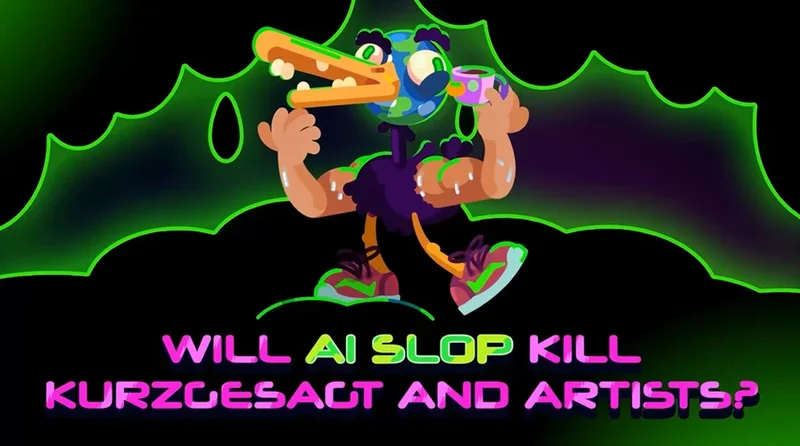
While YouTube often rewards the outrageous and exploitative, Kurzgesagt has maintained a steady following without sensationalizing. German for âin short,â Kurzgesagt aims to explore science in succinct and accessible ways, accomplished through amusing animations. A recent video, concerning microscopic superpredators, was set to private before being removed altogether. As it turns out, the bizarre history of science has now caught up to them, as YouTubeâs AI detection mistook their upload for slop.
âEvery creator’s worst nightmare just happened to us,â posted Kurzgesagt, âthe YouTube algorithm actually blocked us.â
YouTubeâs AI Detection Kicked Us in the Face
Every creator's worst nightmare just happened to us: The YouTube algorithm actually blocked us. It started slowly at first. Some videos started showing strange view fluctuations. Our second to last video did very badly, but this just⦠pic.twitter.com/HP6vIQ3vGc
— Kurzgesagt (@Kurz_Gesagt) July 31, 2026
Kurzgesagt explains that they had noticed unusual fluctuations in their viewership trends over the last few uploads. At first they chalked it up to a hiccup. But the numbers on their recent microbiology horrors video were some of the worst in the channelâs history. Combing through their metrics, they knew something was up. They reached out to YouTube, who confirmed to them that the video had been penalized from the top down. YouTubeâs detection flagged the video for AI generated junk. Something the video was not.
âYouTubeâs automatic AI detection tools wrongly think that our very much human-made videos are AI Slop,â they write. âIt started to choke our channel. Our contacts at YouTube were amazingly helpful and transparent with us, and hopefully the bug is fixed for now.â
The channel has been in operation since 2013. Kurzgesagtâs videos run the gamut of scientific topics, from astronomical awes to ant wars. The channel picked up an obvious headwind from the COVID pandemic, when seeking straightforward, scientific consensus on platforms like YouTube was a nightmare. Theyâve continued to publish popular explainer videos on medicine, physics and strange technology.
Since the jump, Kurzgesagtâs illustrated science history with minimalist, Corporate Memphis-like design, which has since become ubiquitous. And like all ubiquitous visual styles, itâs taken up considerable residence in AI models. While Google is investing heavily into AI programs with one hand, theyâre using the other to stymie AI generated materials from overwhelming their platforms on the other. Since last year, theyâve introduced new measures to detect and allow users to flag channels that flood YouTube with slop. While a discerning eye can weed out most AI generated materials, automatic detection tools are notoriously inadequate. Leaving bots to perform the Voight-Kampff test, most of these AI detection tools struggle to accurately assess what is original and what is a replication.
How AI generated material can exploit, overwhelm and atrophy the usefulness of the internet is something Kurzgesagt explored just last year, though they likely didnât expect the issue would boomerang so directly into the back of their head. Kurzgesagt promises to reupload the superpredators video, with some alterations for overall quality and avoiding repeat penalizations.
Since the incident, theyâre not the only YouTube channel to come forward claiming to have been suppressed by these new measures. How Google ultimately plans to both overwhelm the web with AI and simultaneously avoid exploitation, or having people recognize the romantic Trump/Biden Chinese duet as a doctored video, will test the inherent hypocrisies of these programs.