More than 25 years ago, women journalists began cracking the glass ceiling, becoming editors-in-chief in relatively large numbers (see the collage on the right).
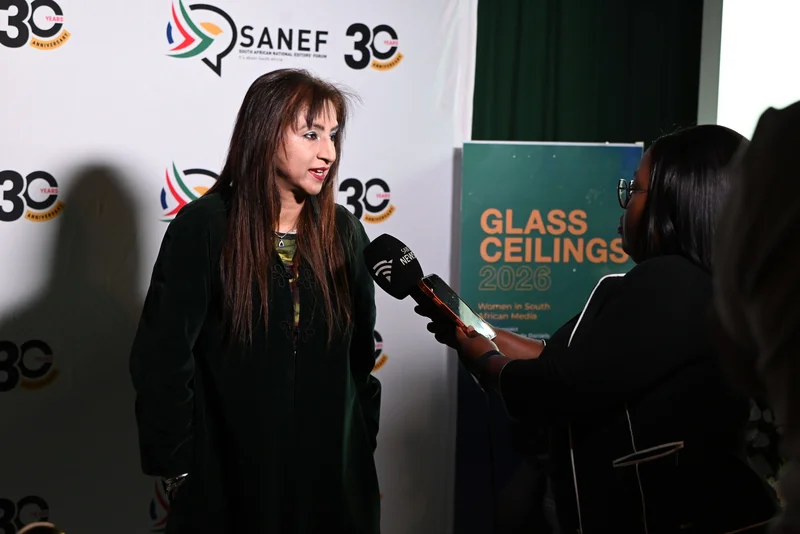
But the findings of Glass Ceilings 2026: Women in South African Media, launched by the South African National Editorsâ Forum (Sanef) at Emoyeni Estate in Johannesburg on Thursday, 6 August, reveal a significant backlash against gender equality, with fewer women in newsroom leadership and more women, particularly black women, leaving journalism.
A hefty 75% of the women journalists surveyed for the Glass Ceilings 2026 research project cited online harassment and cybermisogyny as a serious problem with little recourse available.
This shows that the glass ceiling from the previous research (2018) has morphed into the cyberceiling of today. The 75% represents a 45 percentage point increase from the 2018 Glass Ceilings report by Gender Links and Sanef, which found that 30% of women journalists and 9% of male journalists identified cyberbullying and misogyny as prevalent issues.
Although traditional âglass ceilingsâ (blockages and barriers to professional progress) remain, women are now further obstructed by the very platform once touted as the great equaliser: social media.
The Glass Ceilings 2026 research calls out not just the big tech global platforms, where hatred â including racism, sexism, misogyny, xenophobia and homophobia â runs rampant while profits soar, but also national media companies for sitting quietly and doing nothing much but biting the hands that feed them â journalists.
Diversity and sustainability suffer
Media companies create uncertainty by cloaking their real intentions in opaque language. For example, just before the 2026 launch, there was chaos and uncertainty around the actions and words of four of South Africaâs big companies:
Arena Holdings sold some of the countryâs oldest newspapers (The Herald and The Dispatch) based in the Eastern Cape to Ubuntu Media Holdings, but the new owners hadnât paid journalistsâ salaries since May, thinking Arena would continue to do so. The journalists got caught in the fine print of the sale between the two companies. Eventually Ubuntu paid, but didnât Arena believe in performing due diligence with regard to whom it was selling to?
Media24 announced last week that it was about to start building a ânew operating modelâ for editorial. This sounds distinctly like restructuring, which is a euphemism for retrenchments. It had started âconsultationsâ with staff. Letâs watch, wait and see what its plans are â more diversity or less.
Then the National Media Group (NMG) presented new ideas too. Who? It seems as though the name Independent Group (which owned Daily News, The Mercury, Sunday Tribune, Independent on Saturday, Isolezwe, The Post, Cape Times, Cape Argus, Daily Voice, Weekend Argus, The Star, etc) no longer exists â it has become NMG. These titles âhave now applied forâ and are âreceiving licensing rightsâ from Sagarmatha Technologies. What does this mean? We will be watching closely to see whether it strengthens or weakens media diversity.
Journalists revealed this week that 171 out of 309 jobs at eNCA, more than half its workforce, are on the line â another journalist bloodbath.
âGlass Ceilingsâ research speaks out
Women journalists are speaking out about shenanigans in their companies against the backdrop of huge losses everywhere in the world of traditional journalism, as big tech platforms profit from news without compensating those who produce it.
In many ways, only the Glass Ceilings project, conducted periodically over 20 years, has critically examined the media industry, particularly sexism, patriarchal attitudes, barriers to advancement and old boysâ clubs, while also highlighting many other issues.
This project, through its 10 chapters and endorsements, contains a powerful array of voices from editors, NGOs, lawyers, Âacademics and activists: Katy Katopodis, Phathiswa Magopeni, Ferial Haffajee, Paula Fray, Lizette Rabe, Patricia Handley, Makhosazana Zwane-Siguqa, Kirsten Pearson, Dinesh Balliah, Bongekile Macupe, Sophie Smit, Tina Power, Judy Sandison, Kate Skinner and Kathy Magrobi.
The Glass Ceilings 2026 project revealed that the landscape for women journalists in 2026 has changed radically in the two decades since the inaugural Sanef Glass Ceilings research study, with cybermisogyny emerging as the primary threat today.
Although sexism persists in newsrooms and media companies, women journalists now occupy a more emotionally volatile environment: the online and digitised space. After significant gains during the first Âdecade of democracy, women are now experiencing a backlash in leadership positions in media companies, newsrooms and on social media.
The findings below pertain to both the survey results and the individually researched chapters.
The rise of cybermisogyny: Of 111 women surveyed, 75% confirmed the existence of cyberbullying and cyberÂmisogyny. Only 9% reported no such experience and 12% were unsure.
The cyberceiling: Cybermisogyny is now a confirmed reality. In the 2018 study, it was categorised as an âemergingâ trend and it did not feature at all in the 2006 inaugural study.
Race and gender: Black African women are leaving newsrooms at notable rates. They report feeling humiliated, sidelined and overlooked, and their promotions are often treated with suspicion. The old boysâ club is now an African boysâ club from which women often seek protection, but donât get it. In her research, Bongekile Macupe witnessed the ârecyclingâ of the same group of black African men into editorship roles at national publications, quoting one of her respondents: âA man can fail in one newsroom and be resuscitated in another. I may not go into names, but I could list them. Men get recycled.â
The gender pay gap: More than 60% in the survey believed a gender pay gap existed in their organisations, noting that they are paid less than men with equivalent experience and qualifications.
The old boysâ network: About 58% of women reported that the network prevails alongside general gender bias, including antiquated notions that âsoft beatsâ are for women and âhard beatsâ are for men.
The new old girlsâ network: Some respondents perceived an âold girlsâ networkâ in operation, suggesting that senior women occasionally align with male power structures. However, they also noted that these alliances offer no protection from online vilification.
The impact of AI: No definitive consensus emerged regarding AI, although 35% believed it would worsen sexism and Âinequality, 24% believed it would make
no difference, 22% felt it was still too early to tell, 11% believed that AI could improve equality and 7% said it depended on its implementation.
Psychological impact: There is a critical failure in the current social media ecosystem. The psychological toll, which ranges from self-censorship to withdrawal from the profession, threatens the diversity and health of South African democracy.
Legal protections: Although South Africa has a robust constitutional framework and even several laws addressing harassment and cybercrime, there are significant gaps in enforcement, platform regulation and institutional support. Addressing digital threats therefore requires a coordinated response involving governments, media organisations, civil society and technology companies. Without such action, the digital public sphere risks becoming an increasingly hostile environment for women journalists and a barrier to press freedom. DM
Glenda Daniels is editor of the new book Glass Ceilings 2026: Women in South African Media, a professor of media studies at Wits University and Sanefâs secretary-general.
This story first appeared in our weekly DM168 newspaper, available countrywide for R35.