Sensing it has the upper hand, Iran issued a long list of maximalist demands before it reopens the Strait of Hormuz, even as officials in Tehran grow increasingly concerned about the shattered economy.
While Iran and Oman have been in talks over how to manage traffic through the narrow waterway, an agreement won’t automatically unlock the strait. Instead, Iran insists the U.S. must first satisfy several conditions.
On Saturday, Iran’s Supreme National Security Council called on the U.S. to lift its naval blockade, end sanctions, pull out its military from the region, pay war reparations, unfreeze Iranian assets, end attacks on Iran’s proxies, and stop threatening the country.
To be sure, some of those demands may be intended to set the stage for future negotiations or aimed at mollifying Iranian hardliners who oppose making any deal with the U.S.
But the aggressive initial stance dampens hopes that the strait will see traffic return to normal anytime soon or that the U.S. will stop applying economic pressure on Iran.
Despite the bravado expressed by top officials, anxiety about the economy persists after high inflation and a currency crash sparked nationwide protests that were put down by a brutal crackdown in January.
Regime moderates have grown more worried that the U.S. naval blockade that was recently reimposed is bringing Iran’s economy close to collapse, sources told the Wall Street Journal.
That tracks with earlier reports about Iran’s president and central bank chief telling Supreme Leader Ayatollah Mojtaba Khamenei the initial blockade was crippling the economy.
But moderates such as the president and others in favor of negotiating with the U.S. have come under withering criticism from hardliners. The tensions often play out publicly, even in state-run media.
On Wednesday, Iran’s deputy foreign minister, who is also a top negotiator, said the economy desperately needs sanctions relief that a deal with the U.S. could provide, according to the Journal.
“When I read some of the opposition to negotiations, I honestly wonder what world these people are living in,” Kazem Gharibabadi told IRIB.
And last month, President Masoud Pezeshkian warned that mounting economic pressure could fuel public discontent.
Experts have cautioned that Iran’s repressive regime is unlikely to be swayed by the suffering of ordinary citizens and is prepared to wait out economic hardship longer than the U.S. public can endure high gas prices.
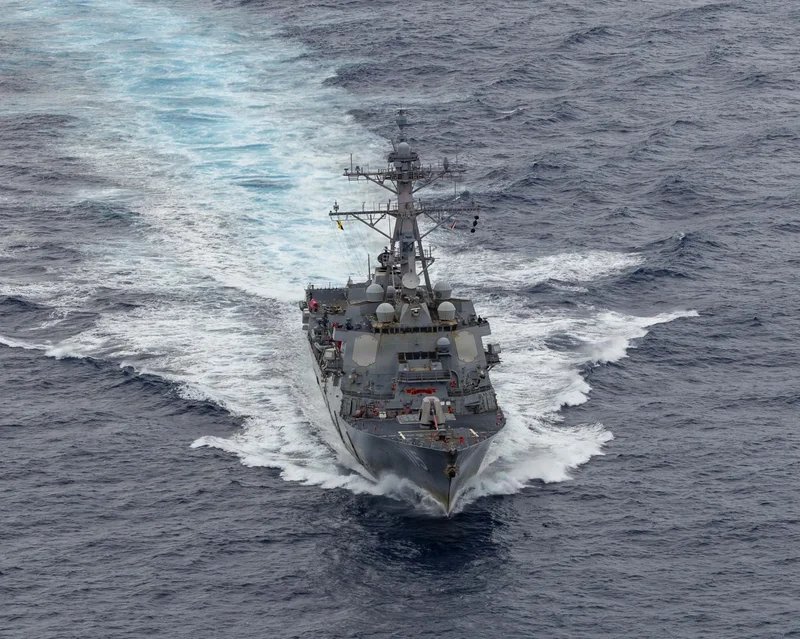
But Iran also needs to get its oil through the Strait of Hormuz just like its neighbors do. On Saturday, U.S. Central Command said it has redirected 53 commercial vessels, disabled two, and boarded two as part of its renewed blockade enforcement.
As a result, shipping and satellite data show no tankers have loaded at Kharg Island, which handles nine out of every 10 barrels of Iranian oil exports, for at least a week.
Meanwhile, Iran’s inflation is worsening. Official data show it accelerated to an annual rate of 88.6% in late June, with southern provinces that saw the heaviest bombardment nearing 100% or more.
Unemployment has also jumped to 9.1%, and GDP is expected to shrink 5.4% this year. And despite its enormous energy reserves, the government has asked Iranians to ration electricity in extreme heat.
“The Islamic Republic crushed a nationwide uprising in January, has an economy in free fall, and is fighting a war with America. Its most dangerous front may prove to be the domestic one,” Hamidreza Azizi, an Iran expert at the Clingendael think tank, wrote in Time last week.
But Bijan Khajehpour, another Iran expert and the managing partner at consulting firm Eurasian Nexus Partners, doesn’t think Iran’s economy is headed for imminent collapse.
Households have served as “shock absorbers” by reducing consumption, postponing investment, working second jobs, relying on extended family, depleting savings, selling assets and receiving money from relatives abroad, he explained in a note on Friday. Similarly, businesses also cut back and shrink rather than disappear.
But Iran’s economic resilience doesn’t mean it’s sustainable, he added, as the country’s infrastructure and human capital steadily deteriorate. For example, the agriculture sector has become more dynamic during the war because the economy has shifted toward subsistence and away from higher-productivity activity.
“A generation that postpones careers, emigrates or permanently disconnects from productive employment weakens a nation’s future capacity to innovate, invest and recover,” Khajehpour wrote. “The post-war labor market therefore provides perhaps the clearest evidence yet that the economy’s resilience is masking a gradual erosion of the very capacities required for future growth.”
breaks the traditional barrier between audience and newsroom. The show transforms
Fortune DailyFortune’s trusted reporting into actionable, conversational, and entertaining insights for an emerging class of business leaders.
Watch here.