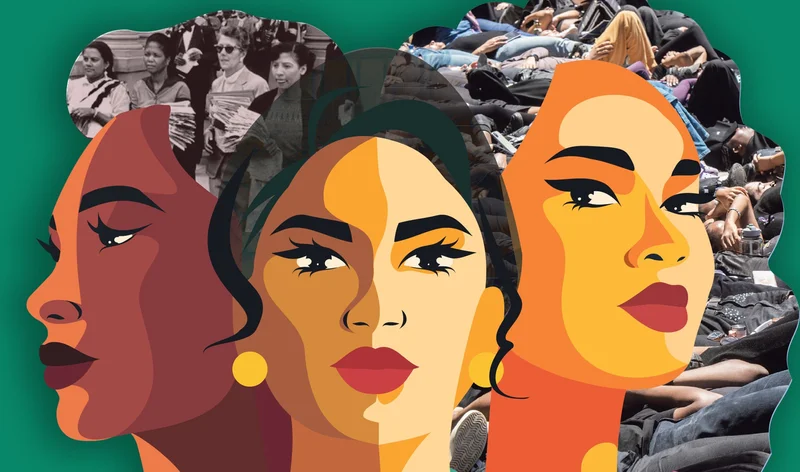
On 9 August 1956, the women of South Africa marched against apartheid pass laws that restricted where black women and men could move and work. Women marched together: against the system of racial segregation, unequal pay and gender discrimination.
Seventy years later, South African women have won many of those rights â but not all the freedoms they fought for.
âWhen we look back over 30 years of democracy, on paper, the law recognises us. Women can hold title deeds, open bank accounts without a manâs permission and legally access safe termination of pregnancy under the Choice on Termination of Pregnancy Act,â says Sibongile Tshabalala, chairperson of the Treatment Action Campaign (TAC).
âBut if you step out of Parliament and walk into our townships and rural villages, you see that legal rights do not automatically translate into lived economic freedom.â
Tshabalalaâs journey into activism began from a deeply personal place. When she was diagnosed with HIV in 2000, there were no antiretrovirals (ARVs) in public clinics. She spent years sick, bedridden and watching neighbours and comrades die â all because the government refused to provide treatment and pharmaceutical companies priced medicines out of reach for the poor.
Joining the TAC in 2009 transformed her from patient into activist. A huge victory was forcing the state to provide public sector ARVs. The prevention of mother-to-child transmissions remains one of the greatest achievements of post-apartheid civil society, she says. âKnowing that millions of mothers are alive today and their children were born HIV negative, including me and my children, because we marched, educated communities and held the state accountable â that is a legacy worth fighting for.â
The persistent pay gap
Women have made many gains in the past few decades, but for millions of them, equal work still does not mean equal pay. The gap between men and women in the labour force has not narrowed since 2008. Women are more likely to be unemployed.
Across all levels of education, gender disparities in the labour market remain entrenched, says Dr Patience Nombeko Mbava, the chairperson of the Financial and Fiscal Commission.
The wage gap has persisted. In 2024, the UN estimated it at 20.2% at the hourly level and 32.5% at the monthly level. The gap is wider at the monthly level because women work fewer hours than men for paid employment. One of the key drivers is womenâs disproportionate responsibilities for unpaid care labour, as well as discriminatory workplace practices.
Women still hold fewer managerial positions and remain concentrated in semi-skilled roles, Mbava adds.
âEconomic independence remains one of the most important frontiers for womenâs empowerment. Ownership matters. Building businesses matters. Creating jobs matters. When women become owners of institutions rather than simply participants in them, they begin changing the economy itself,â says Deborah Mutemwa-Tumbo, cofounder of an all-black, all-women law firm, Tumbo Scott. She is now an advocate of the high court.
As someone who worked in commercial law and sat on corporate boards, she has seen that progress is often uneven. When she founded the law firm with Professor Tshepiso Ngoepe, they wanted to show that women, particularly black women, could build institutions of excellence rather than simply seek a place within existing ones.
Women in leadership
Over the past three decades, South Africa has made remarkable constitutional and legislation progress, and women today enjoy opportunities that previous generations could scarcely have imagined â and that progress should not be understated, says Mutemwa-Tumbo.
âAt the same time, I think culture has not always kept pace with the law. Formal barriers have largely fallen away, but informal barriers remain. Access to capital, professional networks, significant client relationships and decision-making spaces are still not distributed equally.â
These professional networks have a direct impact on pay equity. When opportunities are not shared equitably, remuneration will seldom be equitable either, she says. The networks influence who receives the highest-value work, is introduced to key clients and considered for leadership.
The Johannesburg Society of Advocates recently highlighted that only eight black African women had attained senior counsel status by the end of 2025, despite much greater diversity among junior advocates. It noted that black women leave the Bar at disproportionately high rates during the early years of practice, pointing to structural challenges.
âI think South Africa has every reason to celebrate how far women have come. At the same time, we should resist measuring success only by representation,â says Mutemwa-Tumbo. âThe next chapter is about economic power and institutional leadership, and creating environments in which the next generation of women no longer have to be âthe firstâ in every room. That is the kind of transformation that endures. The law can open the door, but people have to choose to walk through it together.â
An institutional shift is reflected in the 2026 National Budget, in which National Treasury identifies 12 pilot national departments responsible for reporting on gender-
responsive budget interventions and allocates about R342.1-billion towards this over the 2026/27 financial year. It focuses on womenâs economic empowerment, education and skills development and mainstreaming gender across government programmes, says Mbava.
âThe principal challenge is no longer the absence of the policies â itâs ensuring that existing constitutional and policy commitments produce tangible socioeconomic outcomes for women.â
Carrying the care
Personal freedoms have expanded in terms of dignity, voice and reduced stigma compared with the early 2000s, but structural inequality keeps women in survival mode, Tshabalala says.
âThe caregiver load on women-headed households has not meaningfully lightened. If anything, it has grown heavier under economic strain and persistent poverty. Women are still the primary shock absorbers of South Africaâs social crisis.â
Women stretch social grants to feed entire families, nurse the sick when clinics lack staff or stockouts occur, and carry the burden of unpaid care work, she adds.
Resilience is thrust upon women. Like the sun, women rise, having no alternative. This does not start in adulthood, but when the girl child wakes up to cook, clean, look after younger siblings and, in rural or underresourced areas, walk to fetch firewood and water. These family responsibilities, alongside poverty, teen pregnancy and a lack of menstrual sanitation, force many young girls out of the education system entirely.
Property ownership trends have shifted, with single women now owning more property than couples or men. But women-headed households remain dominant, carrying the load of raising families.
âProperty ownership remains a dream for millions of working-class women living in informal settlements or under traditional land systems where patriarchal norms still dictate who holds power,â says Tshabalala.
After a landmark Constitutional Court ruling on 3 October 2025, parental leave changed. The old system gave mothers four months and fathers 10 days. Now, it has shifted to a shared parental leave model where fathers and non-birthing partners can share the time.
Women and climate
âClimate change is affecting municipalities through floods, droughts, heatwaves, fires, changing rainfall patterns and infrastructure damage. These impacts deepen existing inequalities,â says Dorah Marema, head of municipal sustainability at the South African Local Government Association.
Women who are poor, depend on climate-sensitive livelihoods and lack secure tenure, credit, land, information and decision-making are more exposed and less able to recover, she explains. For women-headed households, climate shocks can destroy household assets, food stocks, school materials and informal trading goods.
Drought affects food gardens and water security. Heatwaves increase health risks for vulnerable groups. Poor drainage, unsafe relocation and weak stormwater Âsystems can compound vulnerabilities.
Local government is positioned to address these challenges by investing in physical infrastructure that reduces risk, strengthening social capital to enhance coping mechanisms, and protecting ecological infrastructure to limit exposure to climate hazards, she says. Apart from infrastructure and disaster response, municipalities need to support womenâs livelihoods in agriculture, informal trade, recycling, community enterprises and the green economy.
Representation and real progress
One of the most lauded concepts of progress is political representation. But women are not a monolith. Politicians belong to a wide range of ideological parties, many of which oppose social welfare, worker rights or progressive gender legislation.
Political parties often maintain male-dominated internal cultures that marginalise independent voices, and representatives answer to party leaders, which may mean women end up toeing the line rather than pushing for gains to be realised for their peers. Politicians can end up reinforcing Âstatus quo politics.
Womenâs representation in Parliament increased from 33% in 2004 to 42.8% in 2024, and representation in the National Council of Provinces increased from 41% to 44.4% over the same period. Womenâs representation in the Cabinet also increased from 42% to 43.8%, although this remains below the parity achieved in 2019.
âThese trends indicate substantial progress in descriptive political representation, positioning the country among leading countries globally in terms of womenâs participation in Parliament,â says Mbava.
Marema adds: âThe priority now is to move from commitments to implementation. Political parties and institutions must treat womenâs representation in local government as a democratic obligation. Municipalities must mainstream gender in Integrated Development Plans, spatial plans, climate plans and service delivery budgets.
âBasic services must be understood as gender justice: reliable water, sanitation, waste removal, electricity, roads, public lighting and safe transport reduce womenâs unpaid burden and strengthen safety and economic participation.â
Alarming attitudes
The progress realised over the past 30 years is being threatened by a slide towards conservatism, both globally and locally. Aside from this trend, some things have not changed in South Africa.
Views on gender roles held by men were revealed by the first gender-based violence study by the Human Sciences Research Council (HSRC) in 2019. It found that almost 70% of men said a wife should obey her husband. When it came to sex, almost 23% believed a wife cannot refuse her husband. Nearly 10% believed that women were often to blame if they were raped, and 12% wrongly believed that if a woman did not physically resist, it was not rape.
Black women suffer some of the worst physical violence, a 2024 HSRC report found. Lifetime physical violence was significantly higher among black African women (35.5%) compared with women of other race groups. This has only got worse, with the 2025 report finding that 37.9% experienced physical or sexual violence in their lifetime.
Women need economic autonomy, says Tshabalala. Gender-based violence and health vulnerability thrive on financial dependence. The government must prioritise economic policies that target women-headed households, investing in community healthcare worker formalisation, supporting grassroots livelihoods and expanding social safety nets.
âLaws and national strategic plans mean nothing if police stations lack rape kits, dockets go missing and courts take years to deliver justice. We need dedicated funding and specialised resources directly at the local level,â she says.
Clinics must become safe, nonjudgemental spaces, she adds. Young women seeking contraception, abortions or HIV prevention are still turned away or shamed by providers. Continuous sensitivity training, accountability for secondary victimisation and guaranteed stock of reproductive health supplies in every ward are needed.
In a country where the femicide rate is Ârising and not falling, and economic independence remains out of reach for so many, the sobering reality is that women cannot afford to let gains be lost. DM
This story first appeared in our weekly DM168 newspaper, available countrywide for R35.