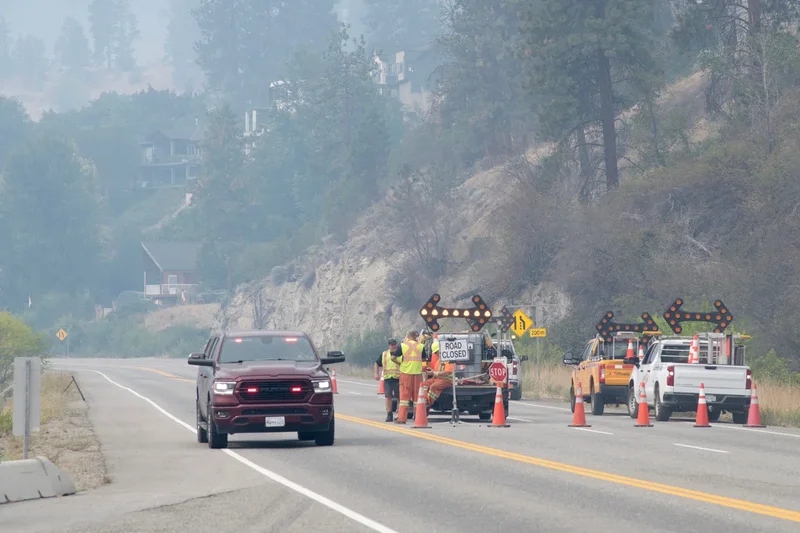
British Columbia has declared a state of emergency as a rapidly spreading wildfire devastates communities, forcing over 20,000 residents to evacuate their homes along Okanagan Lake in western Canada.
Premier David Eby announced the emergency Saturday, with over 100 wildfires currently raging across the province. Nearly half of these blazes are out of control, fueled by hot, windy conditions and a prolonged drought.
The entire community of Summerland, home to approximately 12,000 people, received overnight evacuation orders, alongside 8,000 individuals in and around nearby Peachland. Officials have yet to determine how many homes were destroyed.
Eby confirmed some residents became trapped and required rescue, while search-and-rescue teams continue to comb areas behind fire lines for any others who may have been caught.
“I know many families are facing an unimaginable day today,” Eby said. “People have lost their homes. And many people have been displaced. Others are waiting for news about loved ones.”
Cliff Chapman, director of wildfire operations for the BC Wildfire Service, said firefighting helicopters were diverted to rescue people who could no longer escape by road. He said the outcome would have been significantly worse without cooperation among agencies responding to the fire.
The Bald Range wildfire was first reported on Friday evening but grew to about 50 square kilometers (19 square miles) within hours, overwhelming the smaller community of Faulder and covering the roughly 15 kilometers (9 miles) to Summerland at extraordinary speed.
Chapman described fire conditions across British Columbia as “explosive” and warned that other communities could face fires similar to the one that forced the evacuation of Summerland.
British Columbia Emergency Management Minister Kelly Greene said the state of emergency gives the province additional powers, including the ability to restrict travel and secure accommodations for evacuees that might otherwise be unavailable.
Erick Thompson, an emergency official with the Regional District of Okanagan-Similkameen, called it one of the “quickest-moving, fastest-growing” wildfires the region had experienced.
Thompson eventually had to abandon the emergency operations center and evacuate his own family.
“I had to leave the EOC to come and get my family to leave this area. We’re heading south,” he said in a video posted early Saturday from his vehicle as traffic backed up around him.
Videos posted on social media appeared to show multiple homes burning as residents fled along roads with flames on both sides.
Homeowner Kerry Gold and her husband, Mike Elsinga, fled around 12:30 a.m. after watching flames spread beyond nearby mountains.
“It’s scary. It’s moving fast,” Gold said.
The couple, who recently moved from the city of Vancouver, had packed bags, prepared a carrier for their cat and planned to help a disabled friend evacuate.
“You want to stay here and protect your home, but you also don’t want to get caught in it,” Elsinga said.
Canada has endured increasingly destructive wildfire seasons in recent years, forcing mass evacuations and repeatedly sending smoke across large parts of Canada and the United States.