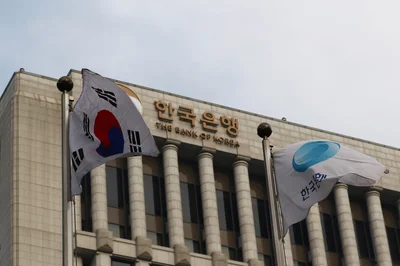
The brutal sell-off in South Korean equities of recent weeks could soon reverse course, according to Citi analysts, who see potential for the Kospi index to add more than 50% from current values. South Korea's headline index is one of the most volatile markets in the world at present, having fallen 28% from an all-time high notched on June 22. It fell a further 4.5% on Monday. But Citi is bullish on the prospects for a revival, writing in a Monday note that the market's headwinds have peaked, and that a combination of strong economic fundamentals and a market-friendly policy mix can lead the charge. Crucially, the analysts are maintaining a price target of 10,000 for the index, which would mark an increase of over 50% from Monday's closing price. "We think the recent share price pullback of KOSPI equities, led by KR memory suppliers, is more of a technical correction driven by market-wide profit-taking and therefore could represent a potential buying opportunity," the analysts wrote. South Korea was the best-performing major stock market of 2025 in a rally that extended into 2026, before progress was derailed by fears around AI spending, concentration risk from its two largest constituents, and speculative activity from the country's army of domestic retail traders. South Korean retail investors who piled into leveraged bets on the country's AI champions are nursing steep losses, exposing the risks of the speculative trading boom that helped fuel one of the world's hottest equity markets. The pain has been especially acute for holders of single-stock leveraged exchange-traded funds tied to chip giants Samsung Electronics and SK Hynix, which had surged alongside the AI-driven semiconductor rally, and have now tumbled. Since the launch of single-stock leveraged ETFs on May 27, Korean retail investors have purchased a net 14 trillion won ($9.4 billion) of them, compared with roughly 2 trillion won by foreign investors, according to KB Financial Group. Policymakers are also fighting to contain inflation, as South Korea's central bank hiked benchmark policy rates for the first time since January 2023 on Thursday. The Bank of Korea's 25 basis point hike that increased rates to 2.75% was in line with median estimates from economists polled by Reuters. The move comes as inflation is expected to remain above the BOK's target of 2% "for a considerable time," the central bank said in its statement. "Inflation is projected to remain elevated for some time as the impact of the rise in energy prices feeds through with a time lag." — CNBC's Lee Ying Shan and Lim Hui Jie also contributed to this report.
Kospi to 10,000: South Korean equities poised to rebound after brutal sell-off, says Citi