Myanmar’s military-backed government has rejected the Association of Southeast Asian Nations’ (Asean) renewed call for the unconditional release of detained former leader Aung San Suu Kyi and dismissed the need for the organisation’s special envoy on Myanmar, according to the foreign affairs ministry.
President Min Aung Hlaing, the former army chief who had originally seized power in 2021 from Suu Kyi’s civilian government, has been trying to win political legitimacy since the takeover and resume relations with Asean.
Asean came up with a peace plan for the Southeast Asian country in April 2021 to end hostilities and initiate dialogue among contending parties, to be facilitated by the special envoy. Mr Min has since been barred from attending top-level meetings for failing to comply with the plan.
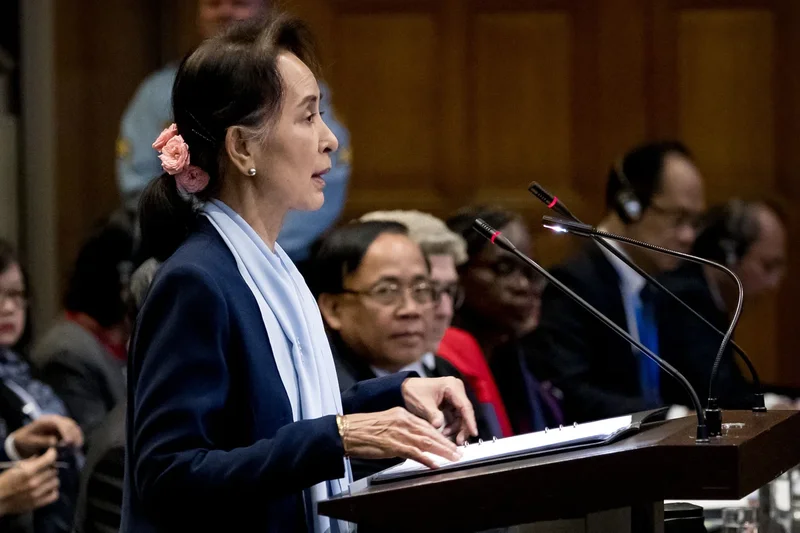
In an apparent effort to placate critics, the government allowed a representative of the International Committee of the Red Cross to visit 81-year-old Ms Suu Kyi last week, the first known contact with an outside international independent humanitarian organization since her detention five years ago.
Ms Suu Kyi is serving her sentence under house arrest at an undisclosed location in the capital Naypyitaw, on charges that her supporters and rights groups have said are politically motivated.
The current Asean chair, the Philippines, welcomed the meeting as a step toward dialogue and reconciliation on Friday, while urging greater access to political detainees and reiterating its call for Ms Suu Kyi’s “complete and unconditional release.”
Myanmar’s foreign ministry's statement late on Saturday criticised the call.
“Although the government has commuted her sentences based on humanitarian considerations, the matter of a full and unconditional release shall only be carried out in accordance with the law,” it said.
The statement also said the government will continue working with Asean’s current special envoy, Philippine foreign minister Maria Theresa Lazaro, but doesn’t see the need to continue down that path when Singapore takes over on 1 January, 2027.
“At present, the government, which emerged from the multiparty democratic elections reflecting the genuine will of the people, has assumed state responsibility,” the statement said.
In a speech more than three months after being sworn in as president following the elections, Mr Min dismissed Asean’s peace plan, saying some member states have discriminated against Myanmar and it would respond on a case-by-case basis.
Critics dismissed the elections, which were held in December and January, as a sham designed to consolidate the military’s grip on power while ostensibly restoring civilian rule.