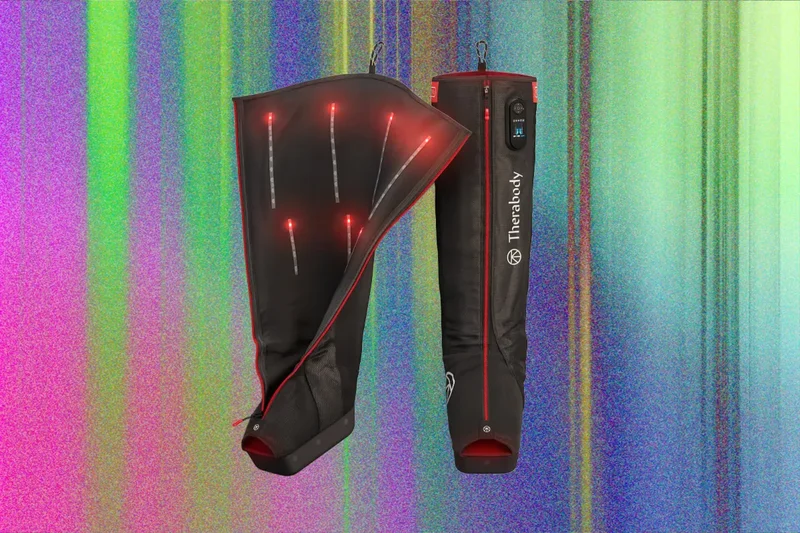
The appeal of compression boots is easy to understand: After an intense workout or a long run, these sleeves wrap around your legs and mimic the squeezing sensation of a massage. The sequential air pressure is meant to treat delayed onset muscle soreness (DOMS) and improve circulation, helping blood, oxygen, and nutrients through tired muscles.
Unlike many wellness gadgets that make big promises with little evidence behind them, intermittent pneumatic compression has been used for decades in medical and rehabilitation settings. Today, brands like Hyperice and Therabody have created at-home systems designed for everyone from marathon runners to workers who spend long hours on their feet.
But with prices ranging from a few hundred to well over $1,000—like our top pick, the Therabody JetBoots Pro Plus—and add-ons like heat and red light therapy, it can be difficult to know which boots are worth the investment. I tested the best compression boots to find the models that deliver the ideal combination of comfort, performance, and customization.
For more muscle recovery tools, check out our guides to the Best Massage Guns, Best Massagers, and Best Therabody Devices.
Featured in This Guide
Best Compression Boots Overall
The Therabody JetBoots Pro Plus are the most feature-packed recovery boots I tested, combining pneumatic compression, vibrations, and infrared LED light therapy in one wireless system.
Why WIRED recommends: The compression and vibrating pairing is therapeutic, to say the least; it consistently left my legs feeling less stiff after workouts. Everything is controlled from an LCD screen built into the lead boot, so there’s no separate controller to keep track of. You can tailor every session to your preference, with durations ranging from 10 to 60 minutes in five-minute increments and manual controls to adjust both pressure—measured in millimeters of mercury (mmHg)—and vibration intensity. You can also choose from four compression modes and eight preset routines.
The trade-offs: Therabody doesn’t publish key specs about the LEDs, and I didn’t notice a significant difference in my post-workout recovery that I could attribute to the infrared light therapy. The boots also don’t connect to the Therabody app, which may disappoint some users, but I didn’t find it necessary. At $1,150, these are also among the priciest compression boots on the market.
Buy if: You want the most premium, customizable recovery system available and don’t mind the splurge. They’re especially suited for athletes and anyone who exercises regularly, or for people managing conditions like lymphedema, deep vein thrombosis (DVT), or chronic venous insufficiency (CVI).
| Specs | |
|---|---|
| Compression | 20–100 mmHg in 5-minute and 5-mmHg increments |
| Sizes (Leg Length) | Short: 27 to 32 inches; Regular: 32 to 37 inches; Long: 37+ inches |
| Weight | Short: 11.3 pounds; Regular: 12.4 pounds; Long: 12.8 pounds |
| Battery Life | 150 to 240 minutes |
| Warranty | 1 year |
Best Entry-Level Compression Boots
If all you want is effective pneumatic compression, the Therabody JetBoots Prime delivers the essentials at a more affordable price point.
Why WIRED recommends: For half the cost of the JetBoots Pro Plus, the Prime skips the vibration and infrared LED therapies but still offers four compression levels (25, 50, 75, and 100 mmHg) and three session lengths (20, 40, or 60 minutes), all controlled from a built-in panel on the boot. They’re wireless compression boots, offer up to three hours of battery life, and can even be used while charging. Weighing about 6 pounds, they’re surprisingly portable and fold down into the included drawstring backpack.
The trade-offs: Customization is limited compared to pricier models. While the boots are foldable, they’re still bulky enough that squeezing them into the drawstring bag can be a bit of a hassle.
Buy if: You want an affordable, no-frills pair of compression boots that nail the basics. They’re a great choice for first-time buyers or anyone who doesn’t want the extras like vibration or red-light therapy.
| Specs | |
|---|---|
| Compression | 25–100 mmHg in 25-mmHg increments |
| Sizes (Leg Length) | Short: 27 to 32 inches; Regular: 32 to 37 inches; Long: 37+ inches |
| Weight | Short: 5.5 pounds; Regular: 6 pounds; Long: 6.3 pounds |
| Battery Life | ~180 minutes |
| Warranty | 1 year |
Best Portable Compression Boots
If you want the recovery benefits of compression therapy without investing in full-length boots, the Normatec Go is the easiest system to live with.
Why WIRED recommends: These calf sleeves ditch the hoses and external control unit in favor of a wearable design. You can recover while making dinner, working from home, or walking around the airport. Each sleeve delivers 360-degree dynamic air compression across three overlapping zones with seven intensity levels. They’re compact, TSA-approved, and light enough to pack in a carry-on or personal item. They’re also compatible with the Hyperice app.
The trade-offs: Since the Normatec Go only targets your calves, you won’t get the full leg compression that traditional boots provide. They also don’t include a storage case, which feels like a necessity for a product designed to be portable.
Buy if: You travel frequently, want a recovery device you can use on the go, or are looking to reduce calf fatigue without packing a full-size pair of recovery boots.
| Specs | |
|---|---|
| Compression | 7 levels of compression (40–200 mmHg) |
| Weight | 1.2 pounds |
| Battery Life | Up to 3 hours |
| Warranty | 1 year |
Best Compression Therapy for Hips
Most compression systems focus on your legs, but the Normatec Elite Hips targets your hips and glutes, which are just as prone to tightness.
Why WIRED recommends: Two overlapping air pumps deliver even, consistent pressure across your hips, glutes, IT bands, and lower back, without leaving noticeable gaps in coverage. They feature seven intensity levels, making it just as useful for loosening up after a long run as it is for activating your hips before a workout. The Elite Hips are also wireless and offer up to four hours of battery life.
The trade-offs: They’re not a replacement for compression boots. While they provide some relief to your upper quads and hamstrings, their primary focus is the hips and glutes.
Buy if: You regularly struggle with tight hips after activities like running or cycling, or you want to improve hip mobility and range of motion. They’re also worth considering if you’re looking for a noninvasive remedy to help manage conditions like sciatica or hip arthritis—just be sure to consult your health care provider first.
| Specs | |
|---|---|
| Compression | 7 levels of compression (40–110 mmHg) |
| Weight | 3.4 pounds |
| Battery Life | Up to 4 hours |
| Warranty | 1 year |
Compare Top 4 Compression Boots
| Product | Coverage | Compression | Weight | Battery Life | FSA/HSA Eligible | Price |
|---|---|---|---|---|---|---|
| Therabody JetBoots Pro Plus | Foot to thigh | 20–100 mmHg in 5-minute and 5-mmHg increments | Short: 11.3 pounds; Regular: 12.4 pounds; Long: 12.8 pounds | 150 to 240 minutes | Yes | $1,150 |
| Therabody JetBoots Prime | Foot to thigh | 25–100 mmHg in 25-mmHg increments | Short: 5.5 pounds; Regular: 6 pounds; Long: 6.3 pounds | ~180 minutes | Yes | $550 |
| Hyperice Normatec Go | Calves | 7 levels of compression (40–110 mmHg) | 1.2 pounds | Up to 3 hours | Yes | $379 |
| Hyperice Normatec Elite Hips | Hips, glutes, lower back, upper IT bands | 7 levels of compression (40–110 mmHg) | 3.4 pounds | Up to 4 hours | Yes | $599 |
Honorable Mentions
Hyperboot by Nike × Hyperice for $799: These high-top, sneaker-like foot massagers combine targeted air compression and heat therapy for your heels and ankles, letting you move around while recovering. That said, WIRED contributor Kristin Canning found the arch support lacking and the battery life short (roughly 60 to 90 minutes), so she wouldn’t recommend wearing them for long walks. The ranged sizing also makes it harder to find a secure fit, especially for a product that’s meant to be worn like footwear. At $799, I’d rather invest in a pair of full-length compression boots.
Urevo AI-Powered Wireless Recovery Boots for $780: These compression boots offer a high range of 80 to 180 mmHg; that’s great if you’ve found other options too gentle, but I found the highest settings uncomfortably intense and ultimately counterproductive. Urevo’s companion app offers 32 massage modes tailored to different sports and workouts, which is the most I've seen offered in my testing. These boots also generate AI-powered recovery summaries, though I found them to be pointless. The one-size-fits-most design is another drawback; it accommodates taller users well, but it can feel long if you’re short.
Urevo AI-Powered Wireless Relax Massager for $250: Like the Hyperice Normatec Go, these are calf sleeves, but they incorporate vibrations and heat therapy for a more therapeutic session. Unfortunately, I found the fit constricting and uncomfortably tight once the compression kicked in, which detracted from the overall experience. At their full retail price of $250, I’d still recommend spending a bit more for the Normatec Go. The good news is that they’re almost always on sale. At around $70 (as they were at the time of writing this), they’re an excellent bargain.
Power up with unlimited access to WIRED. Get best-in-class reporting and exclusive subscriber content that's too important to ignore. Subscribe Today.