What you need to know
-
Israel rejects Trump's Gaza plan, PM Netanyahu says
-
Houthi rebels claim attack on Saudi oil facility
- The Revolutionary Guard says Iran will reopen the Strait of Hormuz once the US 'corrects its behavior' and accepts Iran's conditions
- They include never threatening Iran again, lifting sanctions and releasing frozen Iranian assets
- The Guards also say the strategic waterway's reopening does not depend on how talks with Oman develop
- Iran says the talks are nearing their 'final' stages, with Oman calling the discussions 'positive'
- The UAE says Iran targeted tanker transiting in Hormuz
Keep reading for the latest developments on the conflict in the Middle East on Saturday, August 8, and Sunday, August 9, 2026:
Iran vows to release footage of Supreme Leader
Mizan, the Iranian judiciary's news outlet, reported that a Basij Organization deputy head promised to release footage of the Supreme Leader Mojtaba Khamenei at a later time.
Footage of Khamenei "among the people and out in streets, as well in meetings with the commanders of armed forces" will be released in the future, Qasem Qoraishi reportedly said.
Mojtaba Khamenei, who was appointed Supreme Leader in March, has not been seen in public since his appointment.
According to senior Iranian sources, he suffered facial disfigurement and other injuries in the strike that killed his father on February 28, the first day of US and Israeli airstrikes on Iran.
Israel rejects Trump's Gaza plan, Netanyahu says
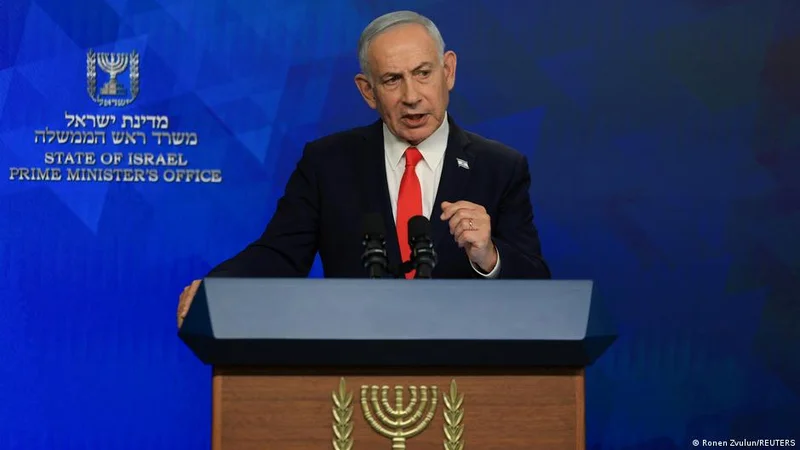
Israeli Prime Minister Benjamin Netanyahu announced that Israel has rejected US President Donald Trump's 15-point plan for Gaza.
The prime minister stressed that the Israeli military will not withdraw from Gaza until Hamas is fully disarmed.
"Israel rejects the 15-point document. The IDF (Israel's military, known as the Israel Defense Forces) will not carry out any withdrawal until Hamas is genuinely disarmed and will continue to thwart threats against our forces and our citizens," Netanyahu said at a Cabinet meeting.
Last month, Trump announced that his Board of Peace had reached a “historic” agreement with Hamas and other Palestinian militant groups in the Gaza Strip to disarm.
Israel designates Hamas as a terrorist group, alongside several other countries including the United States and Germany.
Houthis attack government-controlled port of Mocha in Yemen
A Yemeni government official said the Houthis attacked the crucial Red Sea port of Mocha.
Fayed al-Noman, the assistant undersecretary of the Information Ministry, said the Houthis launched missiles and drones at Mocha.
Mocha is one of the main ports under the control of Yemen's internationally recognized government backed by Saudi Arabia.
It was renovated in recent years to handle shipping that avoids the Houthi-held ports in Hodeida.
The Iran-backed Houthi rebels claimed responsibility for the attack. According to Houthi military spokesperson Yahya Saree, the movement’s forces carried out a “large-scale and precise” operation targeting Saudi enemy troops and weapons depots in the Mocha area.
Earlier on Sunday, the Houthis claimed responsibility for attacking the Saudi Aramco oil facility in Jizan that caused a fire.
Iran: Talks with US won't take place while interim deal is breached
Iranian Foreign Minister Abbas Araghchi said there were currently no negotiations between Iran and the United States, only an exchange of messages through intermediaries.
In remarks published by the Mehr news agency and cited by Reuters, Araghchi also said Tehran would not begin negotiations as long as Washington continued to breach the interim deal signed in June.
He reiterated Iran's stance that an agreement between Tehran and Muscat on the Strait of Hormuz was in the "final stages," though it would not reopen the strategic waterway.
Araghchi said the agreement would establish new shipping lanes to be used once the US fulfills its conditions and reopens the Strait of Hormuz to traffic.
Meanwhile, Iran's Revolutionary Guards also said they would not reopen the Strait of Hormuz until the United States accepts all of Tehran's demands.
"Our current strategy is to maintain this strait until the enemy accepts all our conditions," Guards spokesman Hossein Mohebi told state TV, according to AFP.
He added that "the strait is now actually a theatre of war for us and not just a waterway."
Houthis say they hit refinery on Saudi Arabia's Red Sea coast
Yemen's Iran-backed Houthi rebels claimed responsibility on Sunday for a strike on an oil facility along Saudi Arabia's Red Sea coast.
Houthi military spokesperson Yahya Saree said the group targeted an Aramco refinery in the city of Jazan with a drone.
He added the attack was in response to Saudi drones that had breached Yemen’s airspace over the provinces of Hajjah and Saada.
Earlier on Sunday, the Saudi Energy Ministry reported a fire at a facility belonging to the Aramco refinery, adding that there were no casualties.
The ministry said the fire had been extinguished, but did not describe its cause. Aramco is Saudi Arabia's state-owned oil company.
Welcome back to our coverage
Good morning! We are reopening our blog after a nighttime break.
Stay tuned for more news and analysis on the situation in the Middle East.
What are Iran's demands in negotiations with the US?
Earlier, DW reported that Iranian Foreign Minister Abbas Araghchi had said talks with the United States on reopening the Strait of Hormuz depended on Washington's "compensating" Iran for the US "violation" of a June memorandum of understanding that the two nations had signed.
Aragchi and the IRGC had also pointed to "other conditions" that would need to be met.
Iran's Supreme National Security Council said the country would not lift its blockade of Hormuz until the United States "corrects its behavior."
In a statement by the council's secretary and Revolutionary Guard Commander Mohammad Bagher Zolghadr that was published on Iran's state broadcaster, said the United States must:
- Never threaten Iran again
- Permanently end its war against Iran and its allies in the region, namely Lebanese militants Hezbollah; Houthi rebels in Yemen; and Hamas in the Gaza Strip
- Lift its blockade of Iranian ports and ships in the Strait of Hormuz and pull its military out of the area
- Lift sanctions and release frozen Iranian assets
The US has yet to respond.
WATCH: Iran and Oman near landmark shipping agreement
Iran says it is in the final stages of reaching an agreement with Oman on shipping through the Strait of Hormuz, one of the world's most strategically important waterways. Reports suggest that the deal would give Tehran oversight of vessels entering the Persian Gulf. Oman would manage outbound traffic.
If finalized, the arrangement could mark a significant shift in regional influence and raise questions about freedom of navigation, security and the balance of power in the Gulf.
DW spoke to analyst Megan Sutcliffe and former US diplomat Alan Eyre, who helped negotiate the 2015 Iran nuclear deal, about what this could mean for the region and beyond.
Saudi-Turkey-Pakistan defense deal raises new security questions
On Friday, Saudi Arabia, Turkey and Pakistan unveiled a new security alliance that bears strong similarities to NATO's principles of collective defense.
The three regional powers — who are also strategic allies of the United States — have signed a defense pact that is "intended to strengthen collective deterrence against any act of aggression."
The deal is widely viewed as the three Sunni-majority nations' way of defending themselves against the rising threat from an increasingly hostile Iran, where Shiite Islam is the state religion.
The agreement could also be seen as a sign of shifting power dynamics in the region, as well as a way to hedge against an unreliable US, amid uncertainty over its long-term commitment to its role in enforcing security in the Gulf.
DW's Brent Goff spoke to experts Dania Thafer and Kamran Bokhari to learn more about what the new agreement means for the region and the US-Iran conflict.
Oman calls Hormuz talks 'positive,' warns against attacks
Oman's Foreign Ministry on Saturday said talks with Iran about the future of maritime traffic in the Strait of Hormuz were "proceeding in a positive and constructive atmosphere."
But Muscat warned against "repeated attacks" on cargo ships, which it said could jeopardize the negotiations, although it stopped short of explicitly naming Iran.
Tehran has been targeting ships that it claims have ties to the United States or that fail to comply with its orders.
Earlier on Saturday, Iran said talks over a deal with Oman were "approaching the final stages."
IN DEPTH: How viable is the potential Iran-Oman Hormuz shipping deal?
Iran says a shipping accord with Oman is in its final stages, but analysts warn sanctions, security concerns and rival US and Iranian goals could limit its impact.
Learn more about the potential deal between Iran and Oman in this report.
WATCH: Will Iran develop a nuclear weapon?
Israeli Prime Minister Benjamin Netanyahu says he is determined to prevent what he says are Iran's plans to build nuclear weapons. But is there any evidence that Iran plans to build up its nuclear capabilities?
UAE accuses Iran of attacking state-owned ship in Hormuz
The United Arab Emirates on Saturday accused Iran of attacking a tanker belonging to its state-owned Abu Dhabi National Oil Company (ADNOC) while the vessel was sailing through the Strait of Hormuz.
In a statement, the UAE's Foreign Ministry slammed what it called a "hostile" missile attack. No casualties were caused, the statement added.
The ministry also accused Iran's Revolutionary Guard (IRGC) of "acts of piracy" by attacking commercial cargo ships and using the strait to exert economic pressure on the US and its allies in the region.
The IRGC has warned it would target ships with ties to Tehran's enemies transiting the waterway or if they fail to comply with Iran's orders, such as paying a fee to pass through the Iranian naval blockade.
On Friday, ADNOC — one of the world's biggest energy producers and exporters — said Iran had attacked 15 of its ships with missiles and drones since the conflict started in late February, "including three vessels this week alone."
Iran has targeted a range of countries in the Middle East region that have ties with the US in retaliation for US and Israeli strikes.
Iran says US must agree to its terms before it reopens Hormuz
The Islamic Revolutionary Guard Corps (IRGC) said Saturday that Iran will reopen the Strait of Hormuz after the United States agrees to its terms.
On Friday, an American official said progress in talks between Iran and Oman could lead to the reopening of the strait. Hormuz has been largely closed to maritime traffic for months as Iran and the US each impose their own blockades.
While Iranian Foreign Minister Abbas Araghchi on Saturday said talks with Oman were nearing their "final stages," he warned that progress was "not a sign" that the strait's reopening was imminent.
"The reopening of the Strait of Hormuz is subject to other conditions and compensation for the violation of the memorandum of understanding by the United States," Araghchi said, referring to a June agreement between Washington and Tehran.
On Saturday, Iran's Tasnim news agency, which is affiliated with the IRGC, reported that Guards spokesman Hossein Mohebbi said that Hormuz's reopening "is subject to the specific mechanisms and conditions of the Islamic Republic of Iran and is not related to the negotiations between Iran and Oman."
"The enemy is forced to accept Iran's conditions for the opening of the strait and to refrain from the interference that it is currently making in the negotiations — which have almost reached their end — between Iran, Oman and other countries," Mohebbi said.
Traffic through the strait, which was the conduit for 20% of the world's oil and gas before the war, has been severely restricted since the war began five months ago.
Welcome to our coverage
The Islamic Revolutionary Guard Corps (IRGC) has said that Iran will reopen the Strait of Hormuz on the condition that the United States accepts its terms in full.
The Guards have also said ongoing talks with Oman, its neighbor across the strait, would not have any bearing on whether Tehran lifts its blockade of Hormuz.
The UAE said Saturday that one of its tankers was targeted while trying to sail through the strait.
We will bring you more on these stories and more on the war between the US and Iran and the rest of the region.