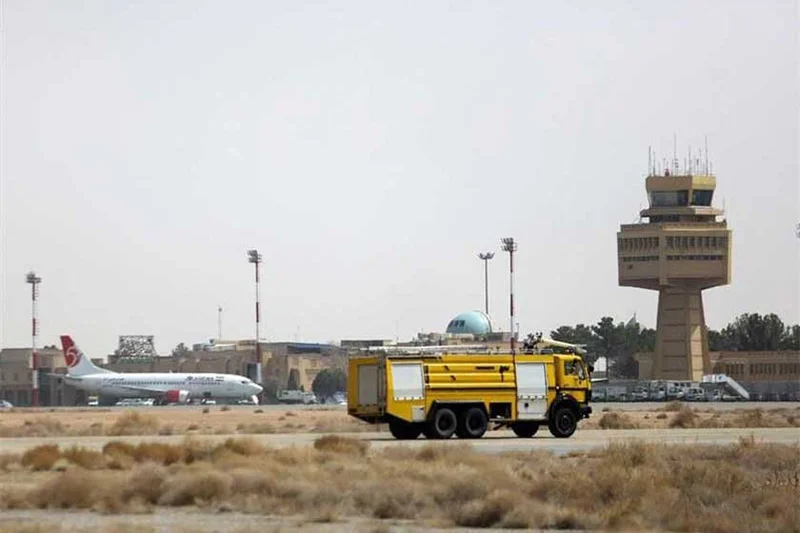
Isfahan-Istanbul flights resume as city seeks wider air connectivity
TEHRAN - The resumption of direct flights between Isfahan and Istanbul could pave the way for expanding the Iranian city’s international air corridors and boosting tourism, according to a provincial tourism official.
Davoud Abian, deputy head of tourism at the Isfahan Department of Cultural Heritage, Tourism and Handicrafts, made the remarks on Aug. 8 during a visit to Shahid Beheshti International Airport in Isfahan, coinciding with the resumption of direct flights to Istanbul.
The number of flights operated by Meraj Airlines on the route has increased from one to three per week, Abian said, adding that the development could serve as a starting point for establishing new air links with destinations including “Oman, Baghdad and Najaf”.
“We are negotiating and communicating with various airlines for this purpose, and several memoranda of understanding are also being signed.”
“Tourism infrastructure is one of the key priorities in Isfahan,” Abian said, stressing that the province’s diverse tourism attractions require effective access to international markets.
He said efforts in recent months had focused on strengthening Isfahan’s tourism diplomacy internationally, with greater attention being given to the province’s potential in film tourism and medical tourism.
Abian said expanding tourism capacity could not be fully achieved without improving access routes to the province. During a period when flights were suspended because of the war, efforts were made to strengthen rail infrastructure for tourist arrivals, but with conditions improving, the development of air corridors has gained greater importance, he said.
“Isfahan has suitable infrastructure for air corridors, but we face limitations in terms of airlines operating routes that can turn this potential into reality,” Abian said, adding that strengthening airline services and expanding flight routes were among the province’s essential tourism needs.
The official also highlighted medical tourism as one of the key areas requiring improved air connectivity. Although Isfahan has suitable infrastructure for medical tourism, there are currently no direct flights from some of the major target markets. Oman, for example, is considered an important market, but there is no direct Muscat-Isfahan service, making stronger air links a priority, he said.
Isfahan has long been a major center of Iranian cultural heritage. The city flourished particularly from the 9th to the 18th centuries and became the capital of Safavid Iran under Shah Abbas I in the late 16th century.
Often associated with the Persian saying “Isfahan nesf-e-jahan” (“Isfahan is half the world”), the city is renowned for its historic mosques, bazaars, gardens, bridges and other architectural monuments.
AM