Brazil · Business
Key Facts
—Total investment. R$540 million (approx. US$106 million) through 2028.
—Location. Araçatuba, in the interior of São Paulo state, operating since 1963.
—Jobs. Around 800 direct employees, 80% of them local residents.
—Production. 150,000 tons annually across more than 180 products.
—Tech focus. Industry 4.0 upgrades and AI-driven automation.
Nestle Brazil will invest R$540 million (roughly US$106 million) through 2028 to expand its sprawling factory in Araçatuba, deep in the interior of São Paulo state, the company announced on July 20, 2026.
Nestlé is a global food and beverage company operating production facilities across Brazil.
One-stop reference
Company Intelligence
Every listed company in Latin America — financials, ownership and structure for 1,450+ companies across 26 exchanges, in one place.
RTAsk Rio TimesMarkets, currencies and the economy›
RT
Ask Rio Times
Latin American markets, currencies and companies.
×
Markets todayThe currencyRates \& inflationEconomy outlook
Why Nestle Brazil Keeps Winning
The investment lands as a quiet counterpoint to a persistent worry: that Brazil has stopped attracting the kind of factory money that builds a middle class.
Araçatuba, a city of about 200,000 people some 530 kilometers northwest of the capital, is precisely the sort of place skeptics say global capital overlooks.
For years, headlines have focused on deindustrialization and capital flight, making this commitment from a global giant particularly striking.
By doubling down on a site it has operated since 1963, Nestle Brazil is signaling that advanced manufacturing still has a future outside Brazil’s congested coastal megacities.
What the Araçatuba Plant Actually Makes
The facility is the largest in Nestle Brazil’s network by net revenue and focuses almost entirely on high-value nutrition.
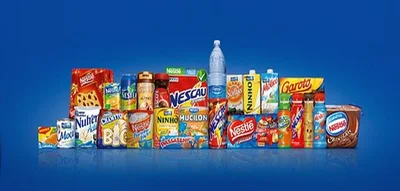
It churns out more than 180 products, including infant formulas like NAN Pro 1 and 2, Nestogeno, and NAN AR, as well as the Ninho and Mucilon lines for children.
The plant also produces the Nutren range for medical nutrition and healthy aging, alongside dairy staples such as creme de leite, Molico milk powder, and ready-to-drink beverages.
Annual output currently sits at 150,000 tons across 175 product varieties, supplying the Brazilian market and exporting to Latin America and the Middle East.
This product mix is significant because it targets demographic trends that are largely immune to economic cycles: birth rates, aging populations, and clinical nutritional needs.
Jobs and Local Roots
About 800 people work directly at the site, and roughly 80% of them are local residents.
The factory also supports around 200 indirect employees and generates an estimated 2,000 additional indirect jobs in the region.
That kind of rooted employment is hard to replicate in a megacity, where workers often endure long commutes and higher living costs.
Araçatuba has hosted the plant since 1963, making it a multi-generational industrial anchor for the area.
For a foreign investor or expat considering Brazil beyond Rio and São Paulo, this illustrates how deep the country’s industrial fabric runs in mid-sized cities.
Technology, Not Just Tonnage
The fresh capital will expand production capacity and integrate new technologies, including Industry 4.0 systems and AI-driven automation.
Company statements point to new product development in nutrition and health, aligning with global demand for functional foods and specialized medical nutrition.
Rather than chasing cheap labor, the investment leans on precision manufacturing and high-margin formulas.
That strategy makes a facility in the interior of São Paulo a logical long-term bet, not a short-term cost play.
For readers watching global supply chains, this is a case study in how multinationals are using automation to bring production closer to consumers instead of chasing the lowest wages.
What It Means for Expats and Investors
For expats living in São Paulo state, the investment reinforces the economic gravity of the interior, a region already known for strong agribusiness and a growing services sector.
It also suggests that demand for skilled technicians and engineers in mid-sized cities will keep rising, potentially creating opportunities for foreign-trained professionals.
Investors should note that Nestle Brazil is betting on non-discretionary health products, a segment that tends to hold up well even when Brazil’s broader economy wobbles.
The export angle to the Middle East and Latin America also means the plant is not solely dependent on domestic demand, offering a natural hedge for the company’s revenue stream.
What Happens Next
The investment runs through 2028, so the upgrades will roll out in phases rather than appearing overnight.
Local authorities in Araçatuba are likely to use this announcement to court other multinationals looking for industrial sites with reliable infrastructure and a trained workforce.
For readers, the key metric to watch is whether this modernization allows Nestle Brazil to boost export volumes, which would confirm that the interior can compete globally on quality, not just cost.
In the near term, the project provides a tangible data point against the narrative that Brazil’s manufacturing story is only one of decline.
Frequently Asked Questions
How much is Nestle Brazil investing in Araçatuba?
Nestle Brazil is investing R$540 million, equivalent to about US$106 million, through 2028. The funds will expand production capacity and integrate new technologies at the company's largest Brazilian factory by net revenue.
What products does the Araçatuba plant make?
It produces over 180 items, including infant formulas such as NAN Pro and Nestogeno, child nutrition lines like Ninho and Mucilon, medical and adult nutrition products under the Nutren brand, and dairy goods including creme de leite and Molico milk powder.
How many people work at the Araçatuba factory?
The plant employs roughly 800 direct workers, 80% of whom live locally, along with about 200 indirect employees. The operation supports an estimated 2,000 additional indirect jobs in the surrounding region.