offbeat
Web app turns your old phone into a new smart display
ScreenWall's creator tells El Reg he doesn't want those obsolete devices going to waste
HANDS ON If you've got a drawer full of old phones, unloved tablets, or even an ancient monitor, you can now give those devices new life in your home by turning them into wall-mounted status boards, clocks, weather stations, or photo frames.
ScreenWall is a web platform developed by German software engineer Tuan Anh Bui that’ll turn any compatible device with an internet connection into a widget display without the need to install anything. If you can scan a QR code, you can have that old device displaying any number of things in no time.
“Use it to build clocks, status boards, ambient screens, signage, and shared walls from the hardware you already have, without asking people to install anything first,” Bui says on the app’s website.
Currently in beta and free for users (with some restrictions on the number of widgets one can deploy), ScreenWall comes with a number of demo widgets, like a clock, weather display, and a split-flap screen able to display various types of information. You can customize pre-existing widgets with some JavaScript tweaks, which is how new ones are written as well, and you can connect data sources via JSON files.
Placing a widget, whether preconfigured or homemade, is simple: Add it to a workspace (called a “wall”), and it’ll sit waiting for a display to be paired with ScreenWall, which is done by either scanning a QR code from a device with a camera, or clicking on a link and inputting a six-digit code for devices that lack one (like an old monitor paired to a thin client, no matter how ancient).
Once paired, ScreenWall detects the device’s resolution and shows it on the wall as a blue square. Drag it over the widget you want it to display, and that’s that. The screen won’t go to sleep or shut down as long as the ScreenWall widget is present, as it uses the standard Screen Wake Lock API baked into modern browsers. Just connect it, get the widget fitting properly on the screen, and set the device up wherever you want - preferably somewhere with access to a power outlet.
What it offers in simplicity and device reusability, ScreenWall also lacks in terms of seamlessness that might make it a tough sell to replace that ticket status board that might be getting long in the tooth.
Devices connect via a web link and are presumably running a full-fledged OS, so any reboot of a system means the device has to be re-paired in order to function. When testing at home, closing the ScreenWall tab on my iPad showed the device as offline on my wall, and the only way I could figure out to reconnect it was to scan the QR code again. Because the code is randomized each time you open the screen, reconnecting my iPad meant adding a third display to my wall, creating a bit of chaos as it re-created the clock widget I had displayed on my iPhone, dropping it on top of the picture of my chipmunk friend and necessitating some manual adjustment.
The ScreenWall clock widget displaying on my iPhone
When I put my iPhone to sleep without closing the ScreenWall tab, it similarly said that the display was disconnected. Unlocking my phone and navigating to the ScreenWall Safari tab brought the clock widget back up. So, as long as that tab stays open, reloading the widget should work more easily.
Bui confirmed to The Register that devices maintain their unique identifier as long as the tab isn't closed, so be sure you don't get rid of that if you intend to deploy a ScreenWall widget for long-term use.
It’s also important to note that, if using an old smartphone, tablet, or some other smart device set up to receive notifications, those still pop up. ScreenWall doesn’t put a device into do-not-disturb mode by default - don’t forget to set that if you’re going to try this out. As Bui noted, it's on the user to ensure "do not disturb mode" is set properly. A simple web app like this one simply doesn't have that level of device control.
The main screen you see when working with ScreenWall's controls in a web browser
As Bui notes on the ScreenWall website, the platform “is still in beta, which means the core experience is usable, but we are still improving stability, compatibility, and polish.” Feel free to tinker with it, in other words, but don’t go tossing those old devices on every wall you can find just yet unless you’re ready to do some legwork to keep ‘em running.
Bui told us that he still hasn't come up with a monetization plan, but that he does plan to address concerns that people may have about running a hosted service.
"I want to prevent people from throwing old tech away, and the tinkerer community are kinda privacy focused and want to use their beloved devices offline," Bui said in an email. "That’s why I am currently thinking of to publish a self-hosted version that users can run locally."
Beyond that, he told us, he's not sure where to take the tool next.
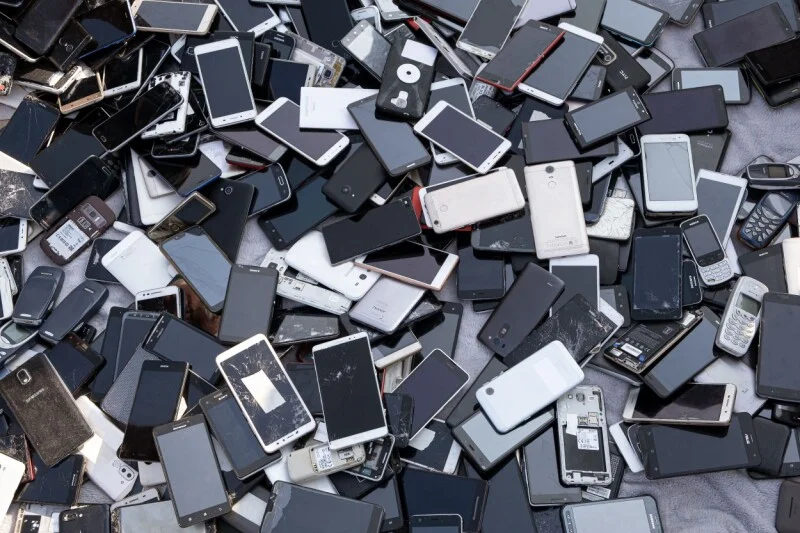
"This project was built out of curiosity and scratching an itch I had really long time ago after seeing all old phones going to waste," Bui explained. "I still don’t know who actually wants this except me."
As for what might get added once stability, compatibility, and polish are addressed, that might be up to the community. "I hope to see people to do very cool things with it, while I try to extend the platform with new features." ®