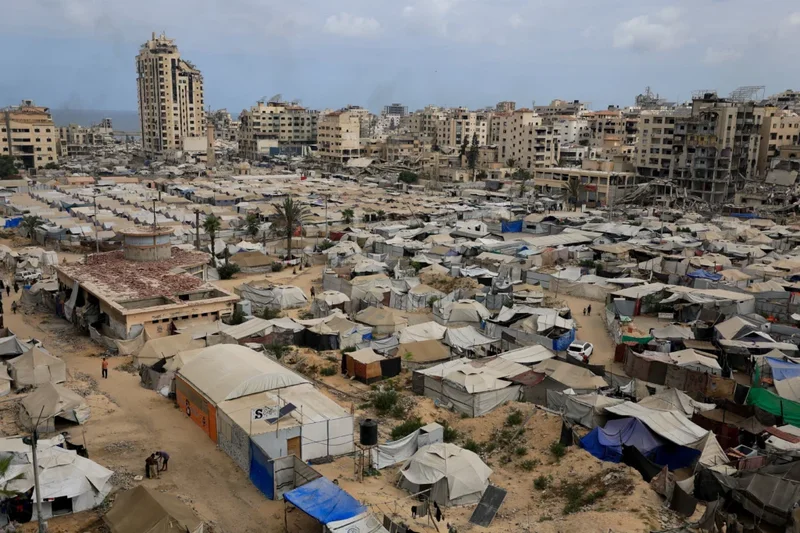
Israel Rejects Trump’s 15-Point Plan to End the Gaza War
Israel · GEOPOLITICS
Netanyahu draws a red line on the 15-point Gaza plan
On 9 August 2026, Reuters reported that Netanyahu told a cabinet meeting Israel had rejected the “Board of Peace” 15-point document. Al Jazeera quoted the prime minister saying the army would not withdraw until Hamas is “genuinely disarmed.”
The New York Times had earlier reported that Netanyahu’s office said the framework did “not reflect Israel’s positions.” The fuller rejection confirmed what weeks of Israeli hesitation had signalled: the plan’s core bargain was unacceptable to the government in Jerusalem.
Israeli officials told Reuters there would be no withdrawal from the Yellow Line until Hamas is disarmed and Gaza is demilitarised. That position effectively freezes the diplomatic track Washington had championed as a breakthrough.
Sequencing versus preconditions: the unbridgeable gap
The fundamental dispute is over sequencing. Trump’s plan envisages a phased withdrawal of Israeli forces linked to Hamas disarmament, supervised by an International Stabilization Force and a technocratic Palestinian administration.
Hamas and mediators want steps to move in parallel, Reuters reported. Israel insists Hamas must first undergo “genuine disarmament” before any pullback begins. That gap has so far proven unbridgeable.
Hamas had agreed in principle to a phased disarmament roadmap, according to Reuters and The Guardian. But it had not accepted full surrender of weapons on Israel’s terms, leaving the two sides far apart on the most sensitive question.
A governance blueprint that reshapes power in Gaza
The plan is not merely a ceasefire document. It is a governance architecture that would replace direct Israeli military control with a National Committee for the Administration of Gaza (NCAG), a technocratic Palestinian interim authority under international supervision.
Trump would chair a Board of Peace overseeing the transition. The BBC published the White House’s 20-point version of the framework, which includes immediate aid entry and reconstruction overseen by international mechanisms.
For Netanyahu’s coalition, this structure is politically explosive. Hardline figures oppose any arrangement that could lead to a durable Palestinian governing structure in Gaza, seeing it as a step toward statehood rather than a temporary administrative fix.
The money behind the 15-point Gaza plan
NPR reported that Trump’s Board of Peace had already secured US$7 billion in reconstruction pledges from member states. The United States committed US$10 billion of its own, giving Washington enormous leverage over Gaza’s post-war political order.
Reconstruction contracts, aid flows, and security coordination are all tied to compliance with the United States-led framework. That funding structure was designed to pull Arab and Muslim states into the arrangement through financial and diplomatic endorsement.
The International Stabilization Force was described by NPR as potentially involving 20,000 soldiers and 12,000 police officers under Major General Jasper Jeffers. Those planning figures underscore the scale of the security operation Washington envisages.
Domestic politics and the coalition calculus
Netanyahu’s rejection cannot be separated from his coalition’s composition. Police Minister Itamar Ben-Gvir called the draft unacceptable and argued that Israel’s policy of assassinating Hamas leaders must continue, Reuters reported.
The Guardian and Chatham House both frame the plan as a direct challenge to Israeli extremists. It points toward Palestinian administration and eventual statehood conditional on compliance, not indefinite occupation, which hardline ministers have vowed to prevent.
Any concession that appears to reward Hamas or create a pathway to Palestinian governance risks fracturing the coalition. That domestic reality shapes Israel’s negotiating position as much as any security assessment on the ground.
Great-power stakes and what comes next
The United States is using the Gaza file to anchor a broader regional order combining security guarantees, reconstruction finance, and political conditionality. Israel’s rejection shows that even a Washington-backed framework can be blocked when it conflicts with Israeli domestic politics and battlefield priorities.
Reuters noted the plan had initially been celebrated by Trump, mediators, and Arab states as a breakthrough. Israel’s position was later relayed through officials and allies who insisted it had not signed on, leaving Washington managing both sides simultaneously.
The White House must now pressure Hamas toward demilitarisation while preventing an Israeli collapse of the framework through unilateral military action. For readers tracking how great powers and regional players contest territory and resources, this dynamic fits squarely within the patterns explored in Africa: The New Scramble.
Frequently Asked Questions
Why did Israel reject Trump’s 15-point Gaza plan?
Prime Minister Benjamin Netanyahu said Israel would not withdraw until Hamas is genuinely disarmed, rejecting the plan’s phased approach that linked withdrawal to disarmament steps.
What is the Board of Peace in Trump’s Gaza framework?
The Board of Peace is a supervisory body chaired by Donald Trump that would oversee Gaza’s transition, backed by US$7 billion in pledged reconstruction funds and a US$10 billion United States commitment.
What does the International Stabilization Force propose to do in Gaza?
The proposed International Stabilization Force would work alongside a new Palestinian police force to provide security during the transition, with planning figures suggesting up to 20,000 soldiers and 12,000 police officers.
Sources
This article was produced by The Rio Times’ automated newsroom system. How we use AI · Report an error