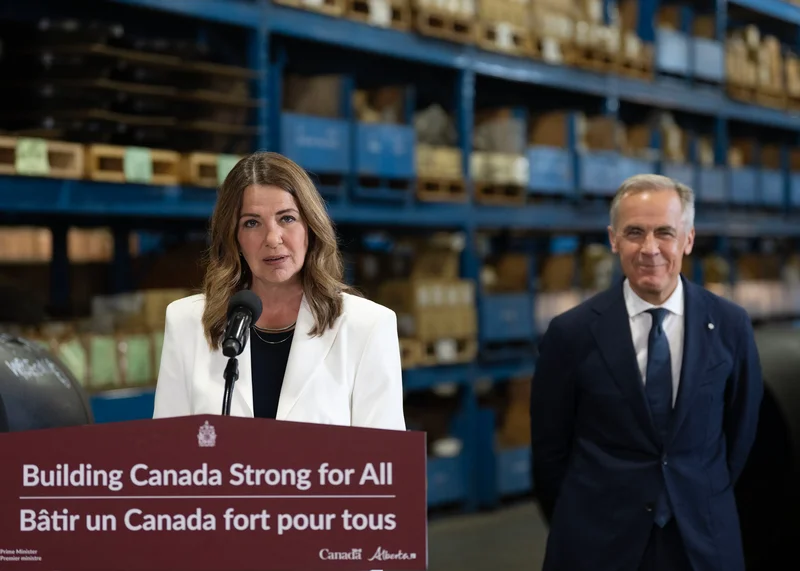
A group that represents numerous First Nations across British Columbia is calling on Ottawa and Alberta’s government to halt efforts to advance the West Coast pipeline, saying expanding the oil industry will accelerate climate change and disasters.
“The destructive and disastrous consequences of expanding fossil fuel production extend far beyond any single territory,” the Union of British Columbia Indian Chiefs said in a letter addressed to Prime Minister Mark Carney and Premier Danielle Smith.
“From catastrophic wildfires to destructive floods and rising seas, the impacts of climate change are already being felt across this country. Every new fossil fuel project deepens that crisis.”
The letter came Sunday, a day after the B.C. government issued a state of emergency as more than 100 wildfires burned across the province, with one forcing nearly 25,000 people across two communities east of Vancouver to flee. Nearly half of the wildfires were burning out of control.
The Indigenous group said it is also publishing the letter on International Day of the World’s Indigenous Peoples on Sunday to reaffirm that it’s against the pipeline because government has not consulted and co-operated in good faith with the First Nations.
It said government has already developed the project’s corridor, named prospective development partners and is publicly promoting its economic case.
“Consultation cannot be meaningful if First Nations are invited only to discuss how a predetermined project will proceed.”
Carney and Smith’s offices did not immediately respond to a request for comment on Sunday.
The roughly 1,250-kilometre West Coast pipeline would carry upwards of one million barrels of crude oil per day from Bruderheim, Alta., to a port near Delta, B.C., for shipment to international markets.
The Alberta government is listed as the pipeline project’s proponent. The pipeline would be owned by Trans Mountain, the Alberta Petroleum Marketing Commission and Pembina Pipeline Corporation.
Ottawa took a step last week toward giving the proposed project a national interest designation under the Building Canada Act, which would allow government to fast-track the pipeline and skirt some environmental laws.
The government said it is accepting public feedback until mid-September on the designation.
Ottawa and Alberta have agreed the pipeline would be conditional on a carbon storage project called Pathways, and vice versa. Pathways, which is owned by various companies, would prevent emissions from increased oil production from entering the atmosphere, and is tied to the pipeline going ahead. It involves a pipeline network that would carry carbon emissions from several sites in northern Alberta to an underground storage hub near Cold Lake, Alta.
A think tank called the Canadian Climate Institute said in July, however, that emissions from the increased production that a new West Coast pipeline would enable far eclipse what Pathways would prevent from entering the atmosphere.
The West Coast pipeline is among several projects that have been approved or proposed under Carney’s Major Projects Office, which is headquartered in Calgary.
Ottawa has said the projects are meant to be of national interest and strengthen Canada’s autonomy, provide economic benefits, advance Indigenous interests and meet Canada’s climate change goals in a rapidly shifting global landscape.
The Building Canada Act outlines the projects’ regulatory pathway.
The Conservatives helped the government pass the Building Canada Act more than a year ago and the government has so far moved three projects toward the national interest designation under the act.
Those projects are the Grays Bay road and port project in Nunavut, the Mackenzie Valley Highway in the Northwest Territories and the Nuclear Waste Management Organization’s deep geological repository in northern Ontario.