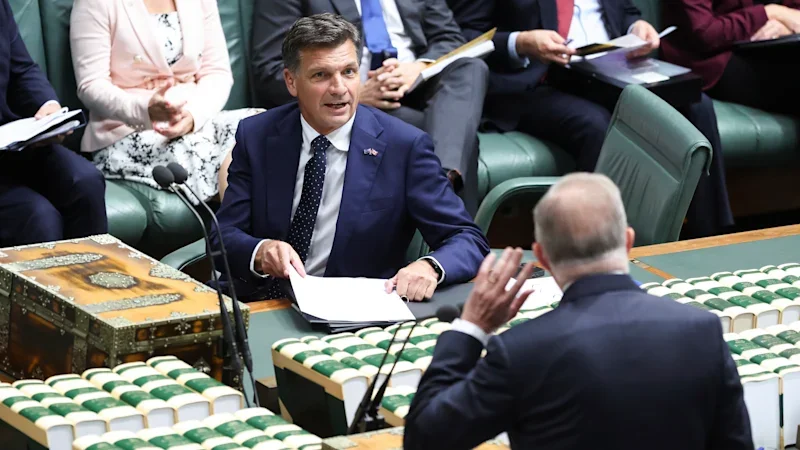
Prime Minister Anthony Albanese has moved to salvage his big tech agenda from the brink of defeat, holding talks with counterpart Angus Taylor to win support for plans to force US platforms to pay for news and block gambling advertising.
A week after the largest news firms pleaded with the prime minister to reverse last-minute changes to the News Bargaining Incentive, Albanese will speak with Taylor on Tuesday to try to make deal on a model to push Meta, Google and TikTok to pay for news articles. Both men are in Canberra as politicians return to parliament following a winter break.
The scheme was at risk of collapse after Nine, the owner of this masthead, and News Corp savaged amendments that may have lowered payments to big media outlets and pushed money to smaller ones. The news bargaining incentive is a world-first framework to draw revenue from tech firms to fund journalism.
The Greens and Coalition also signalled their opposition to Labor’s tweaks. The key change that infuriated the news organisations was one that would hypothetically reduce any one firm’s portion of the fund from $25 million to less than $17 million.
The change was made by Labor weeks before the bill’s introduction to parliament without consultation. It was designed to benefit smaller publishers, but large outlets argued it undervalued the bigger players who hire the most journalists and create most of the news.
If Albanese and Taylor strike a deal, the bill could rush through parliament this fortnight and set up another clash with the White House. The Trump administration has cast Labor’s model as “foreign extortion” of American tech firms, raising the prospect of tariff retaliation.
The news bargaining code is opposed by tech giants who say the policy has no justification because news outlets benefit from distributing their work on social media.
Albanese has pledged to stand up for the scheme in the face of US threats. He has taken on a series of fights with tech giants in the name of protecting Australian journalism and creatives.
On artificial intelligence, Albanese has insisted that world-leading AI firms pay for local content to train their models. And on gambling, Labor is planning to tighten rules for betting promotions.
The gambling crackdown was also at risk of being blocked by the Greens and the Coalition. Opposition communications spokeswoman Sarah Henderson last week said the draft bill was “riddled with deficiencies”.
Albanese has tried to land a compromise position which falls short of a full ban supporting by a vocal minority of Labor backbenchers, as well as a religious and civil society groups.
In an attempt to protect media firms’ revenue from ads and stave off a nanny-state argument from One Nation, Albanese is proposing to cap ads at three per hour. He holds the view that it would not be morally justified to ban ads for a legal product such as gambling, but is aiming to limit children’s exposure.
Albanese and Taylor are expected to come to an agreement on a proposal to force tech firms and media companies to create new tools for users to opt out from gambling ads. This has turned into a sticking point. Media companies want to avoid million dollar fines for failing to create an appropriate online tool in just a few months before the laws come in.
Some advocates would like to create an “opt-in” model whereby a person would need to give consent to see ads, but media companies view this as an effective ban because so few people would likely opt in.
Labor and the Coalition are also likely to agree on making it harder for betting firms to offer inducements like free bets, a week after bombshell allegations that betting firms were holding drug-fuelled events with big gamblers.
Taylor criticised Labor for moving to slowly in a years-long brawl on gambling ads but said he would work with Labor.
“We’ve seen three years of delay from Labor on dealing with this but … we will work with the government to make sure it is right,” he told reporters in Canberra.
“It’s about getting the balance right and predatory inducements are a focus for us in making sure we get that balance right.”
More: