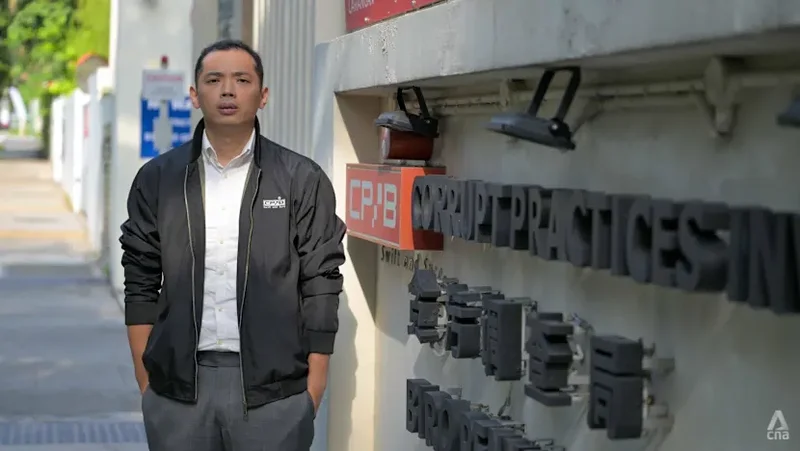
Despite the CPIB welcoming anonymous reports, the bureau still hopes complainants are willing to share as many details as they can.
“When making a report, of course we hope that the public provides us with as much information as possible, because the more details they are able to provide us, the better. With them, we will know where to look, who to look at and what to look at,” said Mr Lim.
This includes details such as where and when the alleged corruption occurred, the identities and roles of those involved, and the bribes involved and how it was transacted.
Cases are kept confidential to protect those being investigated, as it could be stressful for them and their families, said Mr Lim.
“In general, we try to keep our investigations confidential. For most cases, I would say, we will not make it publicly known,” he said.
The CPIB’s role is to look at the facts and evidence and find the truth, and not necessarily to seek out wrongdoing, said Mr Lim.
“If there is nothing being done, we, in a way, clear the name of those whom we are investigating,” he said.
CPIB investigations are typically completed within a year. But more complex ones, such as those with money laundering or overseas elements, could take up to three years, added Mr Lim.
FALSE REPORTING
Mr Lim cautioned against using anonymous reports as a tool for malice, emphasising that the CPIB takes false reporting seriously.
“We have a complaint assessment process that actually acts as a natural filter,” he said, sharing that investigators look at the reliability, credibility and pursuability of complaints.
To prevent people from abusing the system, when the CPIB discovers that someone has made a false report, the protections offered under the Prevention of Corruption Act may be lifted, and the bureau may take legal action against that individual, he said.
“There are times where it might just be something they heard. It might not be fully accurate. We won’t take any action towards those complainants. But there are definitely times where we can see that it’s malicious,” said Mr Lim.
He recalled a private sector case he handled where a man claimed he had given bribes to his sister, who had also taken bribes from another of their sisters.
After looking through the evidence, however, investigators found that there was no such occurrence.
“The person in the end admitted that actually he was just angry with his sister and came forward to make the report. We did charge him for giving false information,” said Mr Lim.
Mr Lim said that the private sector forms “a high percentage” of the cases handled by CPIB, adding that the construction sector is a key sector where a “bulk of the cases” come from.
The amounts involved vary quite significantly, as offenders can range from workers on the construction site to the executives who are giving out the contracts and handling the tenders, he said.