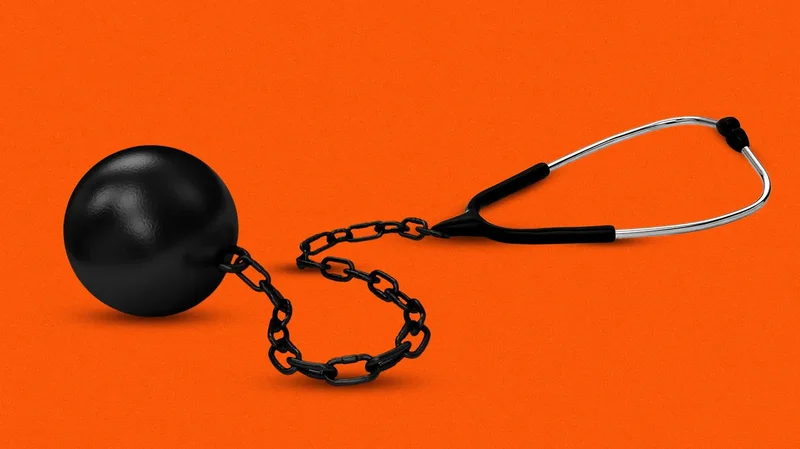
Almost a quarter of workers in the U.S. — 23 million adults — are experiencing "job lock," staying in roles they don't want to avoid losing health insurance benefits, according to a new Gallup analysis.Why it matters: Women and people who have chronic health conditions feel the burden most because health care costs limit their career mobility, wage growth and life satisfaction. By the numbers: Almost half (48%) of respondents who described health care as a "major financial burden" are staying put in unwanted jobs.Fifty-three percent of U.S. workers who experience "a lot of stress" because of health care costs keep unwanted jobs to maintain their insurance.About 44% who have personal or household medical debt say they are staying in an unwanted job for insurance.Thirty-seven percent of workers in the U.S. who borrowed money in the past year to pay for medical expenses say they are staying in an unwanted job, compared with 22% of those who did not borrow money.The intrigue: Workers with one or more chronic conditions are also 12 percentage points more likely than those without chronic conditions to report job lock (29% vs 17%.)About 41% of workers with three or more diagnoses will do the same. The phenomenon is especially common among people with conditions that require ongoing or intensive care.Between the lines: The chronic disease burden is more prominent among women, affecting 66% of women compared to 57% of men.Women are more likely than men to experience job lock, at 30% vs. 20%, respectively.Women are also 12 percentage points more likely to experience financial problems due to healthcare expenses than men.Zoom out: Job lock coincides with broader healthcare affordability challenges, with about half of Americans reporting difficulty paying for care or prescriptions.At the same time 5 million Americans have dropped their health insurance in 2026 after the Trump administration declined to extend subsidies for enrollees under the Affordable Care Act.Worth noting: Large employers are raising insurance premiums this year by up to 10% after health care costs sharply outpaced expectations.The increase is driven in part by pricy anti-inflammatory specialty drugs and high demand for GLP-1s, the weight loss drugs that also treat diabetes.Methodology: Gallup conducted this survey from Oct. 27 to Dec. 22, 2025, among 5,660 U.S. adults. This analysis focuses on 2,322 employed respondents who rely on employer-sponsored health insurance as their primary source of coverage.Editor's note: This story and its headline have been corrected to make clear that the Gallup survey referred to U.S. workers (not all Americans). Go deeper: Health insurers point fingers over affordability woes
U.S. workers are staying in unwanted jobs for health insurance