Hao Shen has lived in Australia long enough to know he wants to stay here forever.
The 43-year-old civil engineer and his wife, a biotechnology scientist, have lived and worked across Europe and Asia. Now they’re settled in Chapel Hill in Brisbane’s western suburbs, where they’re raising their young Australian-born children.
With the travel facility on his permanent resident visa running out, it made sense for Shen to apply for Australian citizenship.
“Our kids are born in Australia, and we found that Australia is a lovely place, and we decided to live here forever,” he said.
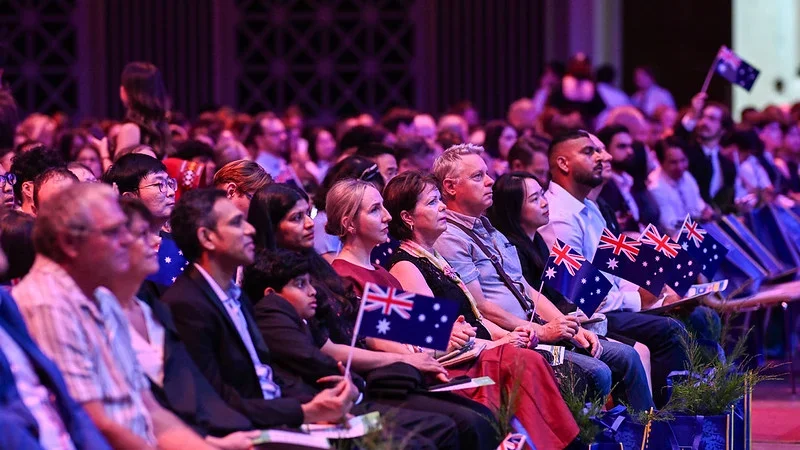
Shen passed his citizenship test several months ago, and began waiting for the final step in the process: a ceremony, usually hosted by the council, where migrants pledge their loyalty.
He joined a list of thousands in the Brisbane City Council area. The latest figure, available from the Home Affairs website, says 7223 approved applicants are waiting – the longest list in Australia.
Two years ago, the list was at 4600, and as pressure from desperate applicants grew, the council put on more ceremonies to get through the backlog.
Attending such ceremonies is compulsory. Until he makes the pledge, Shen is not eligible for the privileges of citizenship, including an Australian passport.
So when his father-in-law in China fell sick with liver cancer, the family was presented with a dilemma.
If the family flies back to China to see him without Australian passports, each non-citizen must pay a $1475 resident return visa fee on their way home to Australia, on top of the cost of flights. This has leapt from $490 per person before July 1 this year.
If the family waits until after they have attended their citizenship ceremony, they would be eligible for Australian passports – which cost $422 for a 10-year adult document, but allow unlimited entries to Australia – and would not have to pay for the visas.
Neither council nor Home Affairs can give a firm indication of when the family will be invited.
“It’s about more than half a year, can be as long as one year ... and that’s a that’s a little bit crazy to us,” Shen says.
“We definitely understand the importance of a ceremony. We need to pledge our loyalty to Australia.
“But on the other hand, there’s no technical hurdle to become an Australian citizen, because the application has been approved. We’re just waiting to be admitted into a ceremony.”
Brisbane City Council said it had five more ceremonies scheduled for 2026 – but nothing in September or October. At each ceremony, about 450 new citizens over the age of 16 attend.
Prince Mathew, a registered nurse and New Zealand citizen who is also on the waiting list, has launched a petition to pressure the Brisbane City Council to put on more ceremonies.
His family has also been putting off making plans for overseas travel while they wait to find out when he can attend a citizenship ceremony.
He pointed to neighbouring councils such as Logan, where he said people did not need to wait so long, as the council held multiple ceremonies on the same day.
South-east Queensland has some of the largest waiting lists in the country. Moreton Bay and the Sunshine Coast each have more than 1000 people, with most waiting more than three months.
Logan and Ipswich councils have roughly 1000 on their lists, but most applicants wait less than three months, the federal data says.
The Department of Home Affairs said it “actively engaged” with councils about their waiting lists.
“The government is committed to promoting the takeup of Australian citizenship and ensuring the efficient processing of citizenship applications and reducing processing times, including reducing wait times for approved applicants to attend a citizenship ceremony,” a spokesperson said.
A spokesperson for Brisbane City Council said it was working with the federal government to schedule “as many ceremonies as possible, and maximise the number of new Australians we can welcome at City Hall”.
“Brisbane is Australia’s largest local government, so the number of people approved by the federal government to become new citizens can be significantly larger than other local councils,” they said.
A listing for a ceremony planned to take place in October was withdrawn because it clashed with federal parliament, the council said.
Community organisations such as Lions and Rotary clubs can also hold ceremonies, but the federal government said most around the country were hosted by councils.