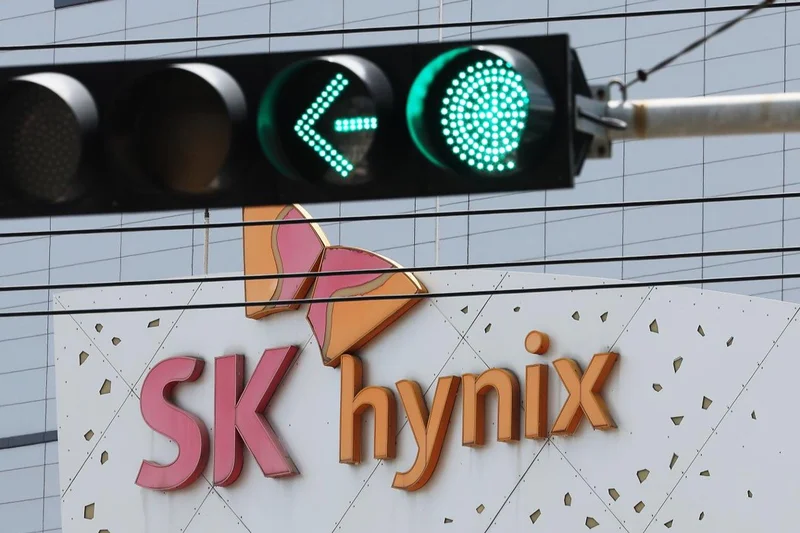
Korea has become an important barometer for the global artificial intelligence (AI) stock trade, industry officials said Monday, as swings in Seoul increasingly reflect shifts in technology sentiment that are playing out across markets from Tokyo and Shanghai to Wall Street.
The shift reflects the unusual structure of the Korean market. The KOSPI's heavy weighting toward semiconductor companies, combined with its sensitivity to foreign capital flows, means changes in expectations for AI investment can be reflected in Korean share prices quickly, and sometimes more sharply than elsewhere.
That has made Seoul an increasingly important reference point during Asian trading hours.
Investors have increasingly treated the Nikkei 225 and the KOSPI as expressions of much the same trade, according to Nikkei Asia. Both indices have substantial exposure to companies tied to AI and semiconductors, while their trading hours largely overlap.
The relationship was evident last Wednesday. Stronger-than-expected earnings from Japanese electronics supplier Ibiden initially sent AI and semiconductor-related stocks sharply higher in Tokyo, lifting the index by more than 2,000 points at one stage. But the rally lost momentum as gains in the KOSPI faded during the session.
The volatile price movements of Korean stocks are spilling into Japan, often overshadowing domestic factors such as corporate earnings, the Japanese media wrote.
"Korean price action represents how investors feel about technology during Asian hours," said Sava Mihic, founder and portfolio manager of Mihic Fund Management in Sydney. "The KOSPI is highly exposed to the AI trade, and the most volatile stocks in Japan recently are highly exposed to the AI trade and have been moving the market. As a result, the two have been trading together at times recently."
The phenomenon is not confined to Japan.
Since April, a sharp increase in Chinese institutional positioning in technology stocks, alongside a surge in retail margin trading, has closely tracked the semiconductor-led rally in the KOSPI, according to Kim Kyung-hwan, a researcher at Hana Securities.
"Then a Korea-led shock and negative U.S. developments in July hit sentiment and valuations, sending both tech indices and margin balances sharply lower," Kim wrote in a research note published on Friday titled "Can Chinese tech stocks escape the KOSPI's pull?"
Korea's links with U.S. markets have also strengthened.
As spending on AI infrastructure by American technology groups increasingly determines the earnings outlook for Korean memory chip manufacturers, movements in the KOSPI and the Nasdaq 100 have become more closely synchronized.
The 60-day correlation between the two indices recently climbed to about 0.50, its highest level since 2021, CNBC reported on July 27, citing data from financial research firm Rayliant Global Advisors.
Analysts said the growing influence of a common force — the AI investment cycle — is drawing major equity markets more closely together.
Yun Jung-in, CEO of Fibonacci Asset Management Global in Singapore, said Korea's concentration of semiconductor stocks and sensitivity to foreign investor flows made the market particularly responsive to shifts in global AI sentiment. Changes in investor expectations can therefore show up in Korean equities more quickly and, at times, more sharply than elsewhere.
"Still, I do not expect this unusually high correlation to persist indefinitely," Yun said. "As the AI rally matures, company-specific earnings and valuations, exchange-rate movements and differences in national policy are likely to reassert themselves as key drivers of market performance."