See more DutchNews articles in your Google search results
See more DutchNews articles in your Google search results
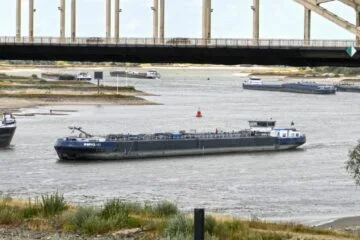
Add as a favourite source on Google Add DutchNews as a favourite source on GoogleThe Rhine is carrying less water than at any point since 1947, leaving cargo barges unable to sail fully loaded, ferries and cruises cancelled, and watering restrictions for farmers.
The fact that this has happened in the height of summer, when the 1947 record was set in November, makes the situation far more serious, the national weather service KNMI has said, because much more water is being lost to heat and crop farming.
Over the past 24 hours the river carried an average of 614 cubic metres of water a second past Lobith in Gelderland, where it crosses from Germany, below the 620 recorded in 1947. Hydrologist Jan Verkade of the Deltares research institute and Rijkswaterstaat gave the figures to broadcaster NOS.
A warm spring melted the Alpine snow that goes into the Rhine about three months early, Verkade said, and the rain that usually follows has stayed away.
Ships, ferries and farms
The low water is already being felt across the country. Cargo barges cannot sail fully loaded, several locks have closed, and ferries and river cruises on the Rhine and its branches have been cancelled or cut short.
Farmers are facing bans on drawing water from ditches and streams for irrigation in some regions. Dozens of houseboats along the river have been left exposed on the riverbed, and are at risk of flooding when the water returns.
Drinking water is not affected, water authorities say, and regional water boards are sharing supplies around the country. The Netherlands remains at level two of a three-stage shortage scale – a shortage, but not yet a crisis.
The cabinet ruled out compensation last week for businesses hit by the drought, which the water minister estimated could run to tens or even hundreds of millions of euros in damage.
No rain in sight
Little rain is forecast for the coming days, and Verkade said the flow could fall below even the 575 cubic metres recorded in February 1929, when ice choked the current. The low water could last for weeks or months, he said.
The World Weather Attribution group of scientists found this summer that climate change had made the European drought far more likely, as warmer air pulls water from the soil and rivers faster.
Verkade said both extremes were sharpening: it is five years, almost to the season, since floods devastated parts of Limburg and the regions just over the German and Belgian borders.
Thank you for donating to DutchNews.nl.
We could not provide the Dutch News service, and keep it free of charge, without the generous support of our readers. Your donations allow us to report on issues you tell us matter, and provide you with a summary of the most important Dutch news each day.
Make a donation