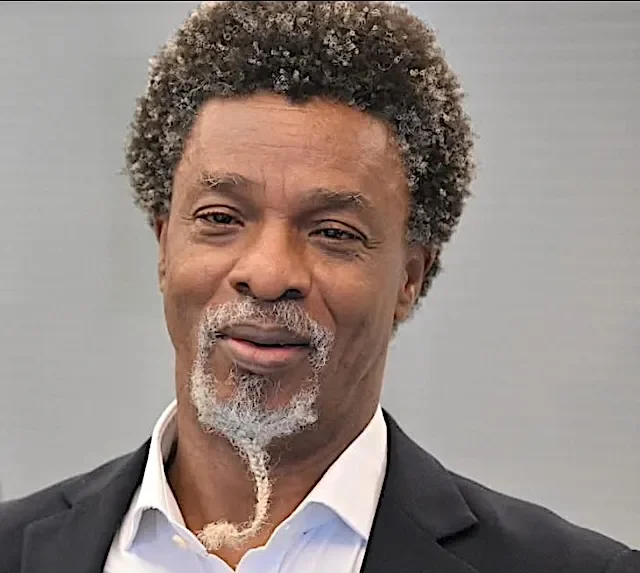
The Tinubu government was incensed. By what? The meeting, two weeks ago, between the Catholic Bishops’ Conference of Nigeria (CBCN) and his government? Or by John Cardinal Olorunfemi Onaiyekan’s subsequent briefing of the media on the meeting’s proceedings? The government’s gravamen against Cardinal Onaiyekan was more easily aired. In the reading of the president’s men, His Eminence was in breach of the clergy-penitent privilege. Honestly, there are very few charges against a Catholic priest as severe as his making public the contents of a private conversation with or confession of a parishioner. In fact, so important is this privilege that it is protected by law.
Subject to limits (of course), especially the requirement to report harm to children, even when the priest comes into this knowledge at confession, this privilege is not without rules. First, the information covered by this privilege must have been generated when a parishioner (loosely defined) talks to a priest. The priest must also be in receipt of this information in his spiritual capacity. Finally, even when the penitent owns the right to keep confession proceedings secret, both confessor and penitent must intend that the proceedings remain private.
It is hard to imagine that when President Tinubu sat across from the Most Rev. Matthew Ndagoso-led CBCN at the state house, he thought himself a penitent before his confessors. Cardinal Onaiyekan’s account of the meeting provided useful clarity on the conversational state-of-play at the meeting – arguably the main reason why the president’s backers have laboured to hang, draw, and quarter the prelate. Still, there is a sense in which the Catholic Bishops might have drawn the president’s ire. President Tinubu’s insistence that hunger has plagued Nigeria long before he was born, was evidently uttered in a fit of pique. The litany of problems that the princes of the Catholic Church laid before the president echoed much of the claims that what passes for the domestic opposition has continued to make at the hustings about the state of the economy.
Yet, the fact that the opposition makes these claims does not mean that they are false. Indeed, the opposition’s ability to connect with the electorate’s key concerns in the inter-ballot period is a key requirement for the success of any democracy. And if hunger, youth unemployment, and insecurity are the key worries that men of faith encounter daily in their interactions with their congregations, there is no better opportunity than in a meeting with the president of a democracy to air these fears. Besides, are we not told that a prophet should not stint on opportunities to show fidelity to his faith? Is he not invited to inveigh against the minds of all who hear him? And his admonition to power, ought that not to come from a deep understanding of who his people are?
| | |
|---|
Where does the politician in a democracy stand in all of this? President Tinubu’s response to the bench of bishops was, in this narrow sense, useful shorthand for how mature our democracy is. When, in the run up to the last general election, Mr. Tinubu asked to be given the presidency because it was his turn to occupy the seat, concerns were expressed, admittedly sotto voce, as to what he planned to do once ensconced in office. Ordinarily, improvements in the living conditions of the people should have topped a would-be president’s agenda. And for one who was aware of hunger’s long-standing relationship with our people, narrowing the space available to this bête noire would have been a nice goal to pursue. The president’s response to the CBCN, however, drew a sharp line between his understanding of his job description, and the electorate’s expectation of his office.
At the meeting with the Catholic bishops, the president’s understanding of his task environment was even more limited. There is no universe in which a government could have removed both petrol and foreign exchange subsidies in Nigeria the way the Tinubu government went about it that would not have left Nigerians worse off – at least in the short-term. But as at when the Tinubu government assumed office, both these subsidies were straining the fiscus and distorting the efficiency of the Nigerian economy as a resource-allocating mechanism.
It would have been far easier, then, for the president to have made this case to the bishops. That his government is aware of the exacerbation of both poverty and hunger as a result of its initial reforms. But that these reforms are necessary if his vision of a new Nigeria is to come to be. Necessary? Yes. But not sufficient conditions for moving the economy’s trend growth rate past 7% annually over the next electoral cycle and into double digit figures after that.
At which point the president would have reeled off structural reforms put in place by his government to boost domestic productivity in agriculture, manufacturing, and services, increase government’s tax take without increasing tax rates, boost the number of youths in education, employment and training, and so on – along with the respective timelines for these.
It is easy to argue at this remove that abuse usually sets in when reasoned argument is no longer available. But this won’t do. Instead, we all need to hit the “pause” button on the possibility that maybe, just maybe, the “ẹ̀mí ló kàn” pitch was never a teleological one. Alas, perhaps it wasn’t even utilitarian. Was it, mayhap, simply a power grab?
Uddin Ifeanyi, a journalist manqué and retired civil servant, can be reached @IfeanyiUddin.