When most people hear “Ebola,” they think of a single disease caused by a single virus.
Scientists know better. Ebola virus disease is caused by several distinct virus species capable of causing devastating outbreaks in humans, each with important biological differences that influence diagnostics, vaccines, therapeutics, and outbreak response. Yet for much of the past decade, global preparedness efforts have largely focused on a single species: Zaire ebolavirus (EBOV).
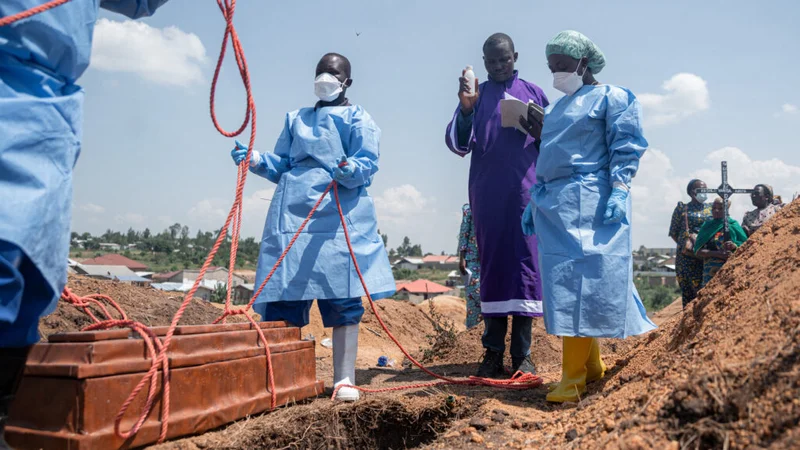
The ongoing Bundibugyo virus disease outbreak in the Democratic Republic of the Congo has become the largest Ebola outbreak in the country’s history and the second-largest Ebola epidemic ever recorded, surpassed only by the 2014–2016 West Africa epidemic. Beyond its devastating human toll, the outbreak has exposed a fundamental weakness in the global approach to epidemic preparedness. After investing billions of dollars in the wake of the West African epidemic, we built extraordinary capabilities — but largely for one Ebola virus. In preparing so well for one Ebola virus species, we left ourselves vulnerable to others.
The response to the West African epidemic transformed Ebola preparedness. We developed rapid diagnostics, established international clinical trial networks, licensed an effective vaccine, identified therapies that dramatically reduced mortality, and built regulatory and manufacturing pathways capable of accelerating the development and deployment of medical countermeasures. These achievements represent one of the greatest successes in modern outbreak science.
Yet nearly all of those advances were designed with EBOV in mind.
Bundibugyo ebolavirus, first identified in Uganda in 2007, is genetically distinct. Although it belongs to the same virus family, we cannot assume that diagnostics, vaccines, or therapeutics developed for one Ebola virus species will perform equally well against another. The current outbreak has demonstrated exactly why that assumption is dangerous.
The first warning came from diagnostics. Early in the epidemic, several molecular assays optimized for EBOV performed poorly when confronted with Bundibugyo virus, delaying diagnosis until updated assays could be developed and deployed. The challenge was not simply technical; it reflected a broader assumption that tools designed for one Ebola virus would perform equally well against another. Surveillance systems built around a single pathogen inevitably develop blind spots when viral diversity is overlooked.
Vaccines provide perhaps the clearest illustration of both the strengths and the limitations of current Ebola preparedness. The licensed rVSV-ZEBOV vaccine (Ervebo) transformed the response to outbreaks caused by EBOV and remains one of the greatest achievements in infectious disease research. Because it was designed to target the glycoprotein of EBOV, however, its effectiveness against Bundibugyo virus has long been uncertain.
Recognizing this uncertainty, the World Health Organization appropriately recommended in May that the Ervebo vaccine not be used routinely during the Bundibugyo outbreak outside of research settings, citing insufficient evidence to support its effectiveness against this Ebola virus species.
Since then, however, the scientific landscape has evolved. Emerging laboratory studies, immunologic data, and ancillary analyses from the current outbreak suggest that Ervebo may induce immune responses capable of providing at least partial cross-protection against Bundibugyo virus. Although these findings remain preliminary and are not yet sufficient to establish meaningful clinical effectiveness, they raise important scientific questions about whether the role of the Ervebo vaccine should be reconsidered as additional evidence accumulates.
Whether Ervebo ultimately proves to provide clinically meaningful protection against Bundibugyo virus is almost beside the point. The broader lesson is that these questions should have been asked and answered before a crisis — not in the midst of one of the largest Ebola outbreaks ever recorded. Preparedness cannot depend on assumptions about cross-protection between related viruses. It requires generating the evidence needed to guide vaccine policy before the next outbreak begins and not while lives hang in the balance.
The encouraging news is that science has responded with remarkable speed. Multiple Bundibugyo-specific vaccine candidates are now advancing through development, including both monovalent and multivalent approaches designed to broaden protection across Ebola virus species. The University of Oxford and the Serum Institute of India have launched the world’s first Phase 1 trial of a Bundibugyo-specific vaccine, and Moderna has now begun a Phase 1 trial evaluating an mRNA vaccine candidate against Bundibugyo virus. Together these efforts demonstrate how rapidly modern vaccine science can respond when there is financial and political will.
Therapeutics tell a similar story. Rather than relying solely on treatments developed for EBOV, investigators are now generating evidence specifically for Bundibugyo virus disease. The WHO-led PARTNERS trial is evaluating remdesivir and the broadly neutralizing monoclonal antibody MBP134, alone and in combination, while the EBO-PEP study is assessing oral obeldesivir as post-exposure prophylaxis among high-risk contacts. Within EBO-PEP, remdesivir is also being made available on a compassionate-use basis for pregnant and lactating women and children under 12 who are not eligible to receive obeldesivir.
These efforts highlight one of the great successes of post-West Africa preparedness: International clinical trial networks can now be activated rapidly during an emergency. Yet they also reinforce the central lesson of the current outbreak. Scientific research is moving at unprecedented speed, with much of it occurring while transmission continues rather than before it began.
In many ways, this is a triumph of science. The rapid development of new diagnostics, the launch of vaccine trials, and the implementation of therapeutic studies during an ongoing epidemic reflect years of investment, international collaboration, and lessons learned from previous outbreaks. Few of these accomplishments would have been possible a decade ago.
Preparedness investments remained disproportionately focused on the Ebola virus responsible for the last global crisis, leaving us less prepared for the broader range of Ebola viruses capable of causing the next epidemic.
This is not the first time preparedness has been shaped too narrowly by the threats of the past. Before Covid-19, pandemic preparedness centered largely on influenza, only for the emergence of SARS-CoV-2 to expose the risks of building response systems around a single viral threat. Mpox offered another warning, showing how a long-neglected pathogen can rapidly become a global emergency as ecological and social conditions change. The Bundibugyo virus outbreak is now delivering the same lesson for Ebola.
Preparedness cannot mean optimizing every investment for yesterday’s epidemic. It must anticipate viral diversity, biological uncertainty, and the reality that the next outbreak will almost certainly differ from the last.
That means investing in pan-filovirus diagnostics capable of detecting every pathogenic Ebola virus species. It means developing broadly protective and multivalent vaccines before outbreaks occur rather than during them. It means evaluating therapeutics with activity across multiple filoviruses, strengthening adaptable clinical trial networks that can rapidly evaluate countermeasures against emerging pathogens, and building manufacturing systems flexible enough to pivot when a different virus emerges.
These investments may appear more expensive in the short term. In reality, they are far less costly than rebuilding our response every time nature presents us with a familiar virus wearing a different disguise. The lesson from the Democratic Republic of the Congo is that we need adaptable platforms that can respond to whatever emerges next. The next epidemic will almost certainly surprise us. Our preparedness systems should not.
Krutika Kuppalli, M.D., is an infectious diseases physician and former World Health Organization medical officer. She served as medical director of an Ebola treatment unit in Sierra Leone during the 2014–2016 West Africa Ebola epidemic and has supported Ebola preparedness and response efforts in Africa and globally. Placide Mbala-Kingebeni is a Congolese virologist and the head of epidemiology and global health at the National Institute of Biomedical Research in the Democratic Republic of the Congo. He is internationally recognized for his leadership in the response to Ebola virus disease outbreaks and for his contributions to emerging infectious disease surveillance and research in Africa.