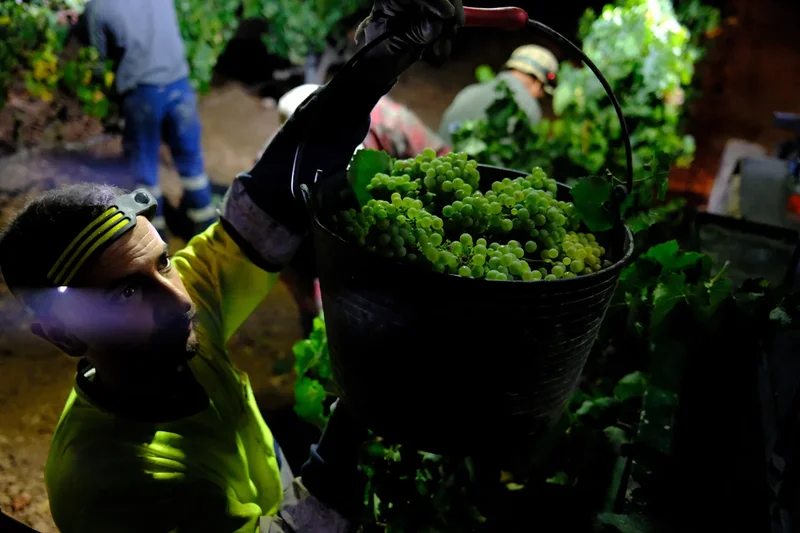
Armed with secateurs and headlamps, grape pickers at a winery northwest of Barcelona are setting out into the vineyards before dawn at 3am, as Catalonia records its earliest grape harvest ever following intense summer heat.
At the Gramona winery in the Anoia region, labourers have started gathering the crop several weeks ahead of the traditional August timeline.
The adjustments come as organisations and businesses across Europe seek to adapt to climate change, following back-to-back heatwaves and temperatures far exceeding regional averages.
The heat was very stressful for several people, even causing medical issues for some of them, said Roc Gramona, the winery's technical director.
"We had to take a decision because these 35 or 45 degrees Celsius (95 - 113 degrees Fahrenheit) were too strong for them," he said. The heat was also stressful for the plants and caused grapes to ripen much faster, Gramona added.
"I think we won't go back to the daylight harvest and we will keep on picking at night."
According to the Reuters Climate Monitor, average temperatures in Barcelona during July were 5.8 C above the historic norm from 1961-1990.
Starting before dawn allows crews to work in cooler temperatures and helps ensure the grapes arrive at the winery in optimal condition, said David Altes, one of the labourers.
Gramona began this year's harvest on July 22, marking the earliest harvest ever recorded in Catalonia.
The varieties currently being harvested are Chardonnay and Pinot Noir, both used in the production of sparkling wines.
Average temperatures across Western Europe throughout June and July have surpassed the previous record established in 2022, according to data from European climate agency Copernicus.
Beginning in May, intense heat has fuelled major wildfires, extended drought and thousands of anticipated heat-related deaths.
Worldwide, 2026 currently stands as the third-hottest year on record, following 2024 and 2025, though climate statistics show time remains to catch up.
Thanks to the one-two punch of accelerated human-caused global warming and a supersized El Niño, a periodic warming of parts of the Pacific that leads to temperature variations around the globe, there’s an increasing chance that by the end of the year, 2026 could become the hottest year on record, beating out 2024 — or at least come close, scientists said.